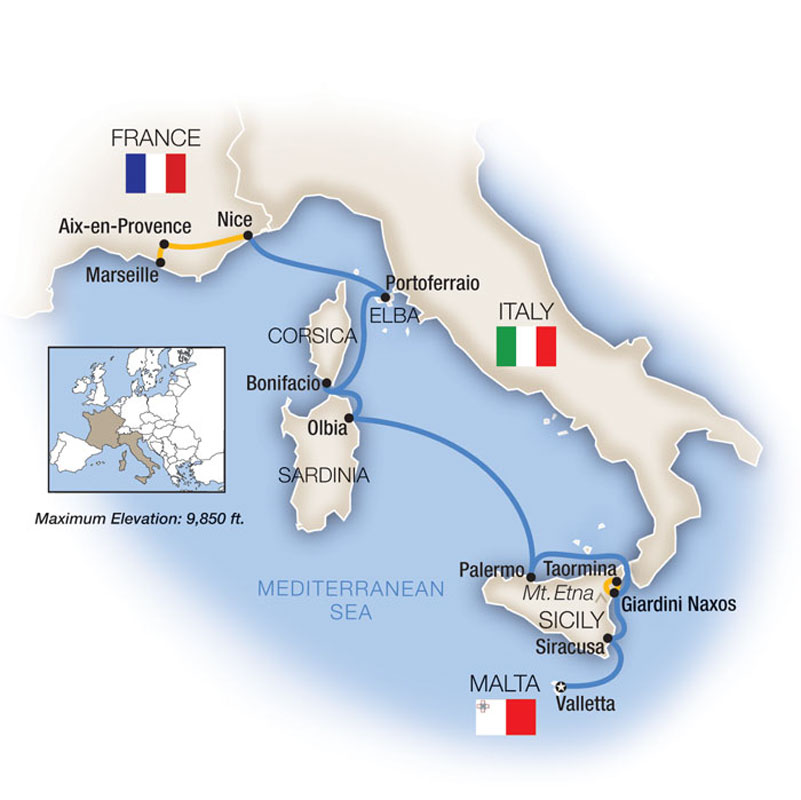
Treasures of the Mediterranean Isles
April 28 to May 12, 2026
Mike and Judy Henderson
I'll leave this map up so you can see where we are.
+++++++++++++++++++++++++++++++++++++++++++++++++++++++++++
5/3/2026 (Sunday) - We join the ship today, but first we're going to do some touring in Malta.
After breakfast we met in the lobby at 8:50am to board the bus. We're going to Hagar Qim first.
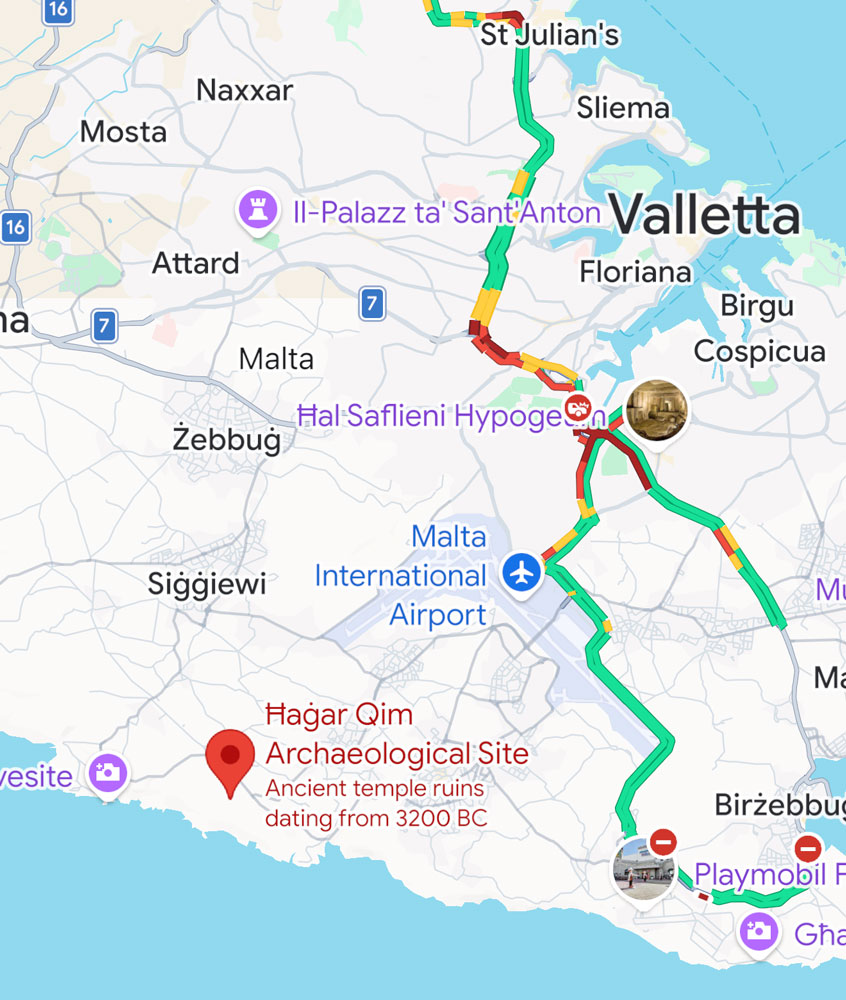
Hagar Qim is a megalithic structure dating back to 3600-3200 BC. The structure is on the other side of the island from Valletta but it didn't take long to get there, perhaps 30 minutes. Here's where it's located on Malta.
The entrance hall had a model of the site. We're going to visit the structure at the top of the picture. The structure in the lower part of the picture is not accessible to visitors.

The site is covered to protect the stones from weathering. The stones are limestone, which can be eroded by rain water. For centuries most of the stones were buried which protected them.

Here's the entrance "door".

We went into the structure.

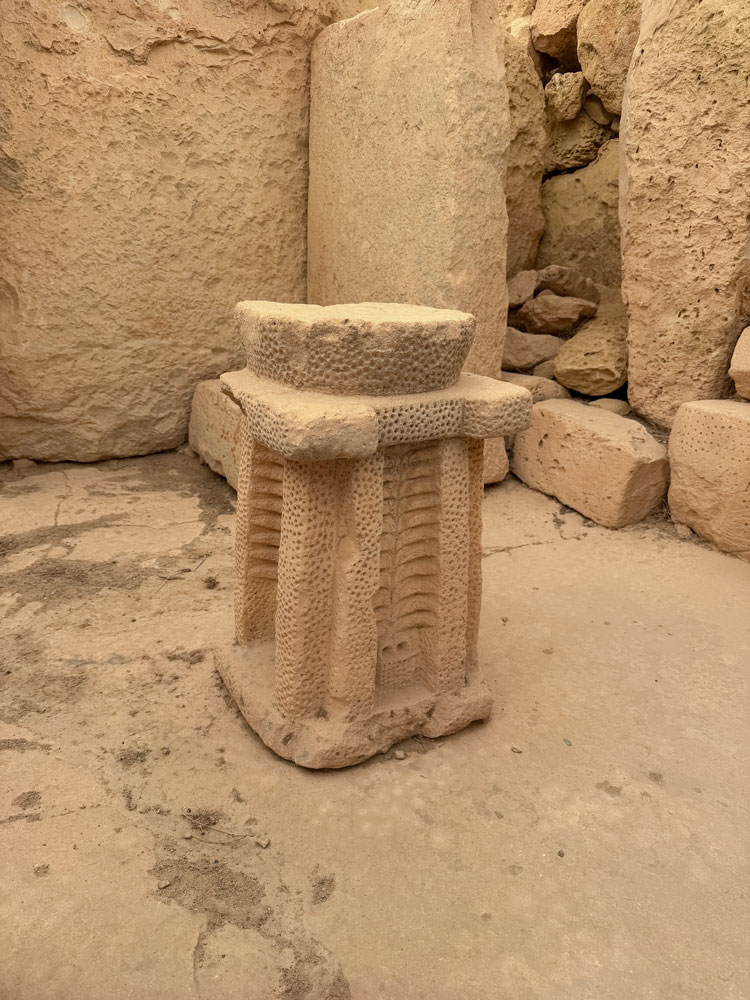
Some scenes from inside the structure.



Some flowers growing between the stones. As you can tell, I'm not all that interested in archaeological sites.

We left Hagar Qim and headed to Mdina. Mdina is an ancient city, first established about the 8th Century BC. I took this picture through the bus window as we were approaching. Mdina was built on a high point, generally in the center of Malta. The much larger city of Rabat has developed on the southwest side of Mdina.

Here's the gate where we will enter.

Judy waiting to enter.

And a close-up of the gate.

The main street is Triq il Villegaignon and we began walking down it. We stopped to look at the exterior of the Vilhena Palace. Note the Maltese cross in front of the entrance.

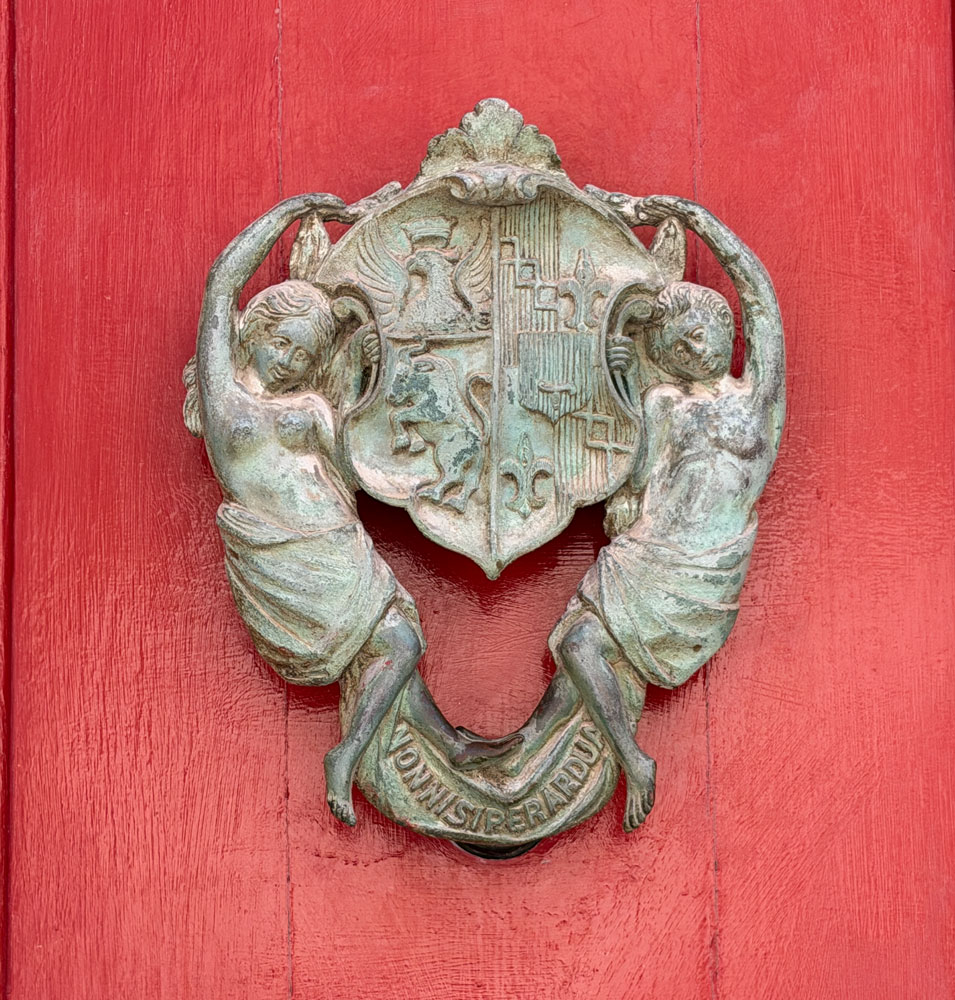
As we were walking down one of the streets, I noticed this elaborate, large "door knocker".

Here's another one.
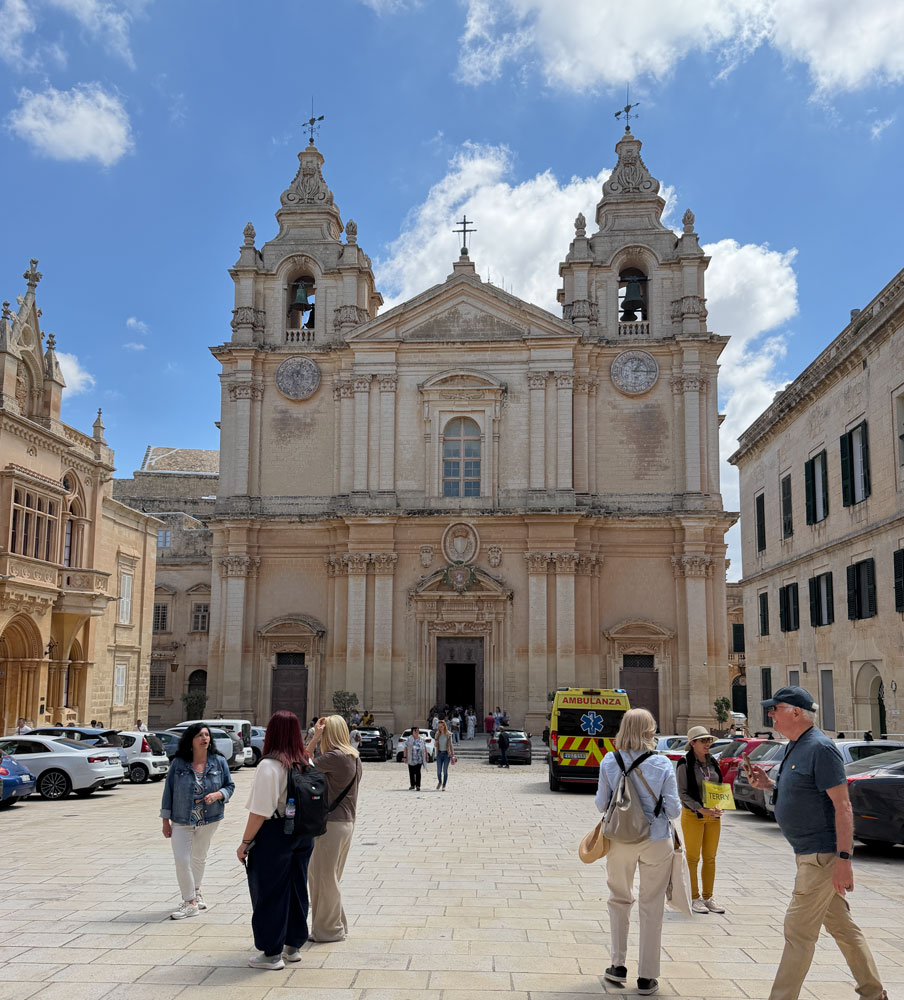
We walked down to St. Paul's Square where the Cathedral of St. Paul is located. We didn't go in.
There were a number of these horse drawn carriages giving tourist tours. The streets where the carriages go are fairly level so it's probably not hard work for the horses.

We continued down the main street to a viewpoint where we could look over a significant portion of Malta.

Here's a panoramic picture of the view from this point.

As we walked back from the viewing point, I ducked into the Annunciation Church.

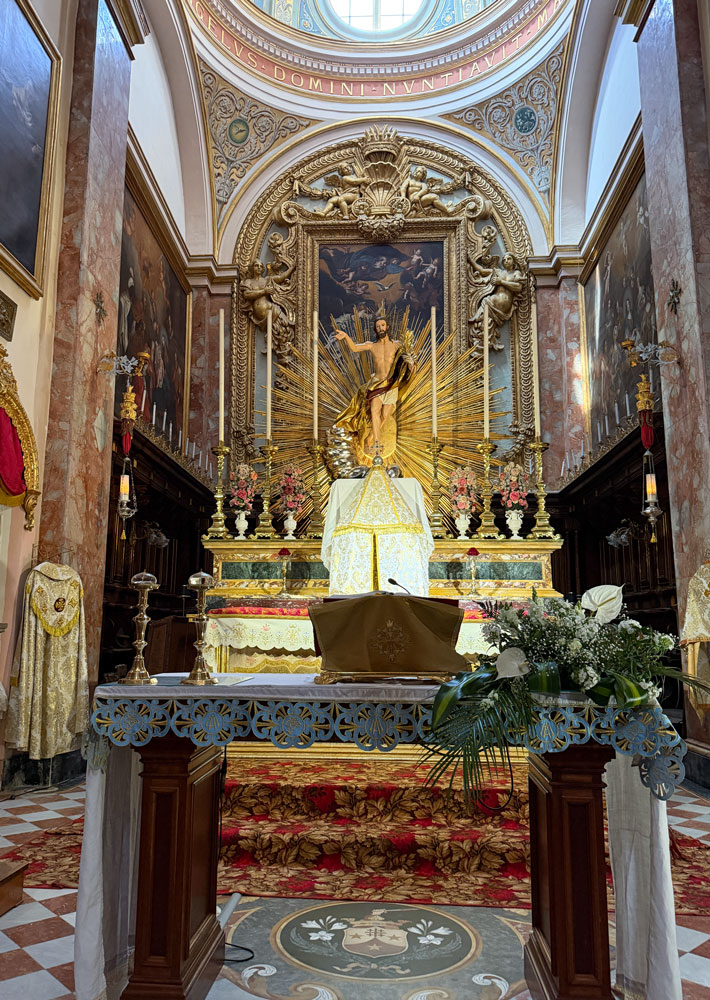
A closer view of the altar.
This statue is outside the church, at the corner of the church.

The group met at the square about noon and we went to the restaurant "AD 1530" for lunch.

The restaurant had set two long tables inside for us. Here's one.

One thing I found very interesting (being a woodworker) was the display of wooden hand planes on the wall.

It was a good, long lunch. We departed the restaurant about 2:25pm, boarded the bus, and headed to the ship, the Le Dumont d'Urville. We arrived about 3pm.
It's a small ship, just under 10,000 tons, 430 feet in length, with a capacity of 184 passengers, built in 2019. Our Tauck group is 150 people and there are no other guests on the ship.
Since the ship has capacity greater then the number of Tauck guests, I wonder if they gave some of the larger suites (such as the Owner's Suite) to Tauck guests who have been on a lot of tours. One couple had been on 60 Tauck tours. They do about five tours per year.
[Side note: The ship is named after Jean Dumont D'Urville, a French Explorer and naval officer in the early 19th Century. He was also a botanist and cartographer.]
Check-in was quick and easy. I couldn't get a picture of the whole ship, but did take a picture of the gangway.

Here's a picture of the ship, from the web. Our cabin is on the other side (the starboard side).

We went to our cabin, #615. The cabin is not huge, but certainly adequate. Everything is new and it's well thought out. I forgot to take pictures as soon as we arrived so the bed is messed up from having our suitcases on it. Here's the bed area.

And the other side of the cabin.

The Internet access is okay, not great but okay. It has blocked me from some sites and I've had to set up my smartphone as a hot spot to be able to reach them.
The bathroom has one sink and a walk-in shower. Its a very convenient shower, easy to use. The walk-in closet is large with lots of hanging space and lots of drawers for storage. It's really a nice ship and the staff proved to be excellent.
There's a coffee maker in the room.
Our cabin attendant, Jonna, came by to introduce herself.

A general meeting was scheduled for the theater where the captain and several of his staff welcomed us to the ship and covered some of the activities required, especially the drill.
Here's the captain, Thomas McCandless.

Then the Ponant liaison director, Axelle Lion, talked to us about the tours, and introduced the five Tauck Tour Directors.

I think I have the names in the right order: Axelle Lion, Stefana Chivoiu, Tanya Mylnarczyk, Tiziana Romano, Terry Portwood, and Andrea Meszardos.

Then it was time for the mandatory safety drill. We went back to our cabins and put on our life vest, then assembled in the Main Lounge.

Judy modeling the latest in float wear.

About 6:20pm the ship left the dock and sailed through the jetty to open sea.

A bit later we went to dinner and shared our table with a couple from Eugene, Oregon.
Then it was to bed. We're heading to Siracusca, Sicily.
+++++++++++++++++++++++++++++++++++++++++++++++++++++++++++
[Note: we were in Sicily in 2018 on a Tauck cruise. If you'd like to see information about more places in Sicily, go here either before continuing to the description of our present visit, or after you read about our present visit.]
+++++++++++++++++++++++++++++++++++++++++++++++++++++++++++
5/4/2026 (Monday) - We were up about 6:30am to prepare for our tour of Noto. We docked in Siracusca about 7:40am.
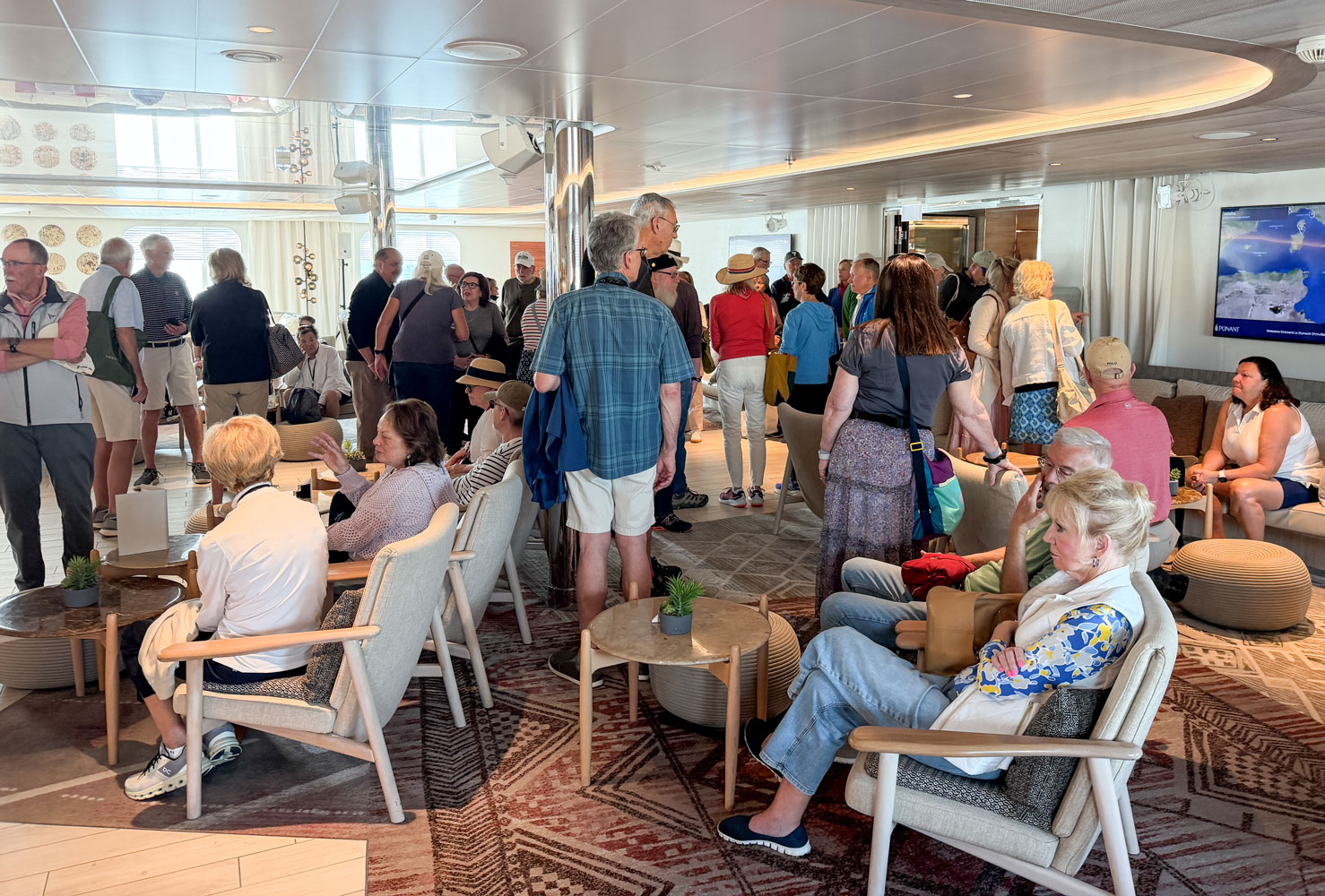
At 9:00am, after breakfast, we gathered in the lounge for our excursion.
It was a fairly short bus ride south to Noto - we arrived about 9:30. The walkway from the bus stop to the city was lined with small vendors. This guy was selling things made from olive wood. With all the olive trees in the area, I suppose he has good access to the wood. In the US, olive wood is a bit on the expensive side. I use it for decorative elements in some of the projects I make.

The entrance gate into the city.
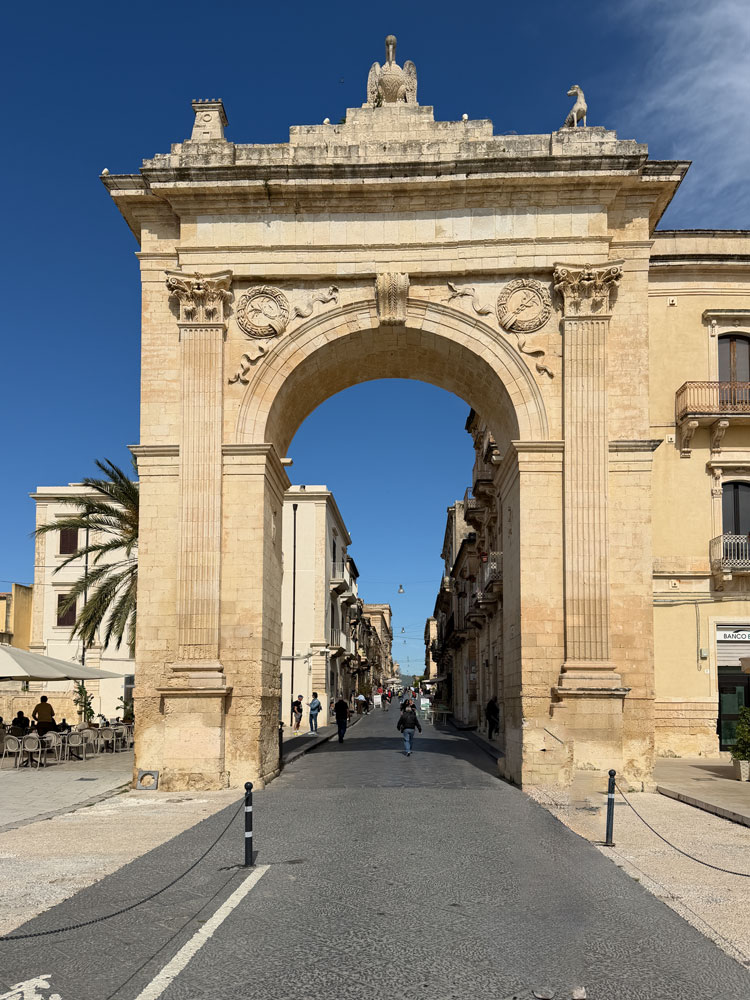
Noto was essentially destroyed by the 1693 earthquake and was rebuilt about 7 kilometers from the original site. Because of that, the streets are on a rectangular grid and many of the buildings have a similar design, having been built about the same time. Its predominantly in the Baroque style.
We walked down the main street to the Church of San Francesco all'Immacolata.

Close by was this beautifully restored Fiat 500, maybe around 1970.

We walked down to the Noto Cathedral.

Across the street was the Town Hall.

A World War I memorial. Italy was on the Allied side in WWI.

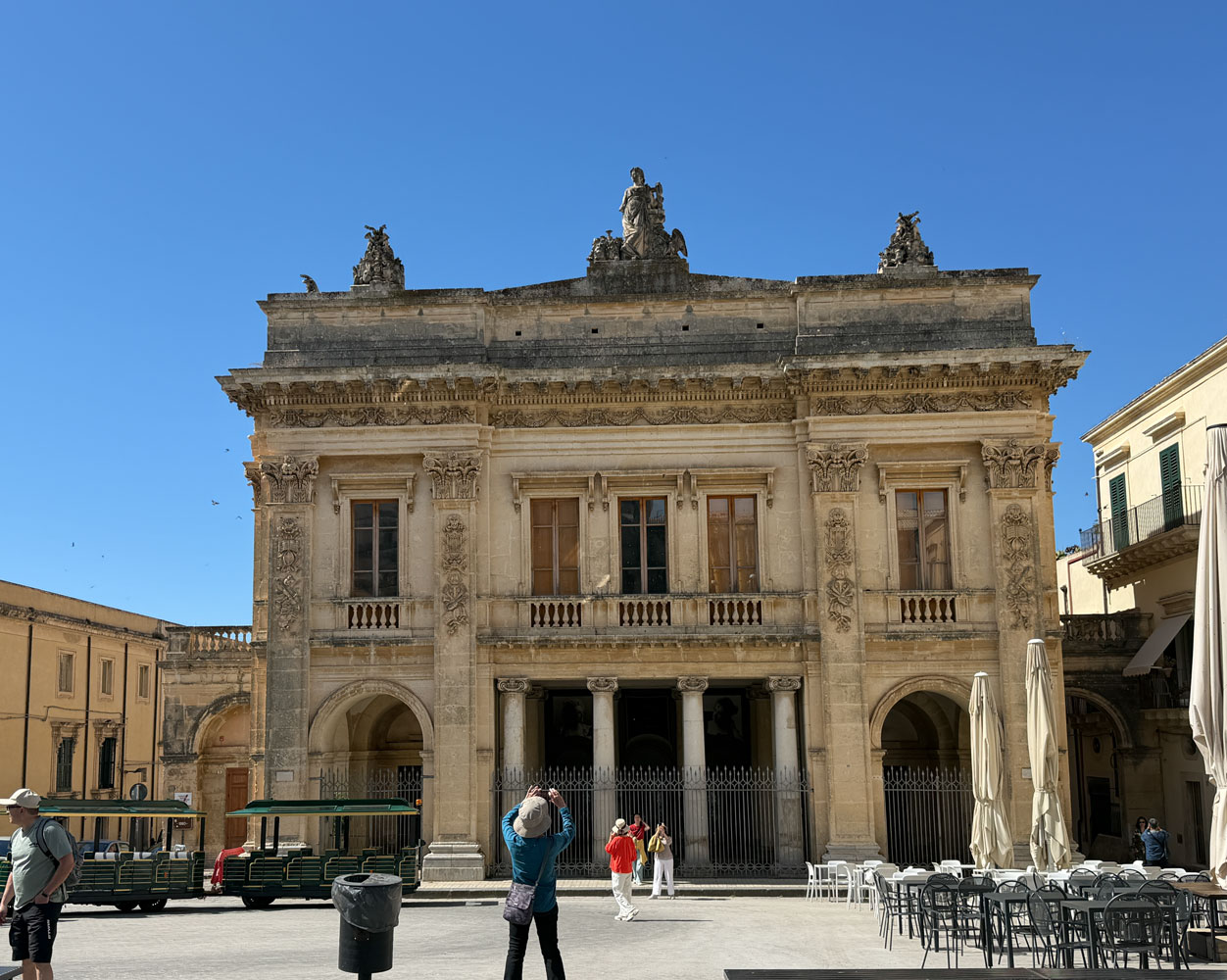
We then walked back to Via Nicolaci where the Infiorata celebration is held each year.

They decorate the street with flowers. I highly recommend you follow the link (Infiorata celebration) to see more about it. The guy who did that website did a really good job describing the celebration, and the town. It's really impressive.

We had some free time, so Judy and I went to a small shop and had a lemon granita and a latte. The granita is an Italian "slush", and is very popular.

After the free time the group walked up Via Nicolaci to Modica Di San Giovanni.

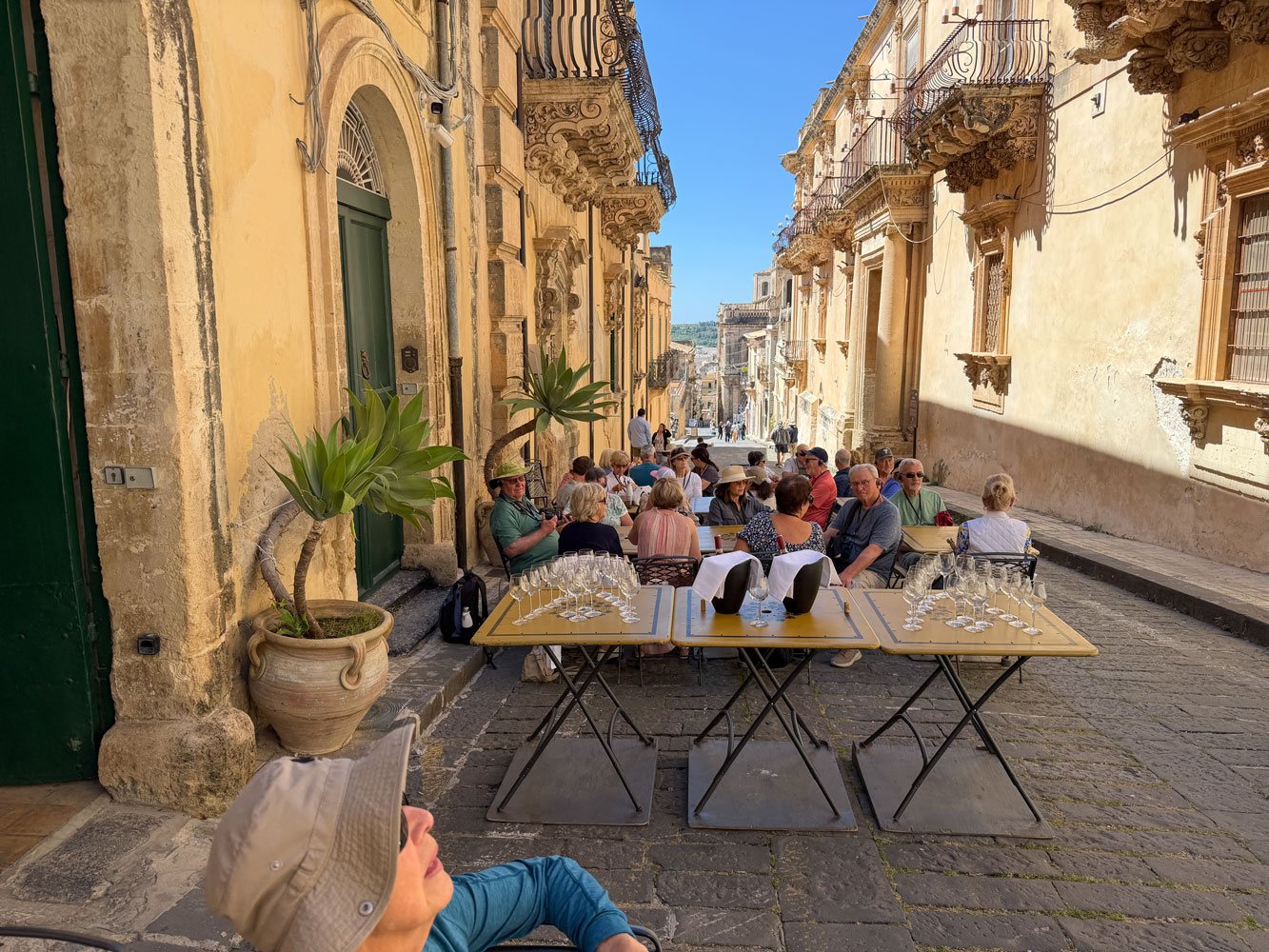
Via Nicolaci ends at a church, the Chiesa di Montevergine, not far from Modica Di San Giovanni. We didn't go in.

While we were sitting at the restaurant, a violinist started playing on the second floor balcony.

A closer view.

We were invited to enter and go to the second floor. We could see the dome of the church from the second floor doorway.

The owner gave us a talk about the history of the house, which had been in his family for several centuries, and his family. He is apparently the last in his line, but the house is now a museum.

Then we moved to the next room where they had laid out Italian delicacies.
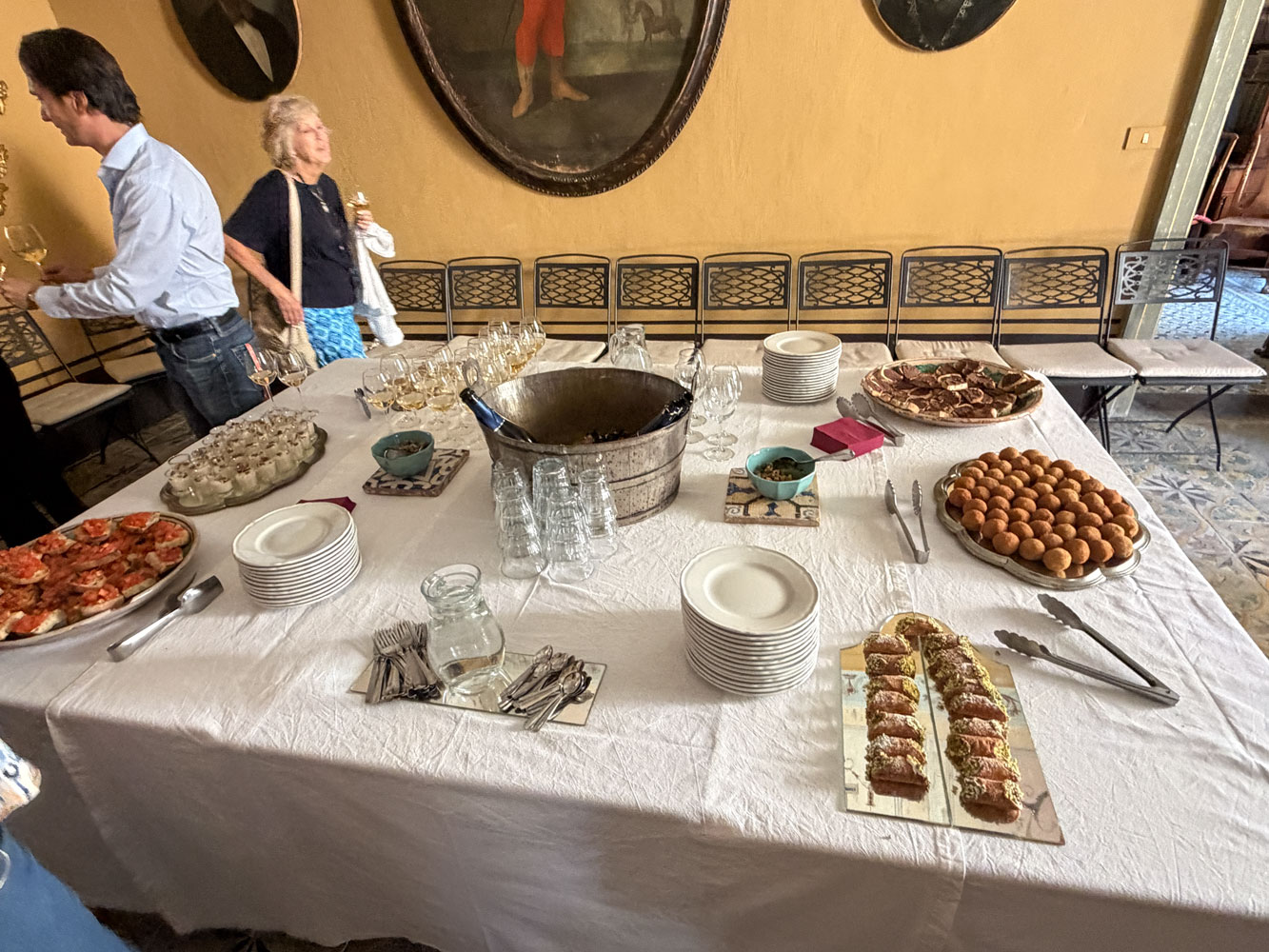
The violinist played for us, mostly Vivaldi, but a little Schindler's List thrown in.

Some of our group enjoying the violin music and the food.

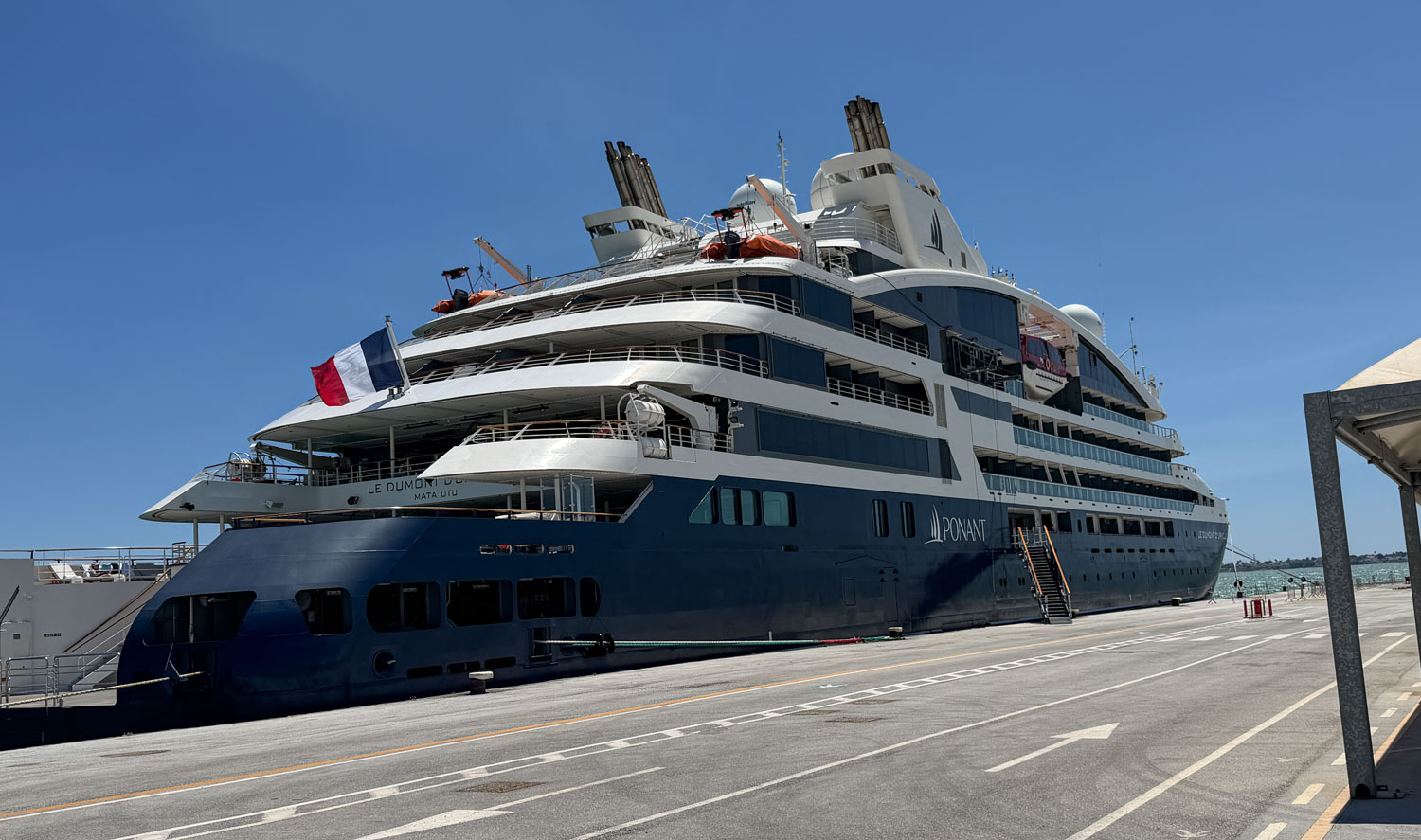
We left the restaurant about noon and got back to the ship about 1:30pm. Note the French flag flying on the stern.
Tonight is the Captain's Gala at 6pm, so we took things easy until it was time to go. Everyone was dressed in their best. Here are three people who were greeting us as we arrived. I assume the two women are part of the entertainment crew. We were never up late enough to see any of the shows.

The party was held on the back deck. Incidentally, Mata UTU is the capital city of Wallis and Futuna, an overseas collective of France. It's located in the Pacific Ocean, about 2,000 miles NNE of New Zealand and about 230 miles west of Samoa.

The captain introduced his staff. I can't identify each one, but the woman, second from the left is the medical officer, and the older guy, fourth from the left, is the engineering officer. The guy second from the right is, of course, the chef.

Then it was to dinner. There were only two options for dinner: A classic menu with steak, and a vegetarian menu. We chose the classic menu - it was a good dinner.
Then it was to bed. Tonight we sail to Naxos, close to Taormina. We'll have to tender in at Naxos. Our excursion is to Mt. Etna.
+++++++++++++++++++++++++++++++++++++++++++++++++++++++++++
5/5/2026 (Tuesday) - We woke up to an extraordinary sunrise about 6am this morning.


Once the ship was anchored, they lowered the starboard tender (very close to our cabin)

We could see Mount Etna from our cabin, covered in snow.

We had breakfast and then met the group in the lounge at 8:00am.
A view of the inside of the tender. It took less than 20 minutes to the dock.

We boarded a bus and drove towards Mt. Etna. Once we got off the main road, the road towards the mountain was narrow and winding. We arrived at the base of the mountain, where there were various businesses, about 9:40.
It took a short while for the TDs to get the lift tickets, and we boarded the cable car about 10:15. The lower station is at about 6,000 feet.

The car doesn't fully stop - but it moves fairly slowly as you get into it.

A view as we were going up. You're never very high off the ground - the cable car is there just to take you up. It doesn't have to span any depressions or valleys. The trip to the end of the cable car route took about 15 minutes.

The altitude at the top of the cable car system is about 8,000 feet. We transferred to a Mercedes-Benz expedition vehicle. These can hold 34 passengers.

The road to the top is plowed through the snow. At times, the snow was much higher than the vehicle.

It's about a 15 minute ride to the top of Etna, or at least, the place from which you have to walk further. The path in the center of this picture is the beginning of the walking path. We were at 9,328 feet. The top of Etna is about 11,000 feet. We arrived at our unloading area about 11:00am. It was not all that cold and it wasn't windy. I expect it can get pretty cold up here, especially in winter.

At our age, we decided we'd skip the walk. Talking later with a few of the people who went on the walk, and who commented on how slippery the path was, we were convinced we had made the right decision. As Clint Eastwood said in the movie, "Magnum Force", "A man's got to know his limitations."
We did take some pictures from the area where the vehicles stopped. Here's a picture of the parking area, with the peak of Etna in the background. You can see some of the people walking the trail.
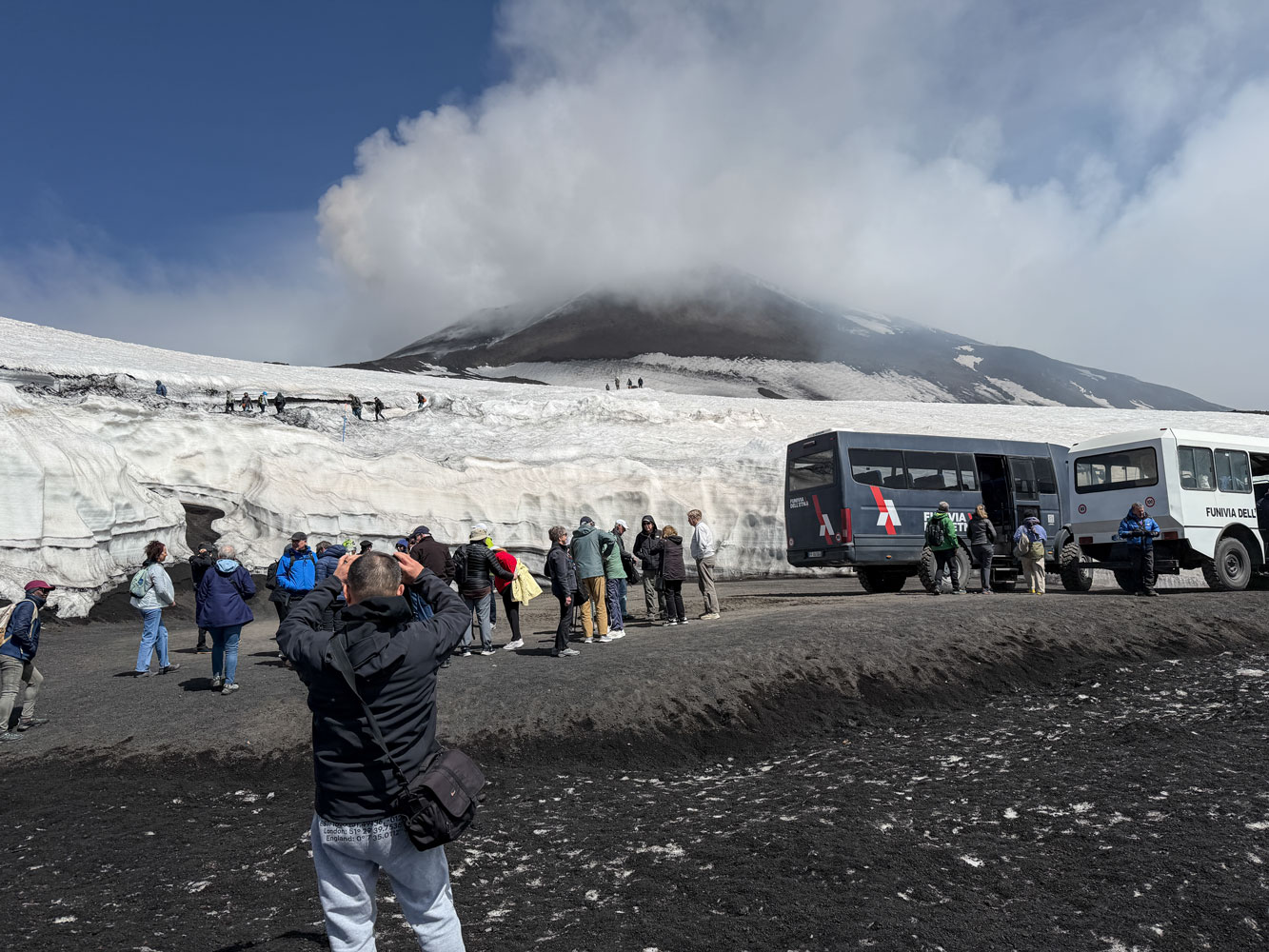
A picture of Judy with the peak in the background, just to show that we were there.

After a bit, we caught the next vehicle down to the area at the top of the cable car. This is not a great picture, taken through the windshield, but it shows another vehicle coming up, and the snow piled on the side of the trail.

When we got back to the building at the top of the cable car, about 11:25am, we waited for about an hour for the rest of the tour - the ones who went on the walk - to arrive, which they did about 12:30.
But from there, things went sideways. They shut down the cable car and started using the expedition vehicles to take people to the bottom of the cable car route. The problem was that there weren't enough expedition vehicles to take people from the top of Etna to the cable car station, and to take people from the top cable car station to the bottom cable car station. The cable car system had been undergoing repairs after damage from the most recent "burp" of the volcano, and its operation was sporadic. We waited for about an hour in line to board one of the expedition vehicles. We got down to the lower cable car station about 2:00pm, and then took the regular bus to this restaurant.

The restaurant was on the second floor and was obviously intended for tour groups. Here's our group at lunch.

They offered a typical Sicilian lunch beginning with a nice antipasto, followed by a main course of breaded chicken and roasted potatoes, finished with dessert. Local red and white Sicilian wine was on the table. We finished lunch about 3pm, and then boarded the bus back to the ship, arriving at the dock at 4:30pm, where our trusty tender was waiting for us.

The ship raised anchor shortly after we got back and we headed to the Strait of Messina. Judy and I went to the forward deck to witness the passage, but it was getting dark by the time we got there, about 8pm.
I tried to take a few pictures but with the fading light I didn't get much.
Here's the Italian side of the strait.

And the Sicilian side.

The large towers in the pictures were used in the past to carry power lines to supply electricity to Sicily. - they were built in 1955 and are known as the Pylons of Messina. In 1985 Italy switched to underwater cables, and the cables between these two pylons were removed in 1994, but the towers were left standing (for some reason). In fact, they are listed as protected landmarks.
[Side note: In 2006 the staircase to the top of the Sicilian Pylon was briefly opened for public access. The pylon is 232 meters tall (761 feet). There are approximately 1,250 steps. It is now closed to public access. There's no way I could ascend that pylon. I'd probably go up about 50 feet and then come back down:-)]
Finally, a screen shot of Google maps showing us clearing the strait. The strait is about 2 miles wide at this point and has some strong currents.

There is a proposal to build a suspension bridge across the strait but so far it has not been funded. The people who live on the Sicily side seem to be very opposed to the plan. It would probably be partially funded by EU funds, and there is some opposition to it from other member nations as well.
Judy and I went to the back deck restaurant where we each had a hamburger. From the back deck we could see the outline of Etna with lights at the top. Etna had greeted us in the morning, and said "goodbye" as we left.
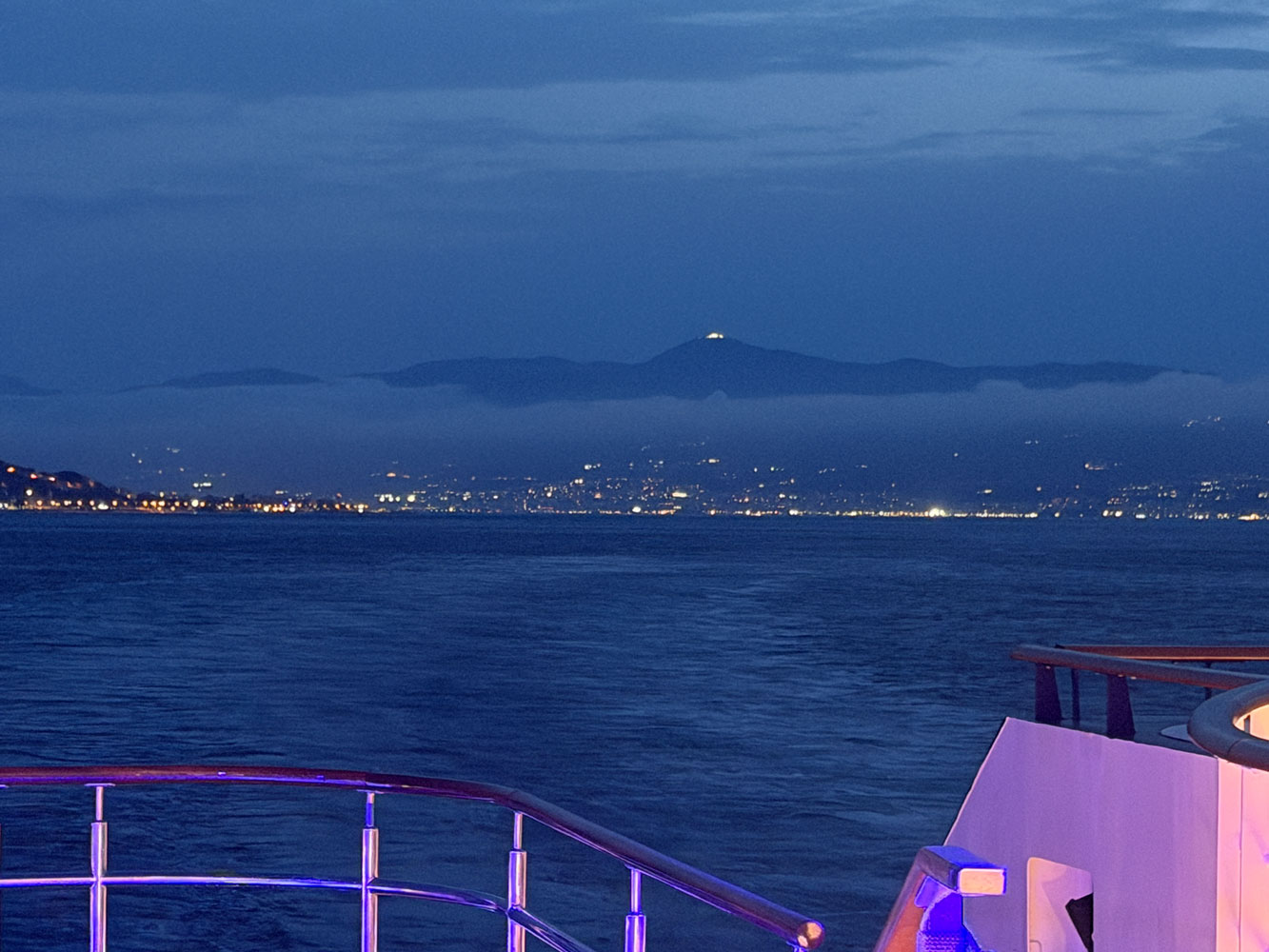
That was our day - we went back to the cabin and to bed. Tomorrow we arrive at Palermo.
+++++++++++++++++++++++++++++++++++++++++++++++++++++++++++
5/6/2026 (Wednesday) - We were up early this morning, before the ship reached Palermo. The ship docked at the Palermo Cruise Ship Terminal about 7:30am. We boarded a bus about 8:30am for a "Walking tour of Palermo".
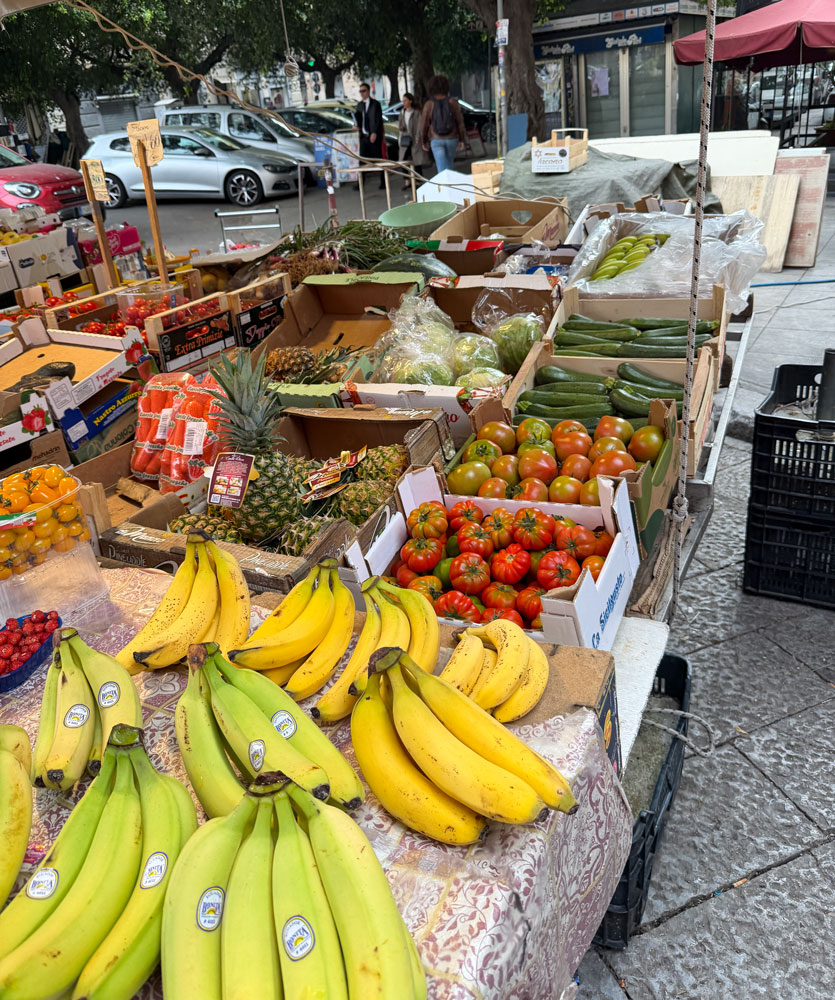
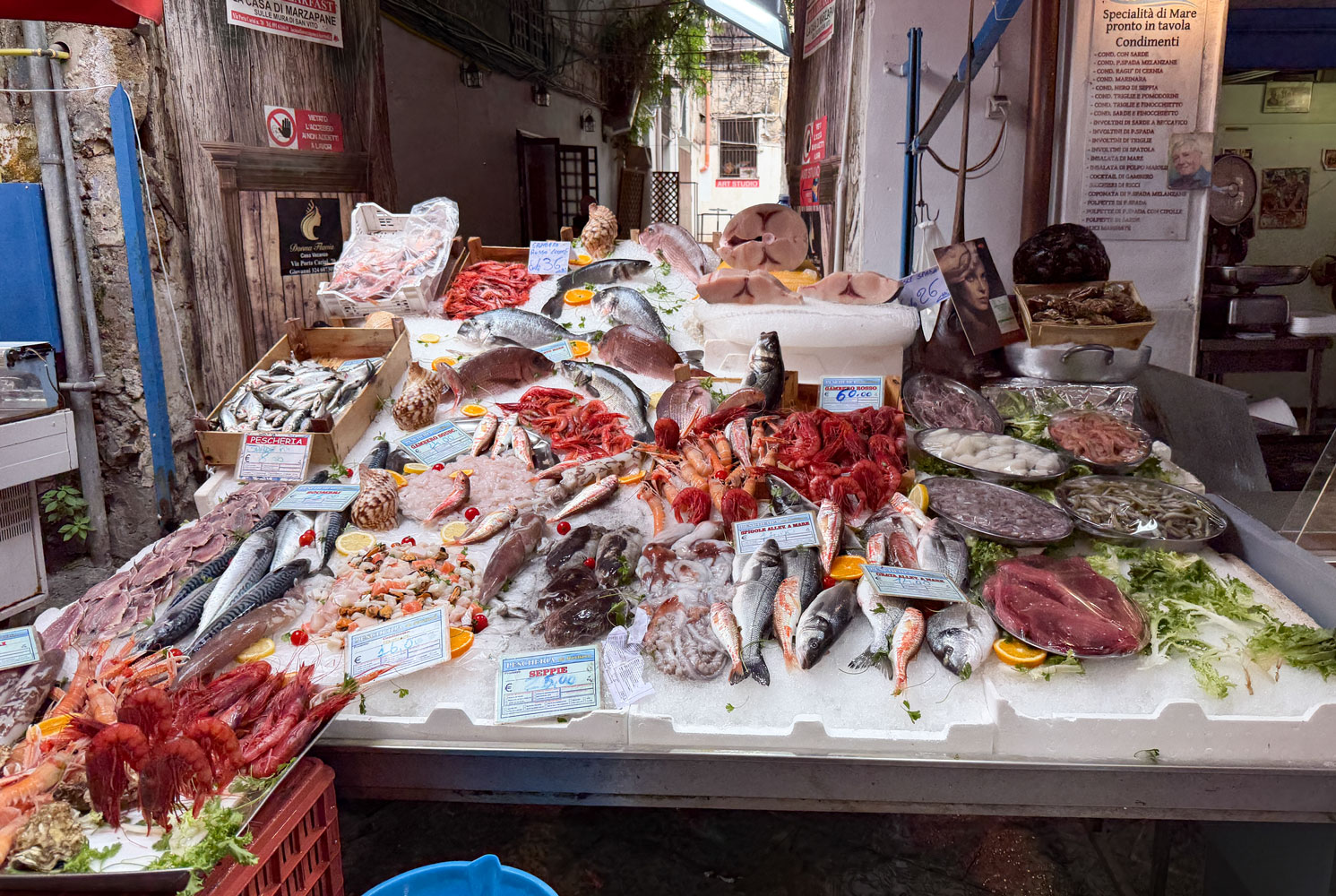
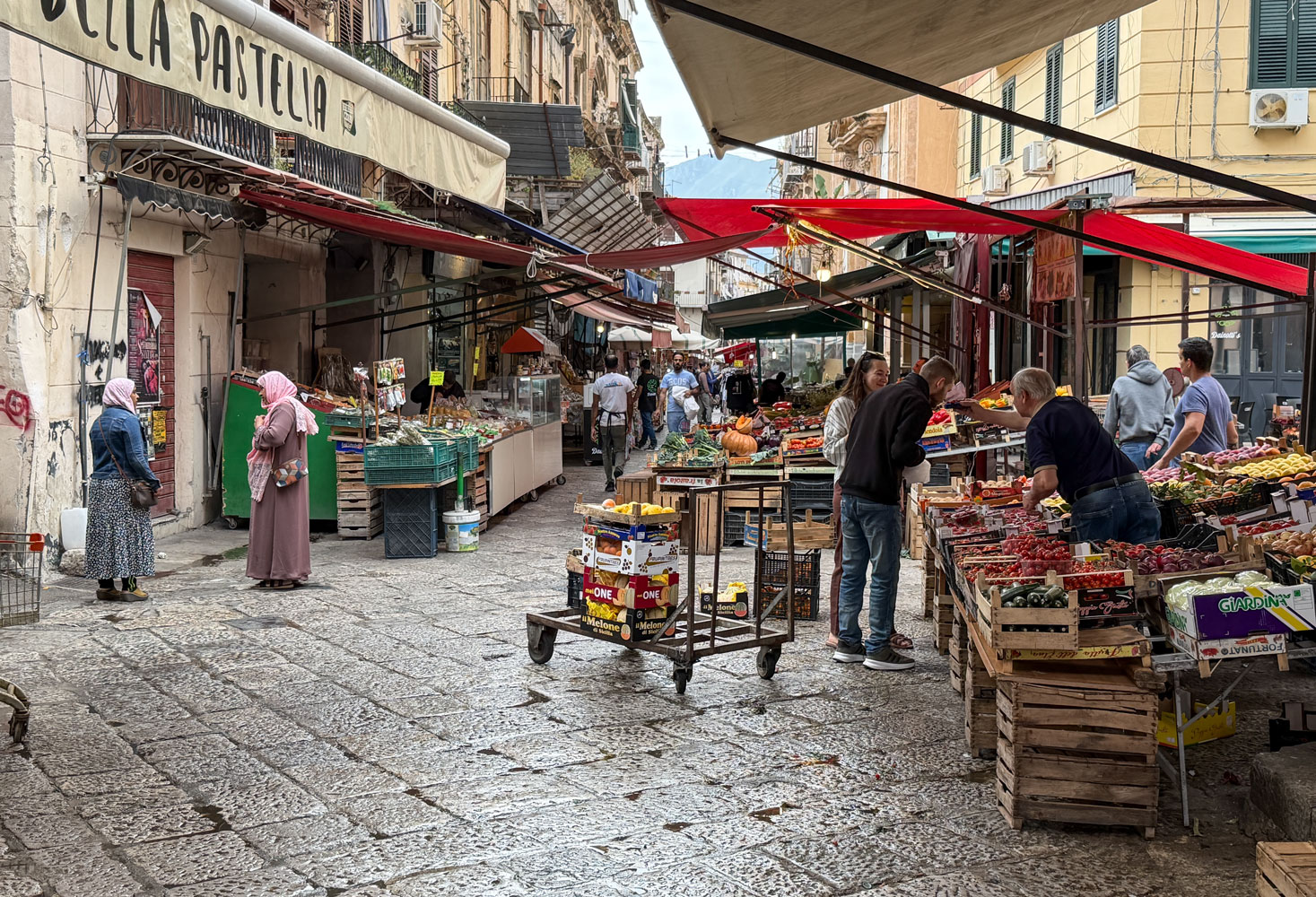
The first place we went to was the Mercato del Capo, the main outdoor market in Palermo.

There were vegetables.
And a number of fish stands.


One last picture down the street of vendors.
Then we took the bus to the area of the Palazzo Valguarnera-Gangi. It was originally owned and developed by the Valguarnera family but is now owned by the Gangi family. We arrived there about 9:30.

We were not allowed to take pictures inside the palazzo. Overall, it was a long boring visit. We went from room to room while the guide nattered on about the furniture, paintings and other bric-a-brac in the house. One of the other men on the tour said to me, "I signed up for the wrong excursion."
We didn't finish the tour of the palazzo until about 11:00am, an hour and a half after arriving. Instead of listing it as a tour, they should have listed it as a torture.
As we walked away from the palazzo, I took this picture of the second story plaza area of the palazzo.

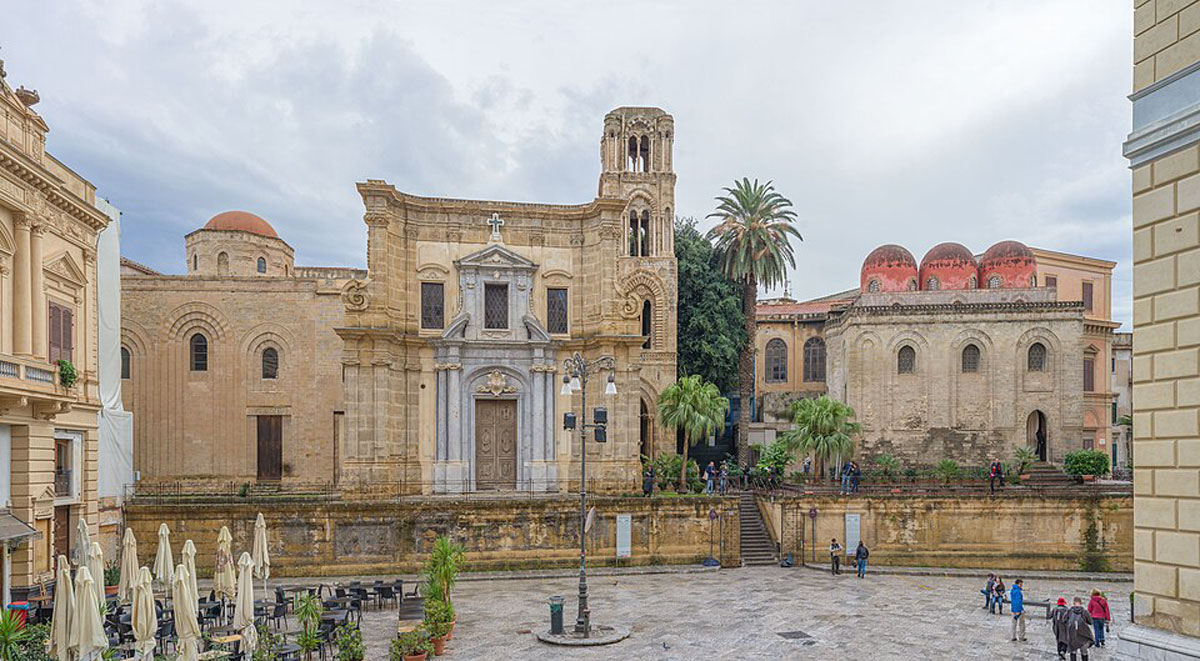
From here we walked to Bellini Square where several churches are located. The two shown in the picture are the Church of the Martorana, and the Church of San Cataldo in Palermo. On the opposite side of the square is the Church of Santa Caterina, part of a Dominican convent for nuns. The Dominicans are a Catholic mendicant order. The have an outreach facility on the square and I saw poor people clustered there to receive medical service. Many of their clients were Muslim (women wearing the hijab, some with children). An encouraging example of cross-faith assistance.
We went into the Church of Santa Caterina. My reaction when entering the church was "Wow".
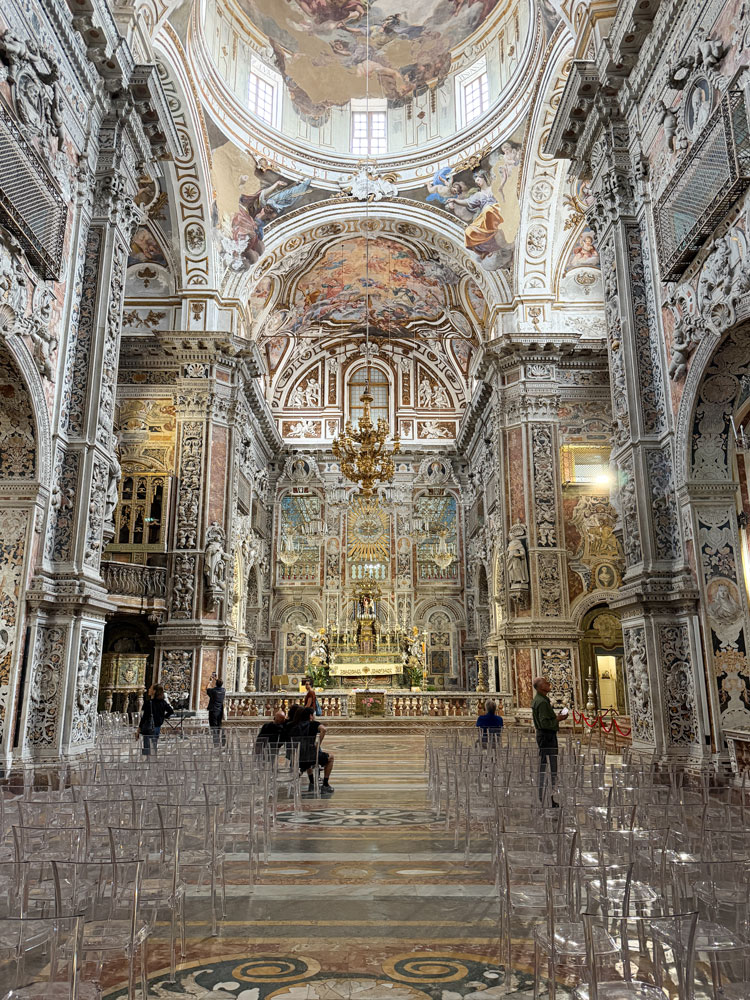
All Catholic nuns take vows of poverty, chastity, and obedience, but the Dominicans, being a mendicant order, are known for renouncing ownership of goods and relying on work, begging and donations for their support (read the article pointed to by the "medicant order" link). But this church is something else - it is opulent. (side note: priests only take vows of chastity and obedience. They do not take a vow of poverty.)
Paul Schurch (a professional woodworker) worked in Europe repairing church organs when he was a young man. He told me a story about how he repaired an organ for a church and when he presented a bill for the work, the priest tried to refuse to pay, saying that he thought Paul was doing the work for God. Paul told me, "That's when I learned the value of a good contract."
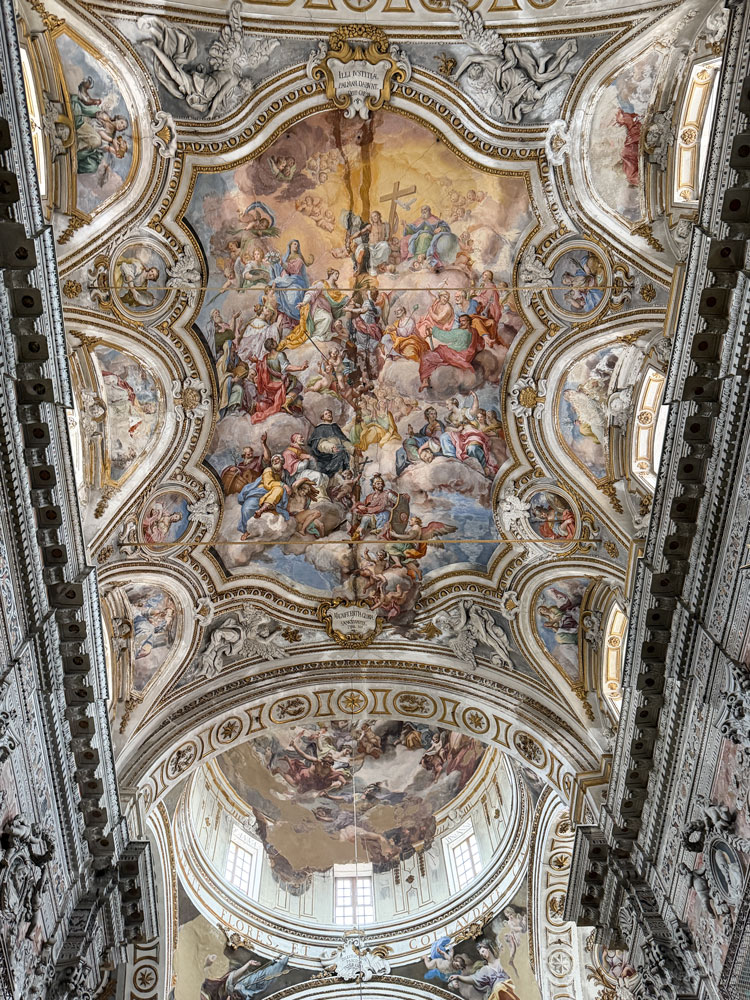
Part of the ceiling.
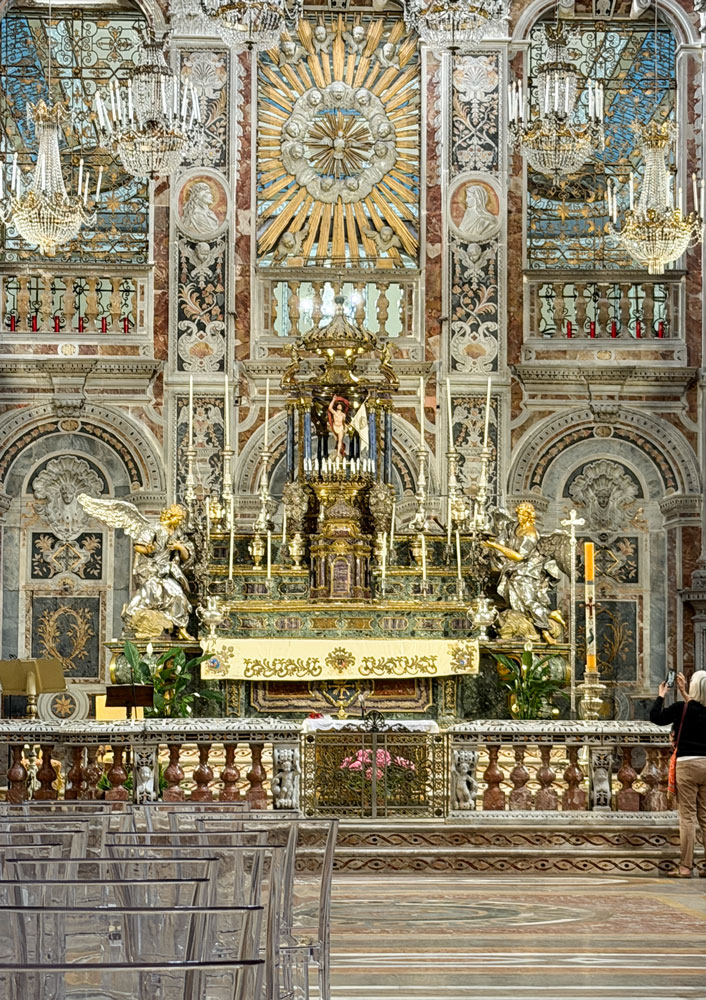
A closer view of the altar area.
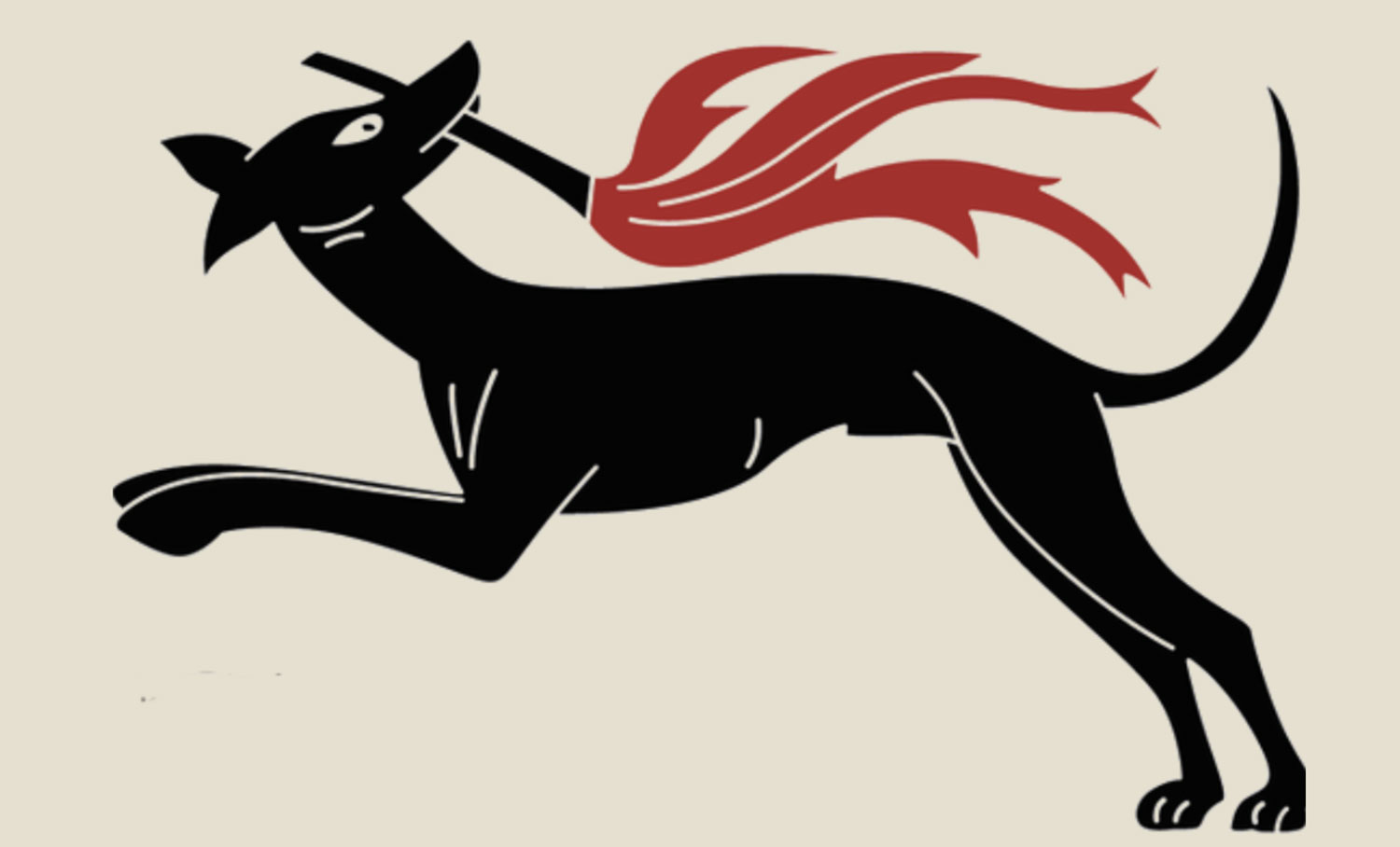
Set in the floor is this image of a dog with a torch in his mouth. This is the symbol of the Dominican Order, "The dog that lights the way." St. Dominic's mother, Blessed Jane of Aza (also known as Joan of Aza), dreamed of the dog carrying a torch when she was pregnant with Dominic. She interpreted it that her son would become a great preacher who would "set the world on fire."
In Latin, the name of the order is "Dominicanus" which can be separated into "Domini Canus" which means "Dogs of the Lord" (or "Dogs of God" - that's almost a palindrome), barkers of the faith.

Here's the "offical" dog logo, from the Dominican website.
A statue of Mary.

[Another side note: Nuns live by the Christian canonical hours for daily prayer: Matins, Lauds, Prime, Terce, Sext (noon), Nones, Vespers, and Compline, same as monks.]
Next we walked to Quatro Canti, formed by the intersection of Via Maqueda and Corso Vittorio Emanuele, arriving there about 11:30am. We were given free time to browse the area, meeting again at 12:30.
Judy and I went to a small cannoli/coffee shop to have one of each (a cannoli and a coffee). We were joined there by Fran and Jeff from NJ and had a wonderful time enjoying the food and talking.
Martin and Tami from WA joined us soon after. Dick and Mary from Houston were sitting at the next table and Judy had a nice time talking with them.
Our guide had explained that Sicilians loved to sit and people-watch, and we felt right at home. No one is rushed from a restaurant.
I should have taken a picture of the group, but sometimes I become a tourist instead of a photographer.

As we were leaving the square, there was a violinist busking in the square, playing familiar music, such as the theme from "The Godfather." I gave him our last few Euro coins.

Then we boarded the bus and returned to the ship about 1pm. We have the afternoon off and I used it to work on this blog.
At 5:45 we had the briefing on our stop in Sardinia. The crew had set up an antipasto and drink station on the back deck and we went there after the briefing but got involved in conversation with Joan, Phil and Colin, and never sampled the antipasto.
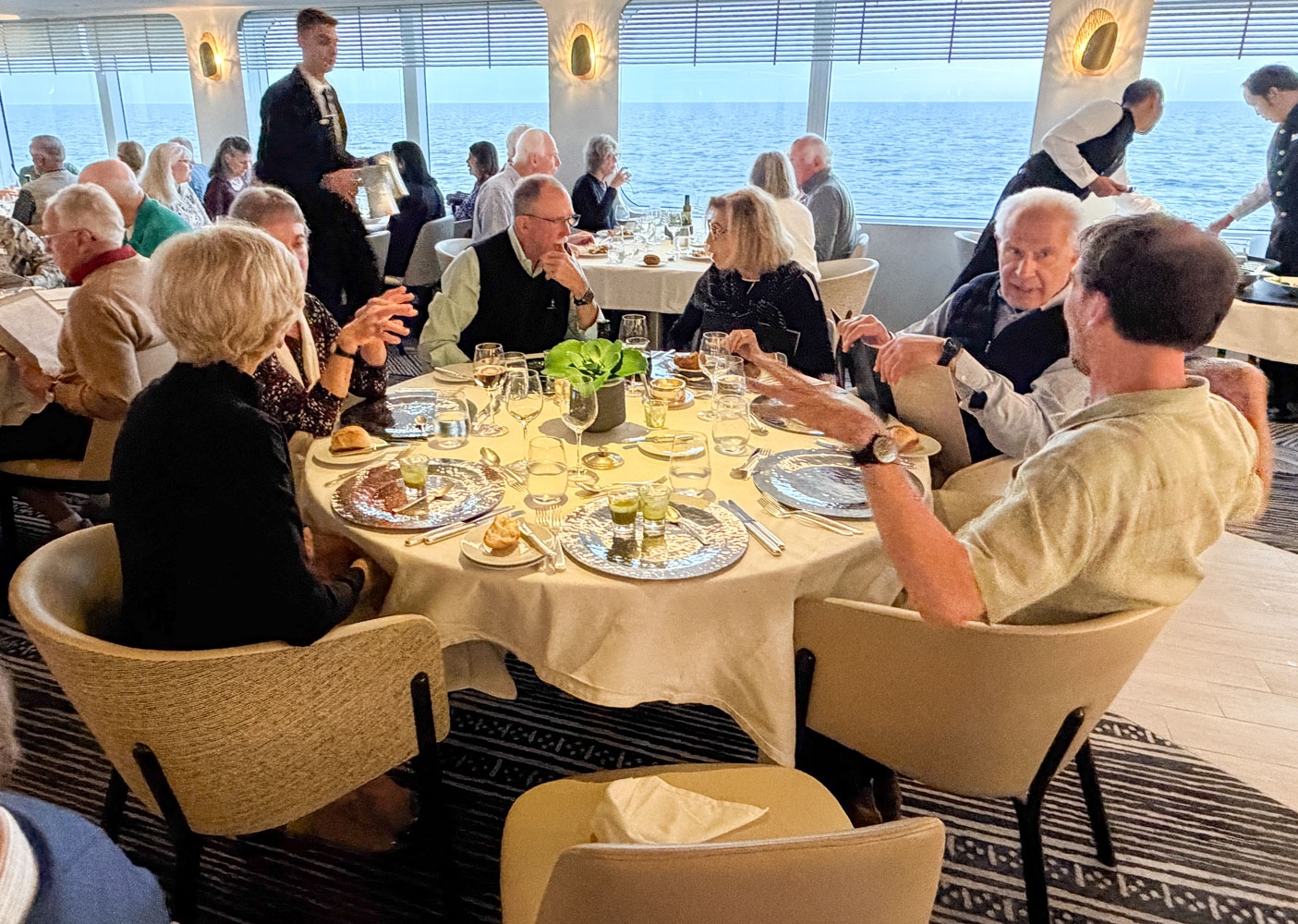
About 7pm the five of us went to the restaurant and Martin and Tami joined us after we had been seated. The food was good, but the conversation was better. It was a good evening.
Here's a picture. Starting from the left are Joan, Judy, Phil, Tami, Martin, and Colin.
About 9pm it was time for bed - the crew was shutting the restaurant down.
We don't reach Olbia until about noon tomorrow so we can sleep in.
+++++++++++++++++++++++++++++++++++++++++++++++++++++++++++
5/7/2026 (Thursday) - Although we don't have anything scheduled for this morning, we woke up about 6:30am. I went walking around the ship and the sea was empty "Alone, alone, all, all alone, alone on a wide, wide sea!" (from "The Rime of the Ancient Mariner, by Samuel Taylor Coleridge.)
During my wandering, I ran into Bill and Jane (from the Boston area) and we had a nice chat.
We arrived in Olbia about 12:30pm, right on schedule. Judy and I had a light lunch and met the group in the lounge at 1:45, then proceeded to the bus.

I'm jumping ahead right now, but this excursion turned out to be mostly a "shopping" excursion. I'll explain as we go along. [Update: I talked with some guests who took the boat ride to the island and they spoke very positively about it. So just avoid the "shopping excursion" that we were on.]
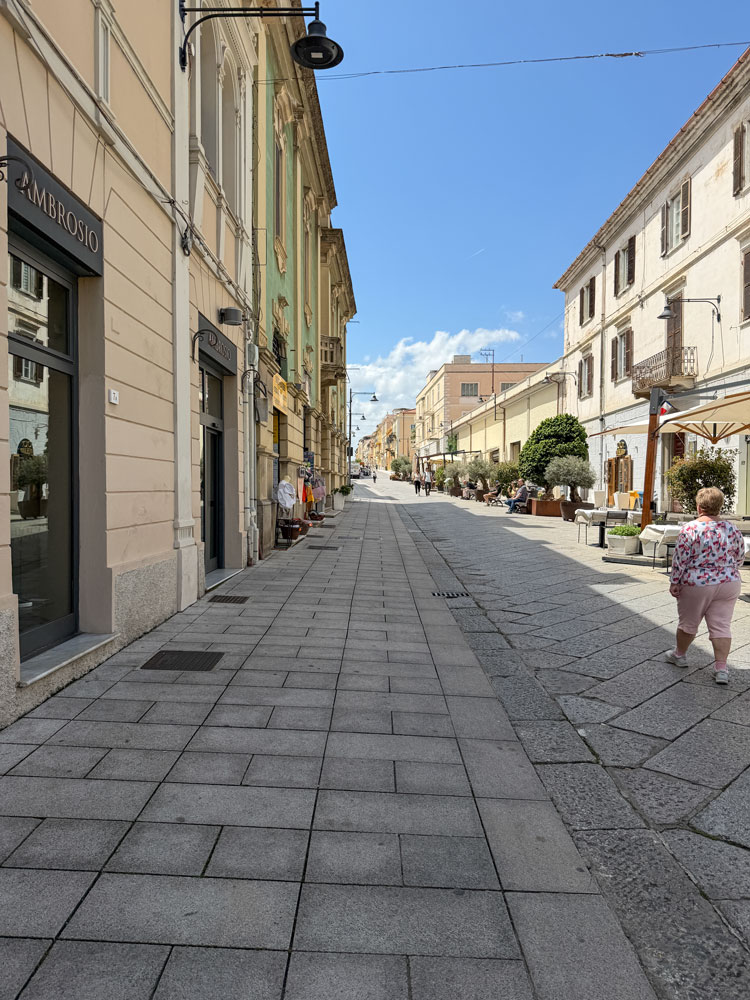
The bus only had to drive a short distance to a parking lot and then we walked into the old town.
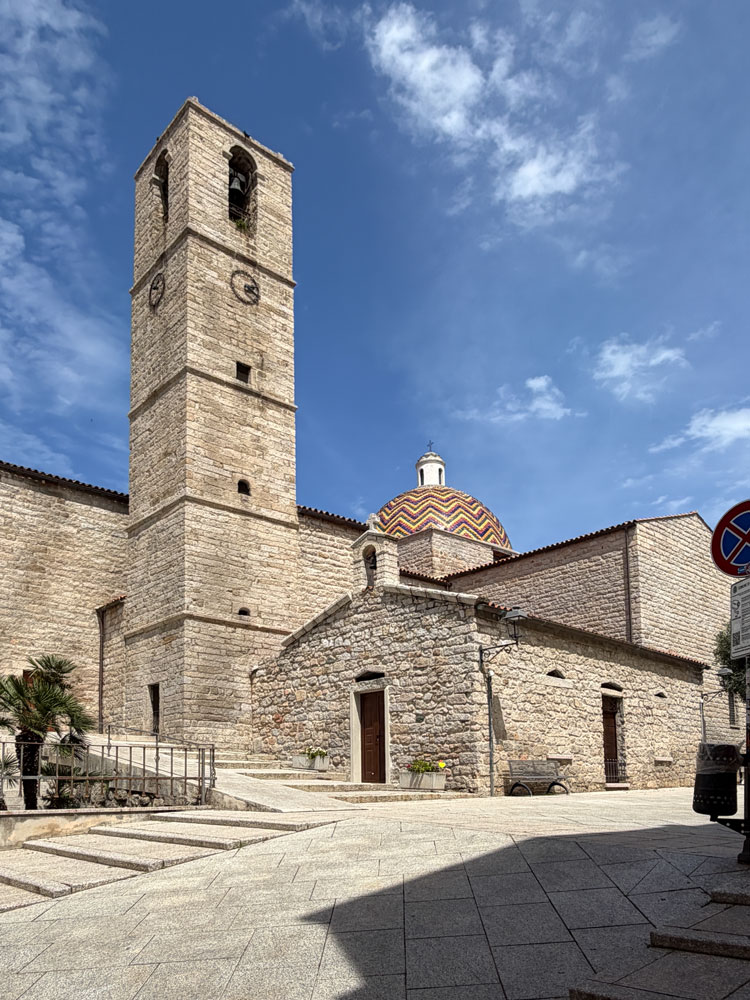
We went to Plazza Santa Croce where the Church of San Palo is located. We didn't go in, just observed it from outside.
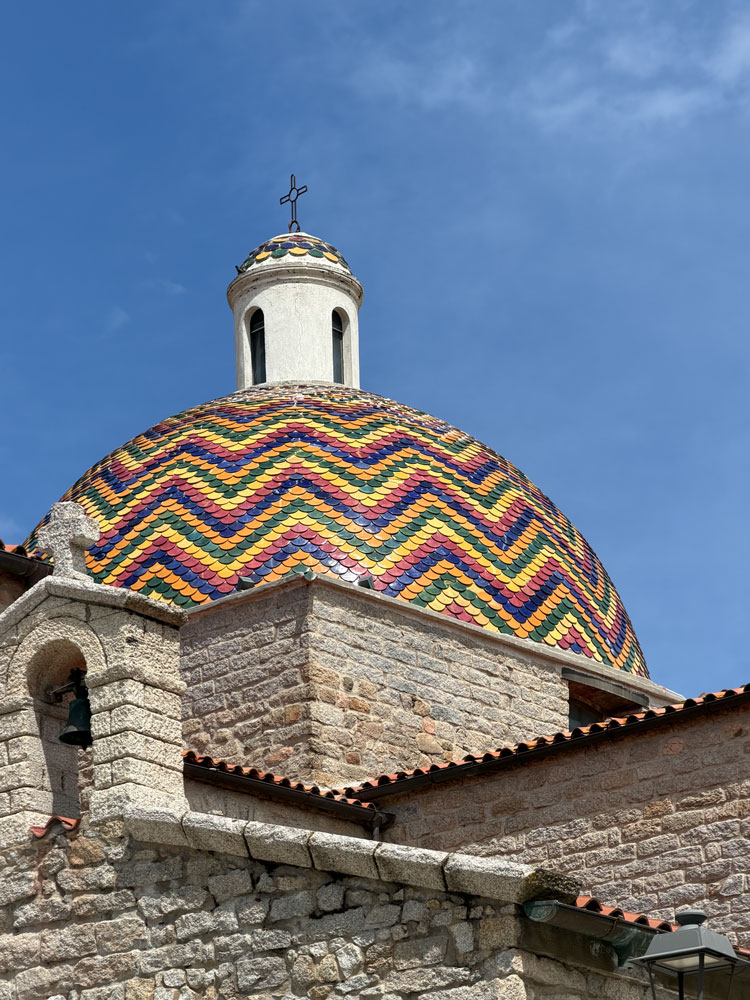
A closer view of the multicolored dome.
Then we walked a block further to a square, arriving there a bit before 2:30pm. We were told that we had "free time" until 3pm.

Judy and I wandered about the town but there wasn't much of interest. Then the group walked back to the bus.
The bus took us on a "scenic" ride along the coast road to San Pantaleo.

We finally arrived at San Pantaleo at 4:10pm. We walked to the old town and Piazza Vittorio Emanuele.
There's a small church there, the Church of San Pantaleo, pictured here.

A view inside the church. There's a woman mopping the floor in front of the altar, and she didn't want us to walk in and slip.

Included in the excursion was a refreshment at Cafe Nina on the Piazza.

It was then about 4:30pm and we were told that we had "free time" until 6:00pm (an hour and a half!). Judy and I wandered about the town to see the small artisan shops.
A 6:00pm we gathered and walked back to the bus and were driven to the Sacred Well of Sa Testa. The well goes back to the 12th to 11th centuries BC. We arrived there about 6:40pm. It was built by an ancient civilization that left no history.
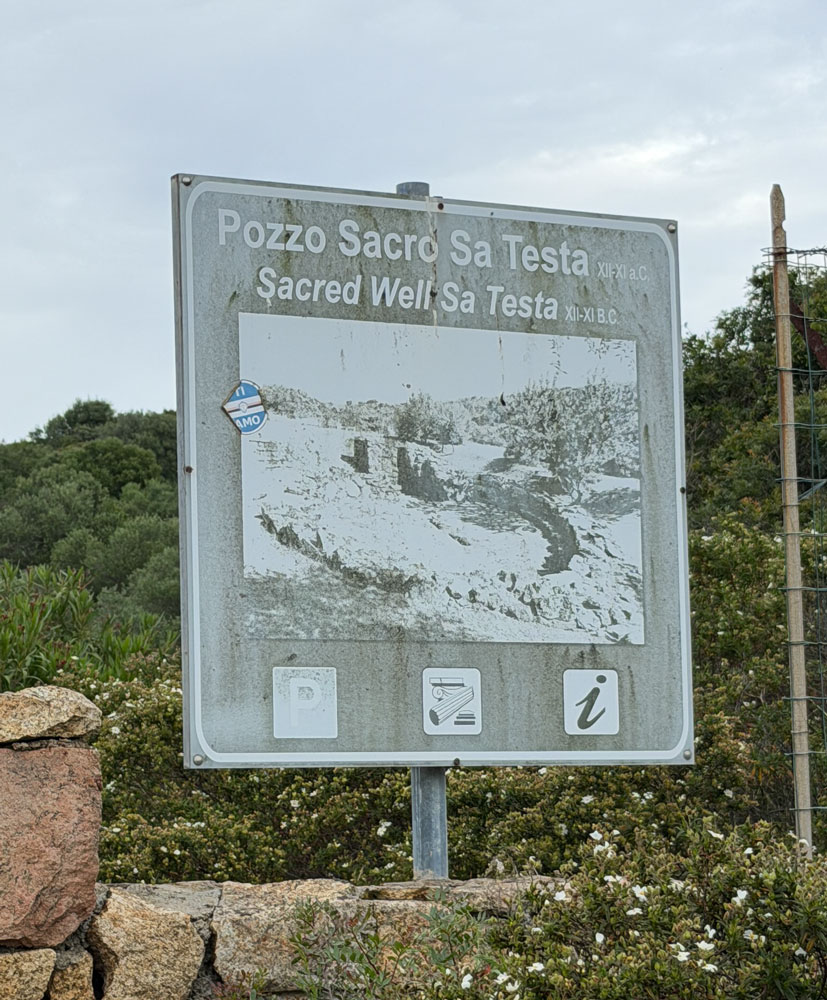
Here's some information about the Sacred Well from one of the information signs at the site.

Here's the well.

We departed the well about 7pm and the bus took us back to the ship. Judy and I had a light dinner and that was the end of our day. Tomorrow we go to Bonifacio, Corsica.