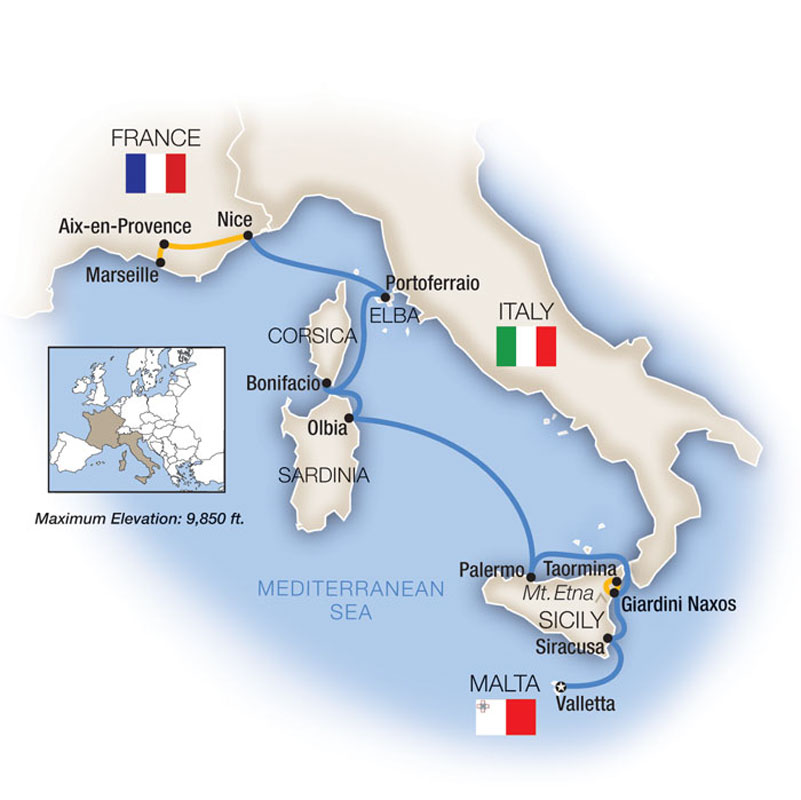
Treasures of the Mediterranean Isles
April 28 to May 12, 2026
Mike and Judy Henderson
We've visited many places in the Mediterranean but this cruise offered some places we haven't seen, especially Sardinia, Corsica and Elba, and it takes us back to Malta where we only had very limited time during a previous cruise. We had also visited Aix-en-Provence before - way back in 2014.
+++++++++++++++++++++++++++++++++++++++++++++++++++++++++++
4/28/2026 (Tuesday) - We leave today and arrive in Malta on the 29th. Then, on the 30th, we have a private tour of Malta prior to the Tauck tour.
Our flight is on a Lufthansa 747 from LAX to Frankfurt, and then on a smaller plane to Malta. We'll be in the upper deck of the 747. The 747 is an older aircraft these days and I'm concerned about the quality of the business class seating. There's been a lot of evolution in business class seating in the past ten to fifteen years.
******************************************************
Malta has an interesting history, going back many centuries. In 1522, the Knights of St John, also known as the Knights Hospitaller (formed in Jerusalem in 1048 to care for pilgrims to the Holy Land, about 50 years before the First Crusade.), were driven out of the Island of Rhodes, where they had been since 1309, by the Ottoman Empire. They moved to Malta, which was under the control of Charles V of Spain. The Knights were required to send one Maltese falcon each year to the Viceroy of Sicily as a symbol of their submission to the king's authority.
In 1565, Suleiman the Magnificent, the Ottoman Sultan, ordered his military to conquer Malta in order to have a base from which to extend his conquest into the western Mediterranean. Malta is only about 50 miles from Sicily - his plan was to use Malta as a base to attack Sicily, and then Italy.
The Knights were led by their grandmaster, Jean Parisot de Valette (the capital city of Valletta is named after him). The Ottomans attacked on May 18, 1565 which led to bitter fighting, with no quarter given by either side. The Ottomans broke off the fight on September 8, 1565. The war lasted three months and three weeks and was known as the Great Siege of Malta.
For those interested in learning more about the siege, an excellent book is "The Great Siege, Malta 1565: Clash of Cultures: Christian Knights Defend Western Civilization Against the Moslem Tide" by Ernle Bradford.
But that wasn't the end of Malta sieges. In World War II, Malta was a critical strategic base in the Mediterranean for the Allies, especially with the opening of the North African front by the German and Italian armies. Aircraft and submarines from Malta interdicted ships carrying vital supplies to the Axis forces in North Africa.
The Italians and Germans bombed Malta continuously from 1940 to 1942, known as the Siege of Malta. Their goal was to starve the island into submission. In 1942 Malta was almost out of food and military supplies, especially aircraft fuel. The Allies sent a convoy, known as Operation Pedestal, consisting of 14 merchant ships, four aircraft carriers, two battleships and seven light cruisers - plus many other smaller ships - 87 ships total, to resupply the island.
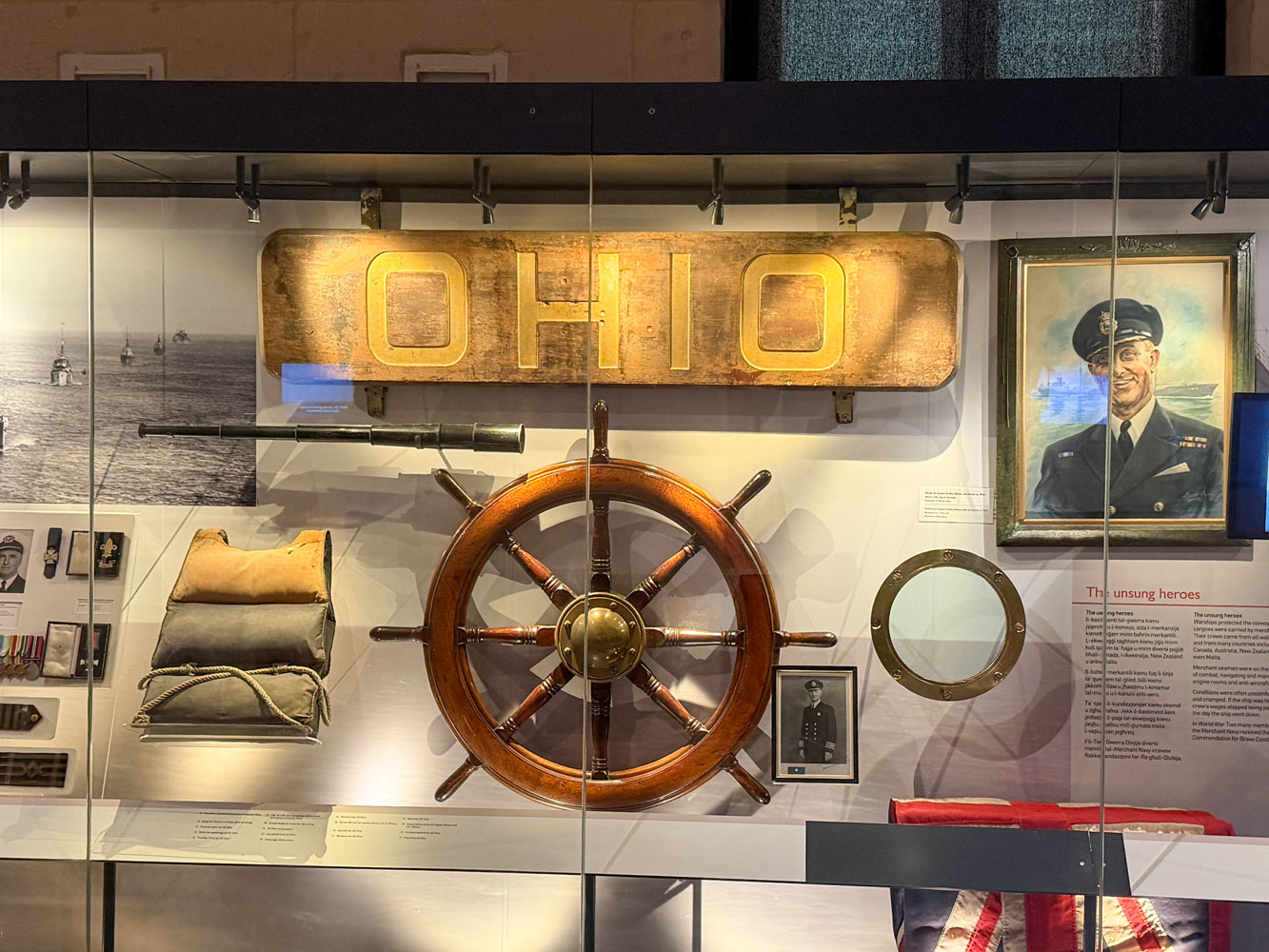
The convoy was continually attacked and the Allies lost nine merchant ships, one aircraft carrier, and two light cruisers, along with other smaller vessels. But five of the merchant ships made it to Valletta, the most important of which was the SS Ohio, an American merchant ship with a British crew, carrying aviation fuel. The Ohio was so damaged that it sank at the dock in Malta, but they were able to pump the fuel out of the ship.
The siege of Malta ended with the Allied landings in North Africa (Operation Torch) and the success of the Second Battle of El Alamein, both in November 1942. The Axis air forces were diverted to the Tunisian Campaign which reduced attacks on Malta.
A book about Operation Pedestal is "Operation Pedestal: The Fleet that Battled to Malta, 1942" by Max Hastings.
A book about the Malta siege from 1940-1943 is "Fortress Malta: An Island Under Siege" by James Holland. Another is "Malta: The Last Great Siege - 1940-1943" by David Wragg.
Now, back to our trip.
**************************************************************
Our limo pickup this morning is scheduled for 11:00am, so we had time for final preparations. Greg came by about 9:00. He's going to stay with the girls (our two Cavalier King Charles) while we're gone.
We were ready early so I texted the driver and he arrived about 10:30. Here's our traditional pre-trip photo.
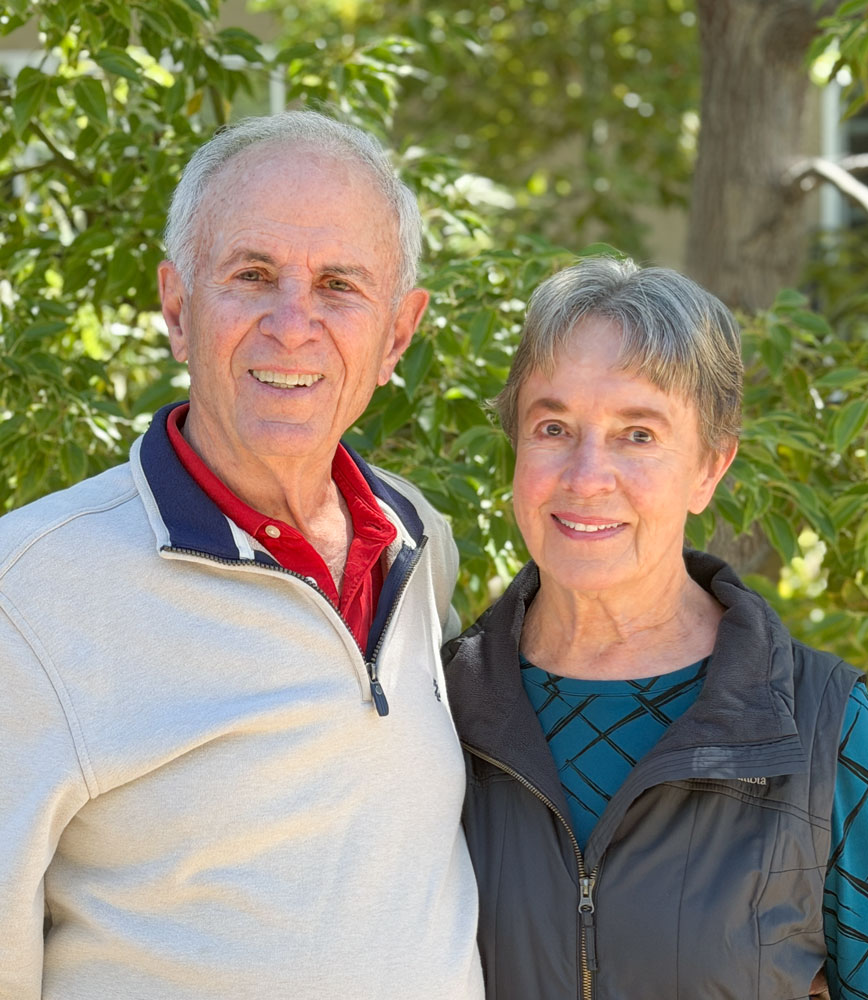
Greg and Lynn said goodbye as we were boarding the limo.
The trip to LAX was quick - not much traffic during the middle of the day. We were able to check in and get to the lounge without difficulty. We have TSA-Pre and there was almost no line for security.
We went to the gate a bit after 2:00 and the gate area was already crowded. Here's the aircraft we'll be on - a Boeing 747-8. There are not many of these still flying. Lufthansa is one of only four airlines still using it. The 747 is not as efficient on a per seat basis as the more modern two engine widebody jets (such as the Boeing 777 and Airbus A350).

Boarding was delayed to give the ground crew more time to clean the aircraft, but eventually we got on board. We're in the top deck. I asked to be seated there because back when I was traveling for business the airlines used the top deck for first class. Business class was forward on the main deck.
The aircraft shows it's age. Not from being worn, but in the design of the seating. There are eight rows of four seats, arranged 2-2, giving seating for 32 passengers in the upper deck.
The overhead bins are a bit small. A carry-on suitcase has to be put in sideways.
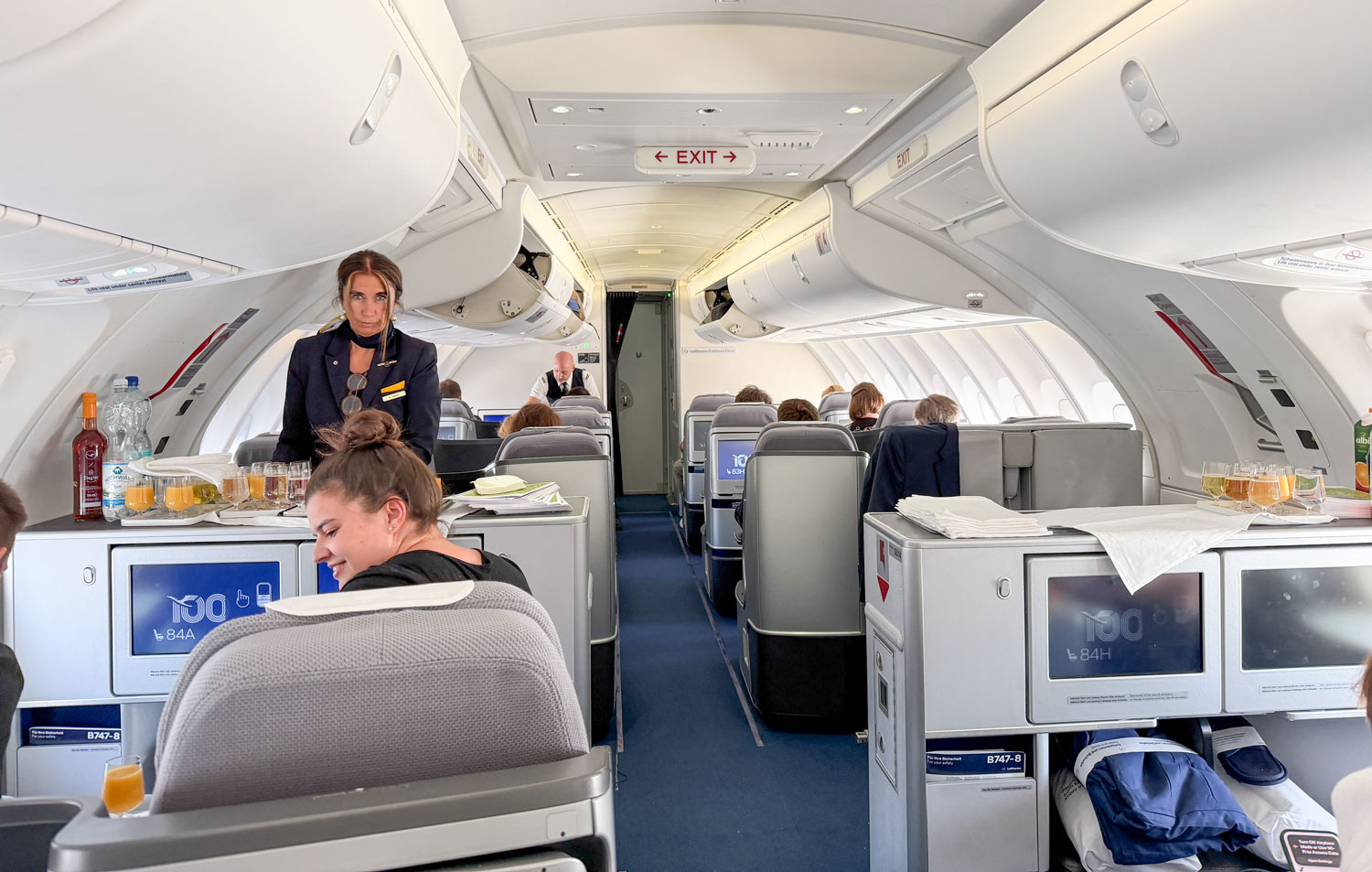
The part that really shows the age is the arrangement of the seats. In modern aircraft, every passenger has direct access to the aisle. Here, the person seated at the window has to crawl over the person seated on the aisle.

Then, the entertainment screens are a long way from the person in the seat. The entertainment system, itself, is very slow, and none of the movies have closed captions for the hearing impaired.
Reports are that Lufthansa plans to keep flying the 747 to 2030 and possibly beyond, and that they have plans to upgrade the seats on the 747-8 models. They will replace the 747-4 models with the Boeing 777-9.
Even though we were delayed in boarding, we pushed back from the gate about 3:15pm, about 20 minutes delayed.
Beyond the older seating, the crew did a good job. They served lunch and then we tried to sleep for a while. The flight is about 11 hours.
**************************************************************
4/29/2026 (Wednesday) - About an hour before we landed (about midnight LA time) the crew woke us for breakfast. We arrived in Frankfurt a bit after 11:00am Frankfurt time.
We exited the aircraft in the International Terminal and our next flight was in Terminal A. After asking several people, we found that we had to take a bus to terminal A (shades of Heathrow). Side note, Frankfurt is a HUGE airport.
The EU is getting ready for the European Travel and Authorization System (ETAS) , which will be required for US citizens in the fourth quarter of 2026. When we exited the bus, we found some kiosks that allowed us to register our passport, face ID and fingerprints for the system. Your passport goes into the red opening on the left, and your hand (for fingerprints) into the red opening on your right. The unit will then take your picture. Your data is good for five years after your most recent travel to the EU.
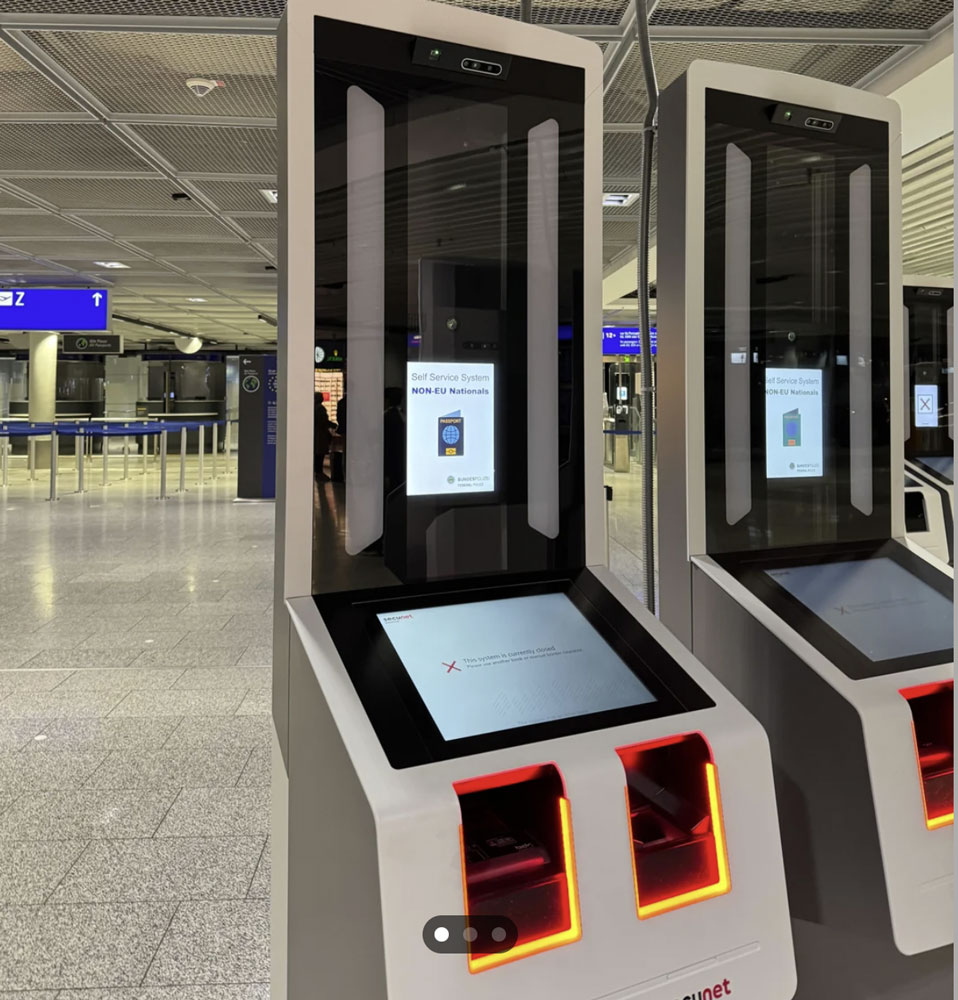
But a lot of people were having problems with the machines so we were stuck there for too long. After you get through the kiosks, you still have to go to passport control and present your passport to the officer.
When we got to the passport control area there was a real backup, with people snaking back and forth in the lines. And it got worse later.

It took a while, but we got through. Our departure gate was not that far, and we settled down to wait.
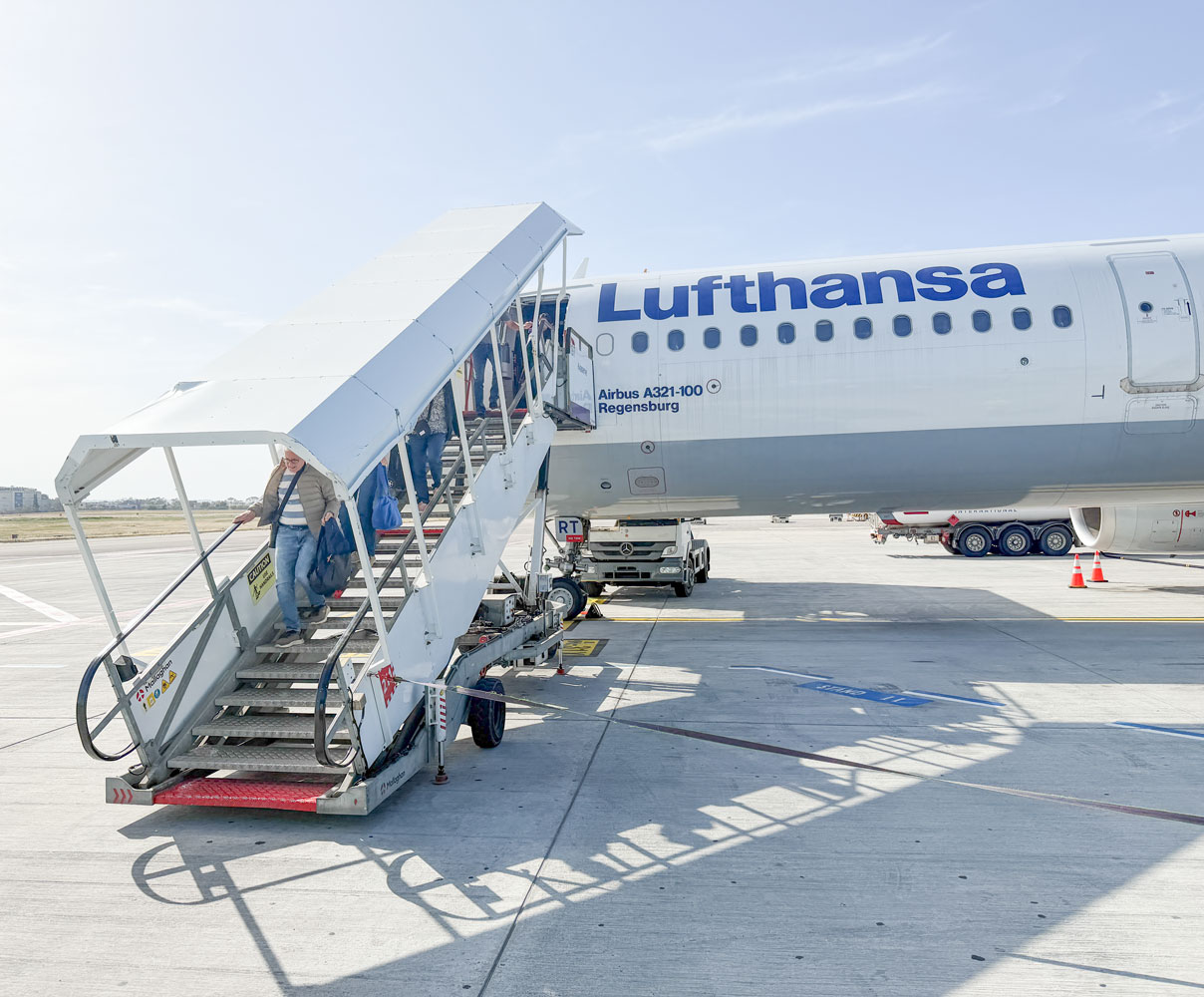
When they called us for the flight, we didn't go directly on the plane, but onto another bus to the aircraft, which meant that we had to climb steps with our carry-on to get into the plane. Here's a picture of the plane that I took after we arrived in Malta. It's an Airbus A321-100 which is a good, reliable aircraft. We were in business class, which in Europe means that you get standard economy seats but have an empty middle seat.
The flight to Malta was only about two hours. As we were coming into the airport, I took this picture of Valletta (not a very good picture). I think that's the Grand Harbor in the center of the picture.

Again, we had to take a bus from the aircraft to the terminal. By the time we got to the terminal, our luggage was on the carrousel.
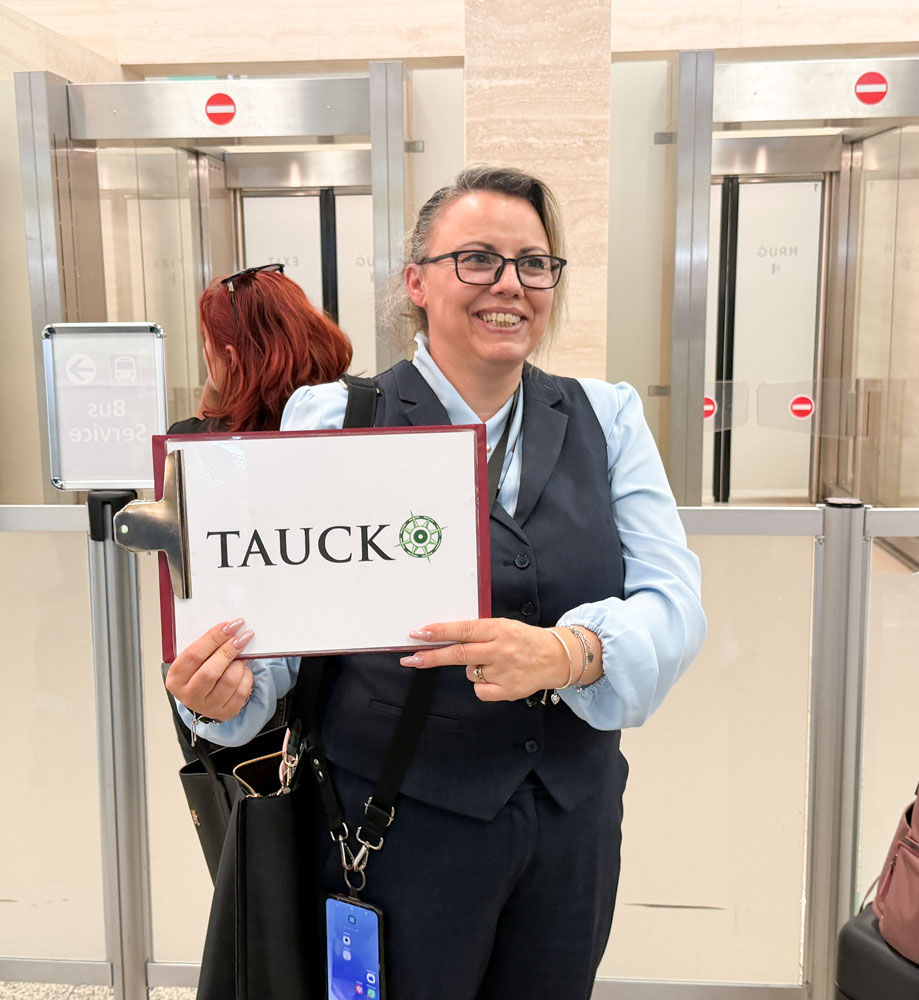
The Tauck "greeter" was waiting for us.
We boarded a vehicle with Pasquale (Pat) and Caterina (Cathy), two other Tauck guests (from Florida) and set out about 5:00pm for the hotel. The traffic was terrible, and although the hotel was not far, we didn't get there until 6:30pm. Here's a picture of the vehicle (and Judy) when we arrived. The Maltese drive on the wrong side of the road, a legacy of the British occupation.

As you can imagine, we were fairly exhausted. We checked in and went to the room. It's a decent room, fairly large, with two Queen size beds (for some reason).
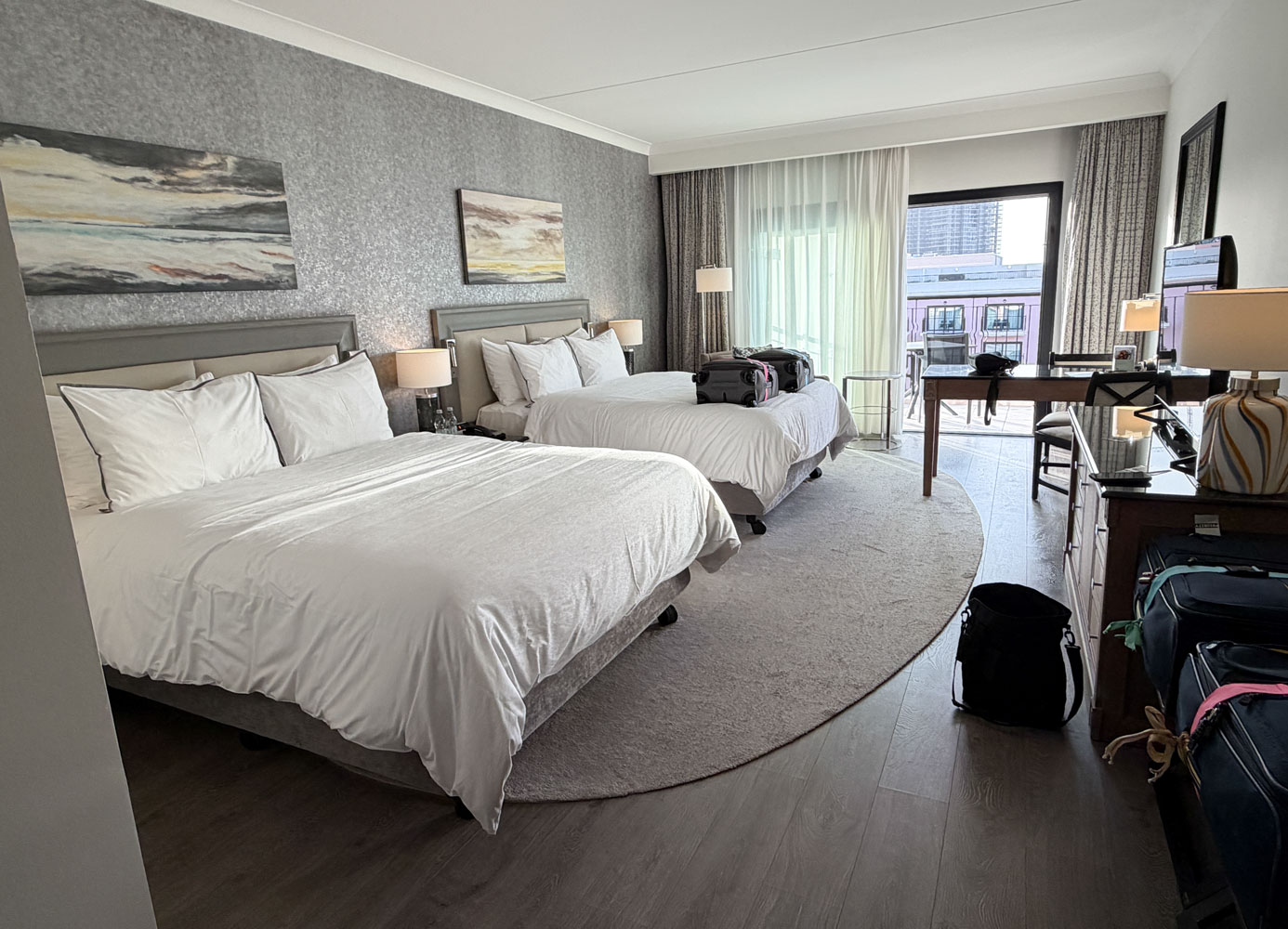
It's on the eighth floor (top floor) and has a good view.
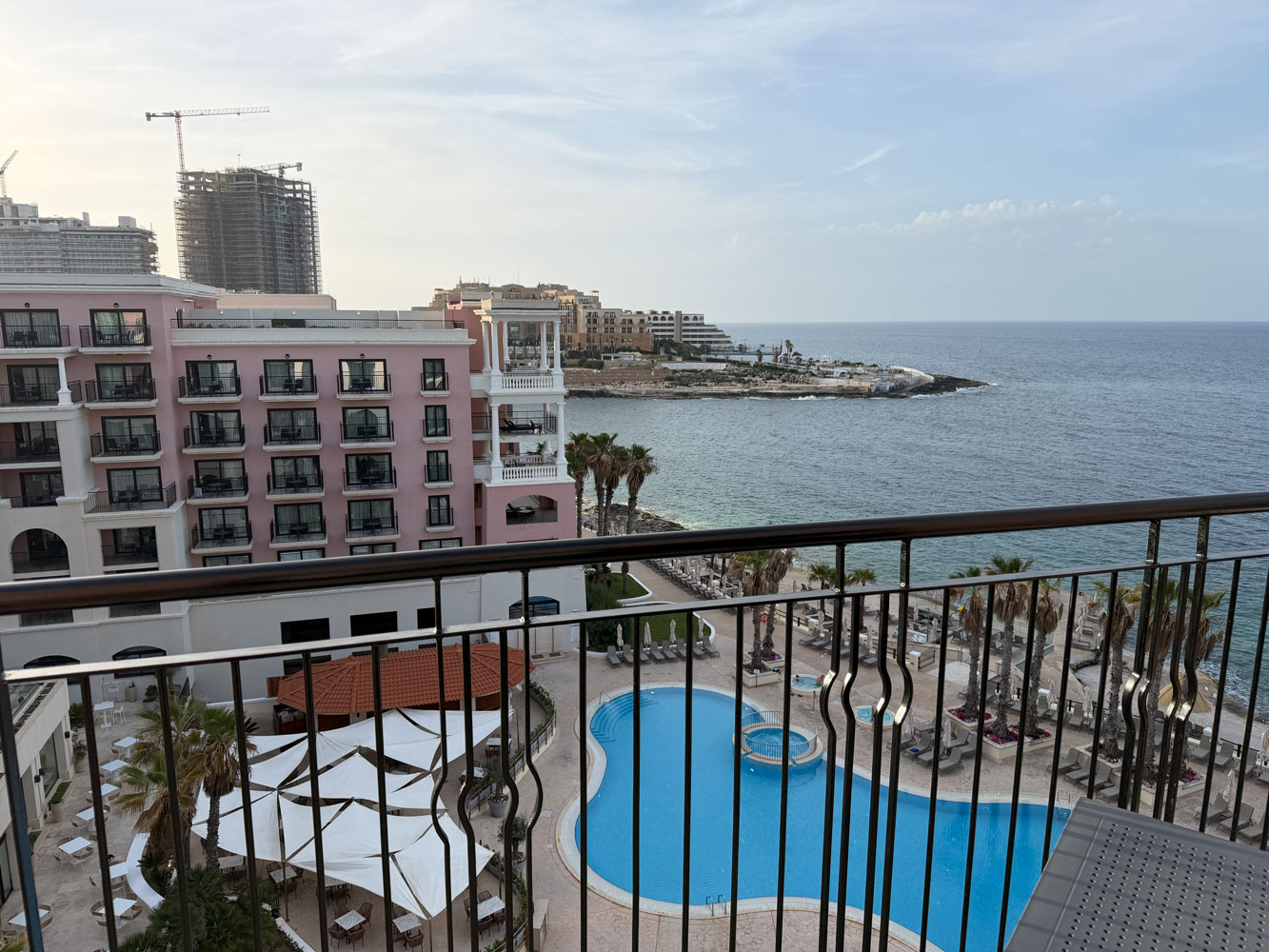
It has good Internet access, which is one of my requirements for a hotel room.
Unfortunately, it does not have a walk in shower - just a tub shower which I really dislike. And no bar soap - just those bottles of liquid soap. I went down to the desk and requested a bar of soap but they claimed they didn't have any. We'll have to buy a bar tomorrow.
It also does not have a coffee maker.
We went down to the bar and had a light snack, and then to bed. We were tired.
**************************************************************
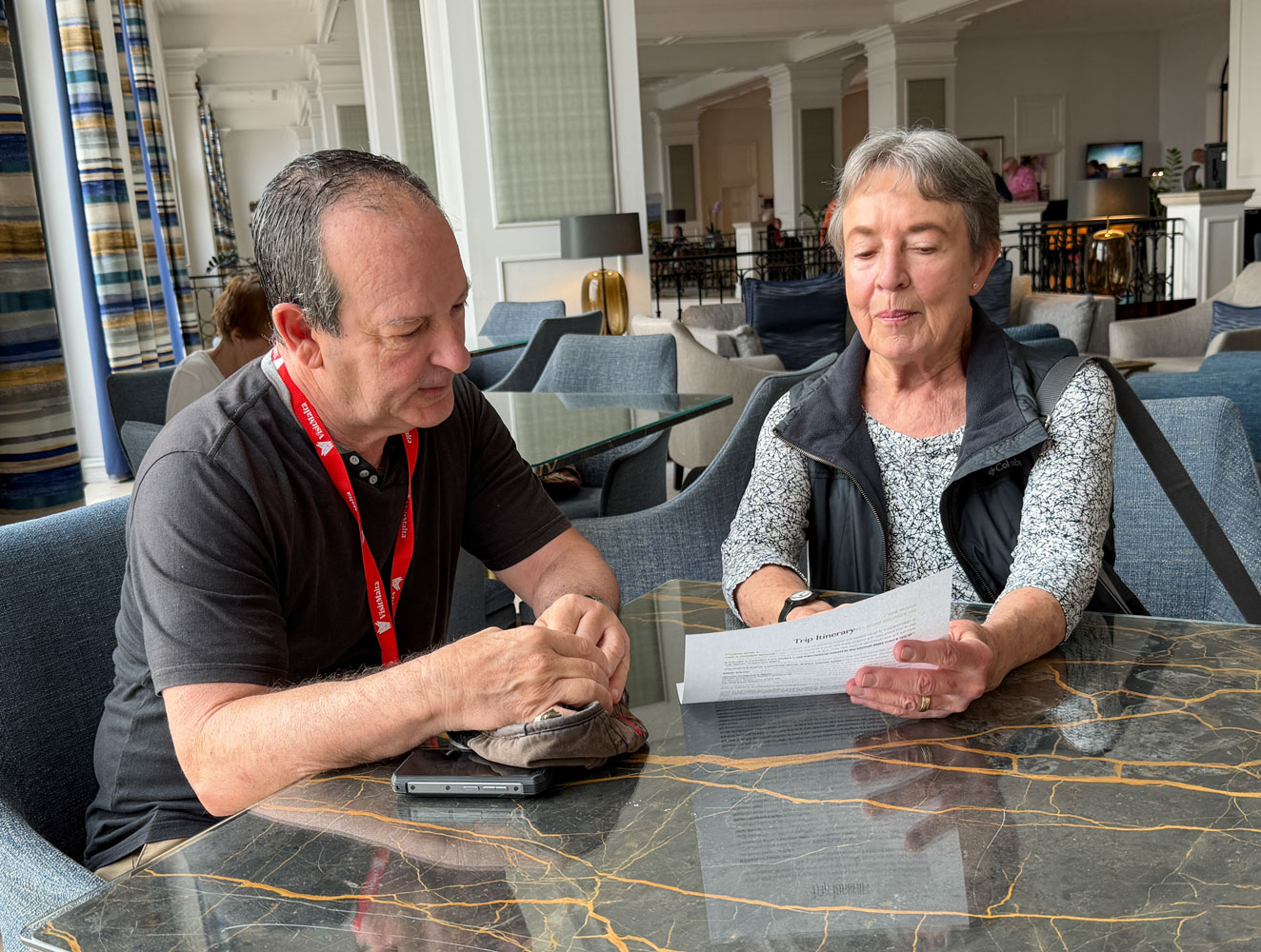
4/30/2026 (Thursday) - We woke up early, of course, and showered. We have a private tour of Malta today with Albert M. of Tours by Locals (also see here). We met Albert in the lobby at 8:30 this morning. Here's Judy reviewing what we will do with Tauck so that we don't duplicate places.
After figuring out our plan for the day, we went out to the car. Albert had arranged for a driver, Ray, with a Peugeot station wagon for us. This picture was taken later, but I thought it showed the car, and Ray, better.

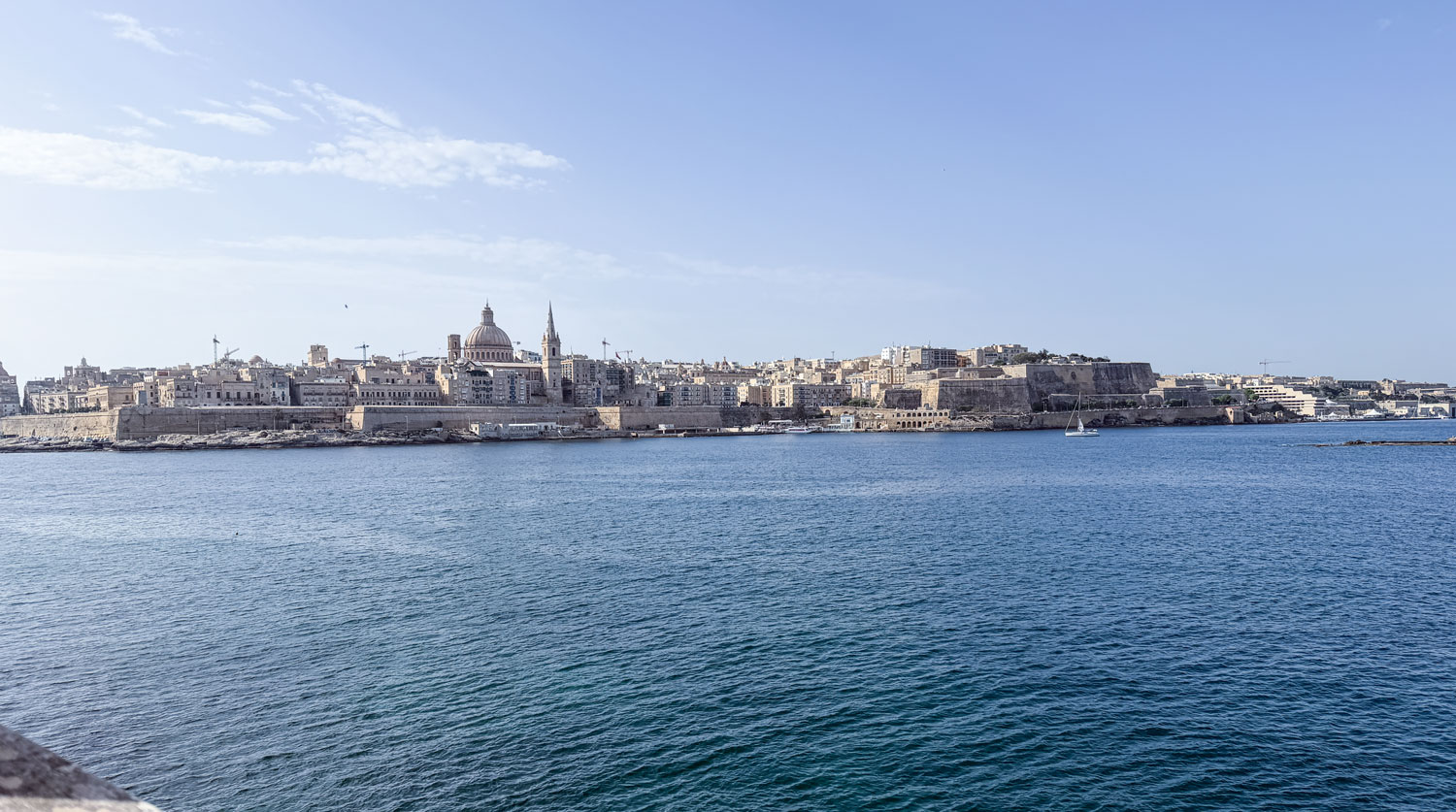
On leaving the hotel, we drove to Sliema where we could look across the water to Valletta. The dome in the picture is the Catholic Basilica of Our Lady of Mount Carmel, which was completed in 1981. It replaced previous churches that go back to the 1500's. Note at the far right in this picture you can see part of a cruise ship. Valletta is a popular stop for cruise ships.
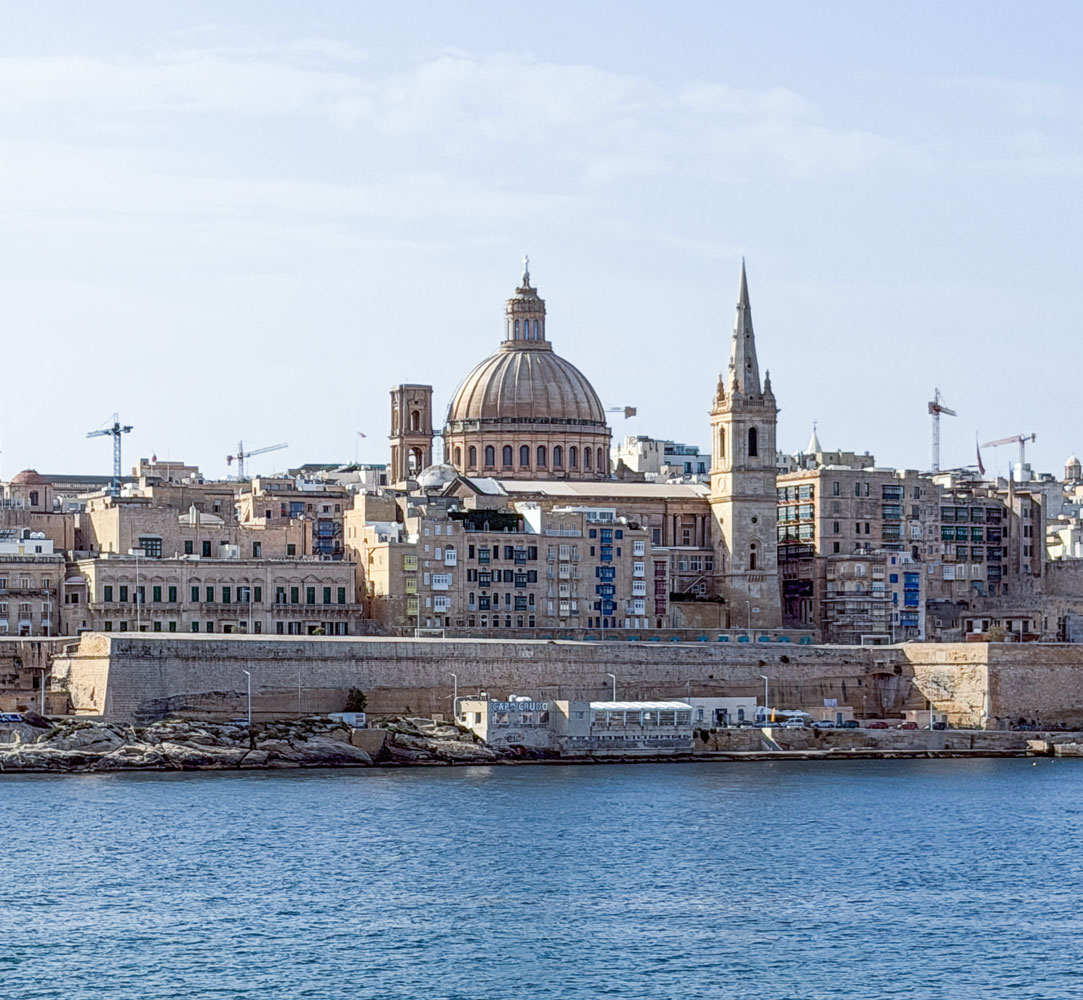
Here's a closer view of the Basilica. The tower in front and to the right of the dome is part of St. John's Co-Cathedral, a Roman Catholic Cathedral. It's Co-cathedral is St. Paul's Cathedral in Mdina, the first Cathedral in Malta, built in the 12th Century.
There is also an Anglican cathedral in Valletta, St. Paul's Pro-Cathedral, built in 1844. Britain took over Malta in 1814. There were probably few Anglicans in Malta prior to that.
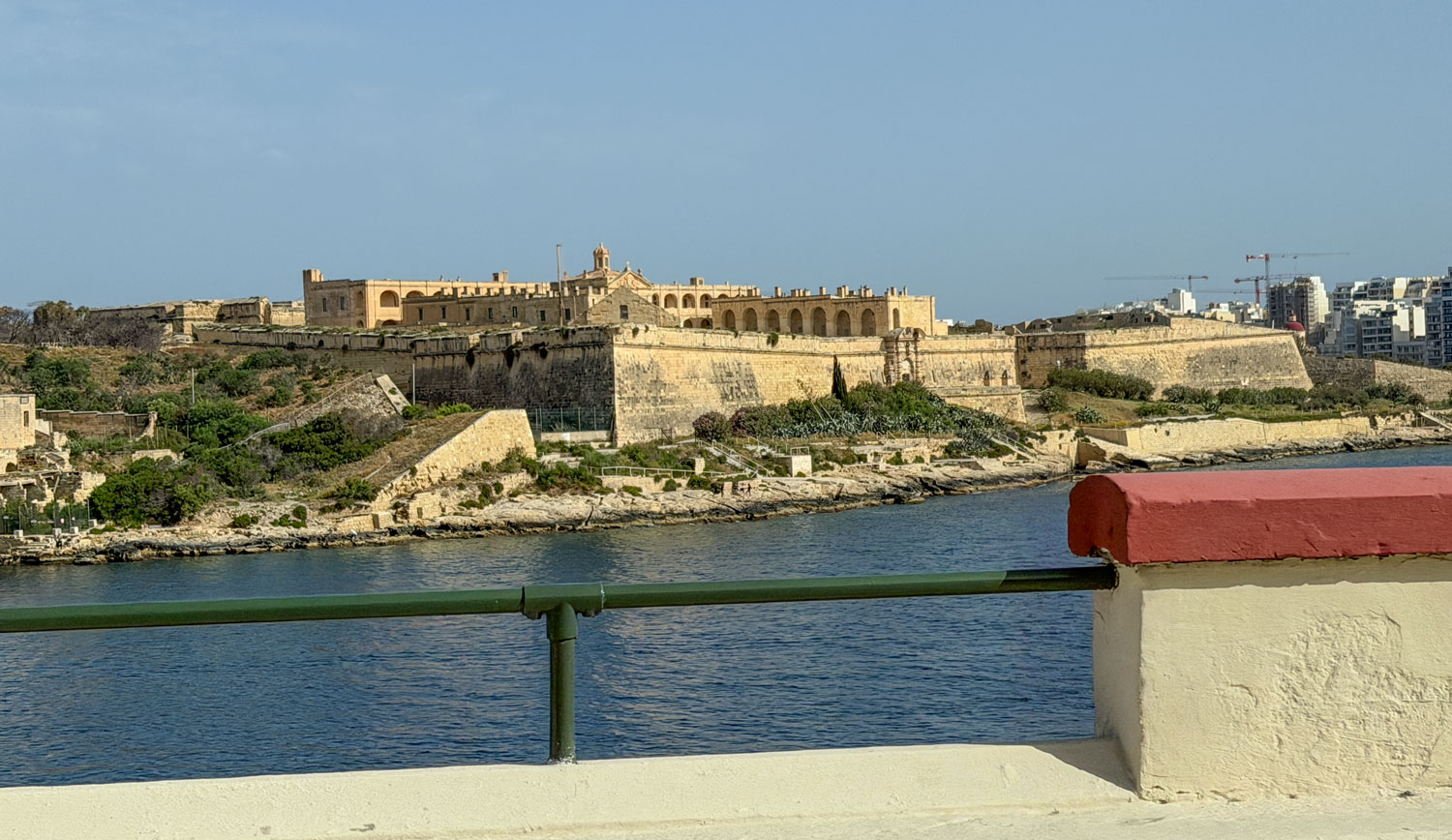
From where we were, we could also look across to Manoel Island, where Fort Manoel is located. It's a star-shaped fort, built in the 18th Century, but with the advancements in artillery, it was not very practical.
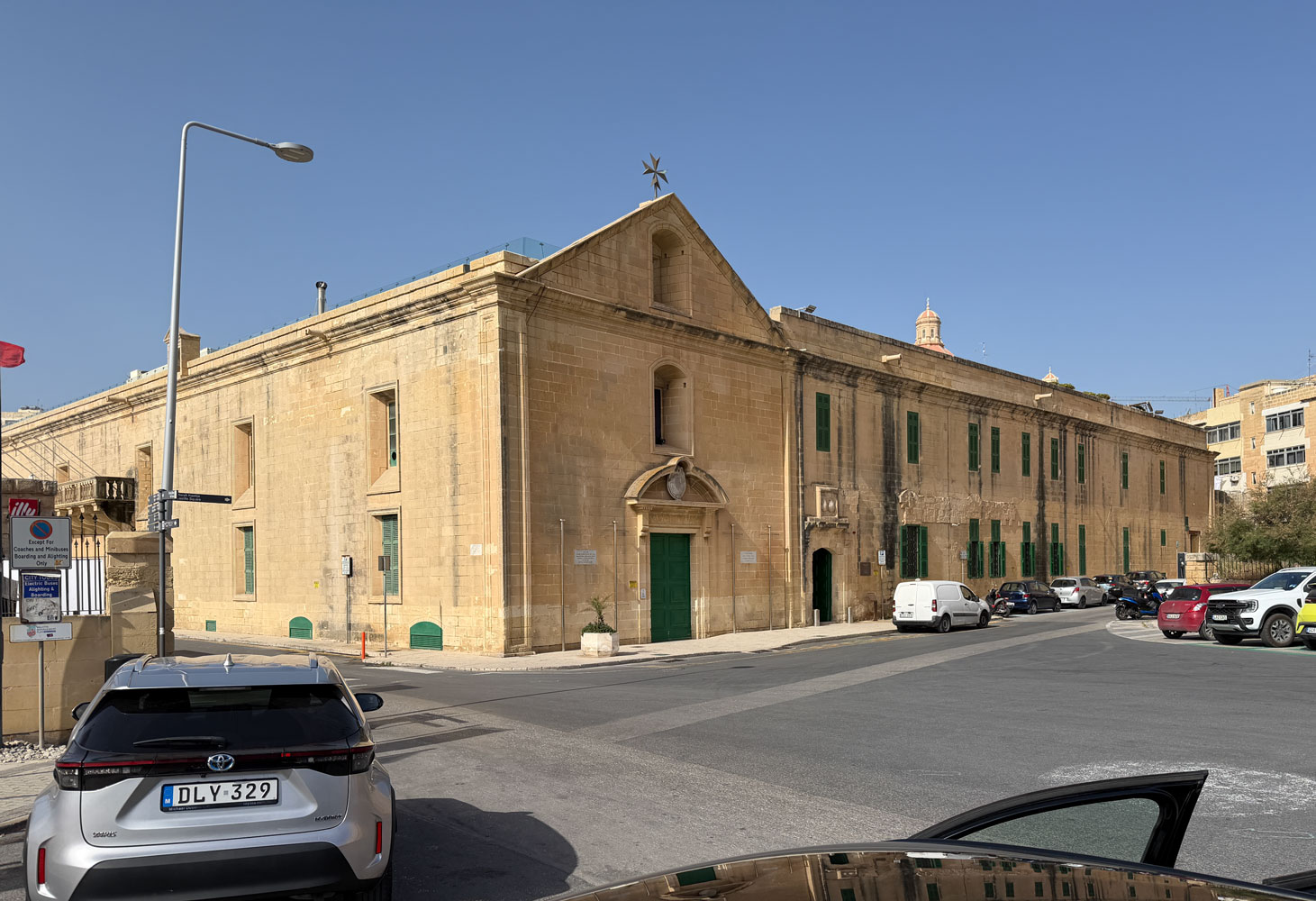
Next, we went to Valletta, and stopped by the Sacra Infermeria, or Holy Infirmary, which was built by the Order of St John in the 16th Century. It's now know as the Mediterranean Conference Centre. We didn't go in.
Next we went to Fort Saint Elmo and the National War Museum. The fort was the scene of perhaps the most bitter fighting during the Great Siege of 1565. Eventually, the Turks captured the fort, but only after overcoming and killing all of the Knights of St. John (estimated at 100 to 150) who were there. In total, about 1.500 defenders died defending the fort. Only nine soldiers survived by swimming to Fort St. Angelo. The Turks lost between 4,000 and 8,000 soldiers during the 28 day siege.
The fort was severely damaged during the siege and then rebuilt over the following centuries. Then, in World War II the British occupied the fort and it was further damaged by aerial bombing. After the war, it was rebuilt again, but all the changes make it difficult to visualize what the fort was like during the Great Siege.
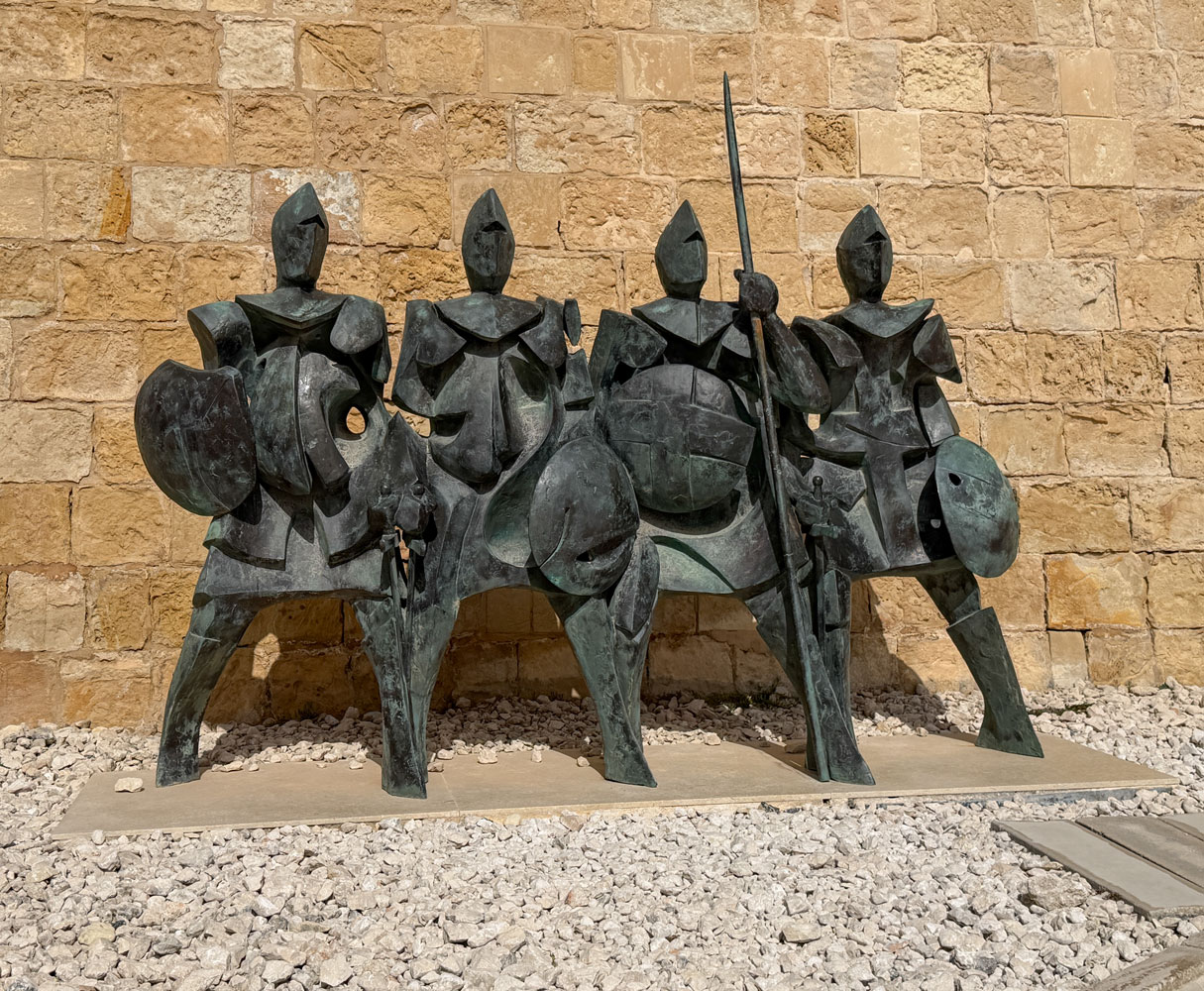
I can only show pieces of the fort, as we moved through it. This modern statuary represents the knights.
This entryway is protected by the "all-seeing eye" of the Knights above it.

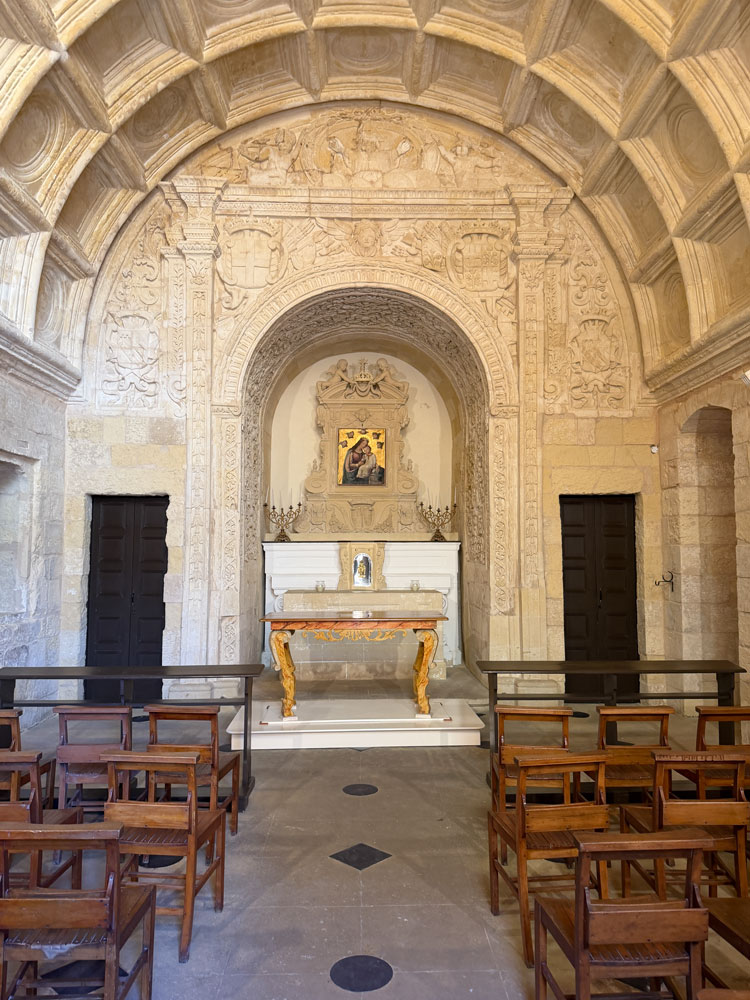
We went into St Ann's Chapel. The original chapel is quite old, but it was rebuilt in the 1700's.
The museum is organized into six exhibit halls, starting from the pre-history time of Malta to modern times. The two largest halls are dedicated to the Great Siege and to World War II. I didn't take many pictures in the museum.
The museum was used for scenes in several movies, including Midnight Express, to represent the Turkish jail. Here's a picture of the area (I think it was originally barracks) that was filmed to represent the Turkish jail.
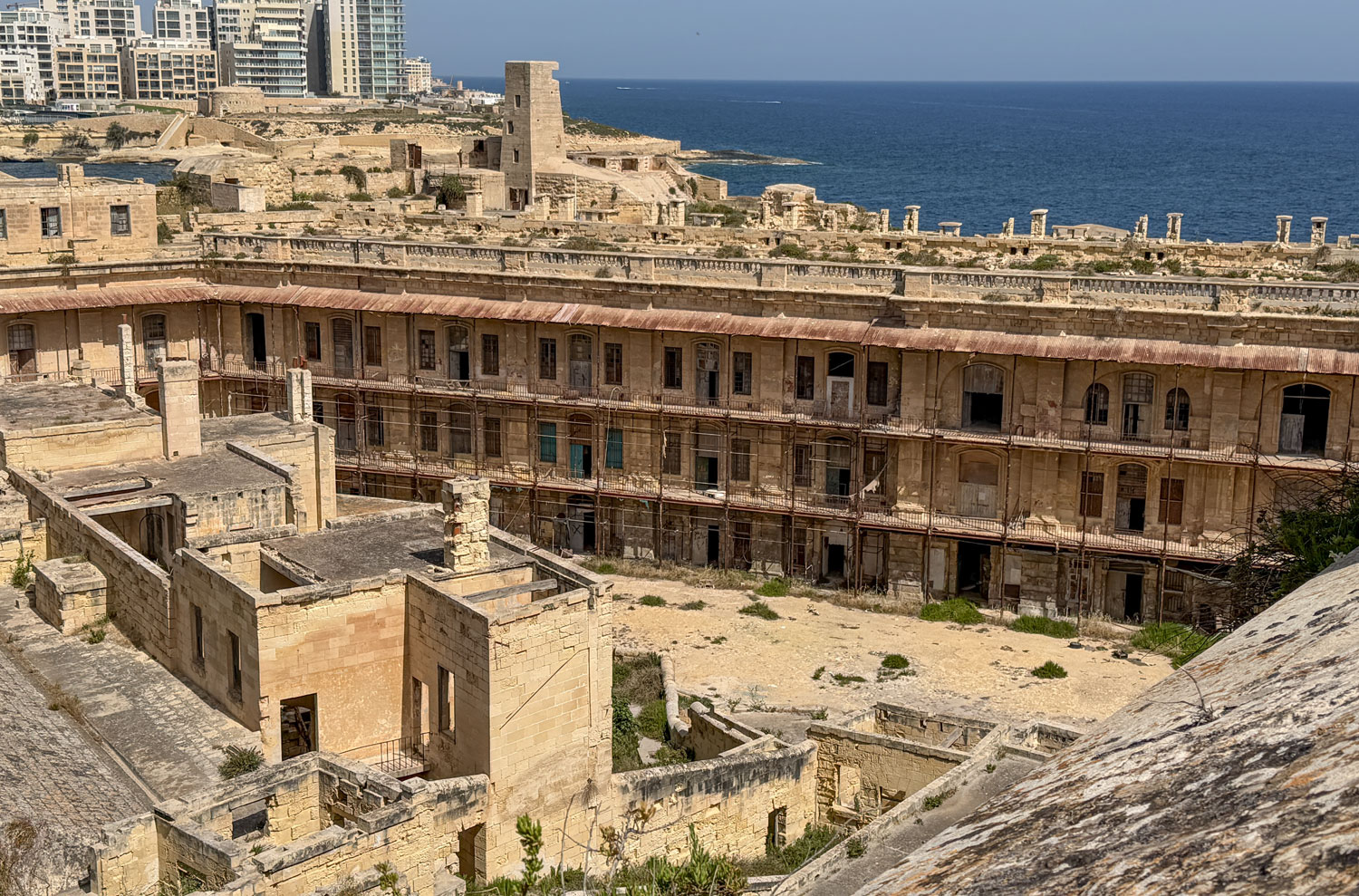
The other movie that Alfred mentioned was Munich, although I don't think it was filmed at Fort St. Elmo. I've seen both films, and although they are good films, I hesitate to recommend them because of their violent nature.
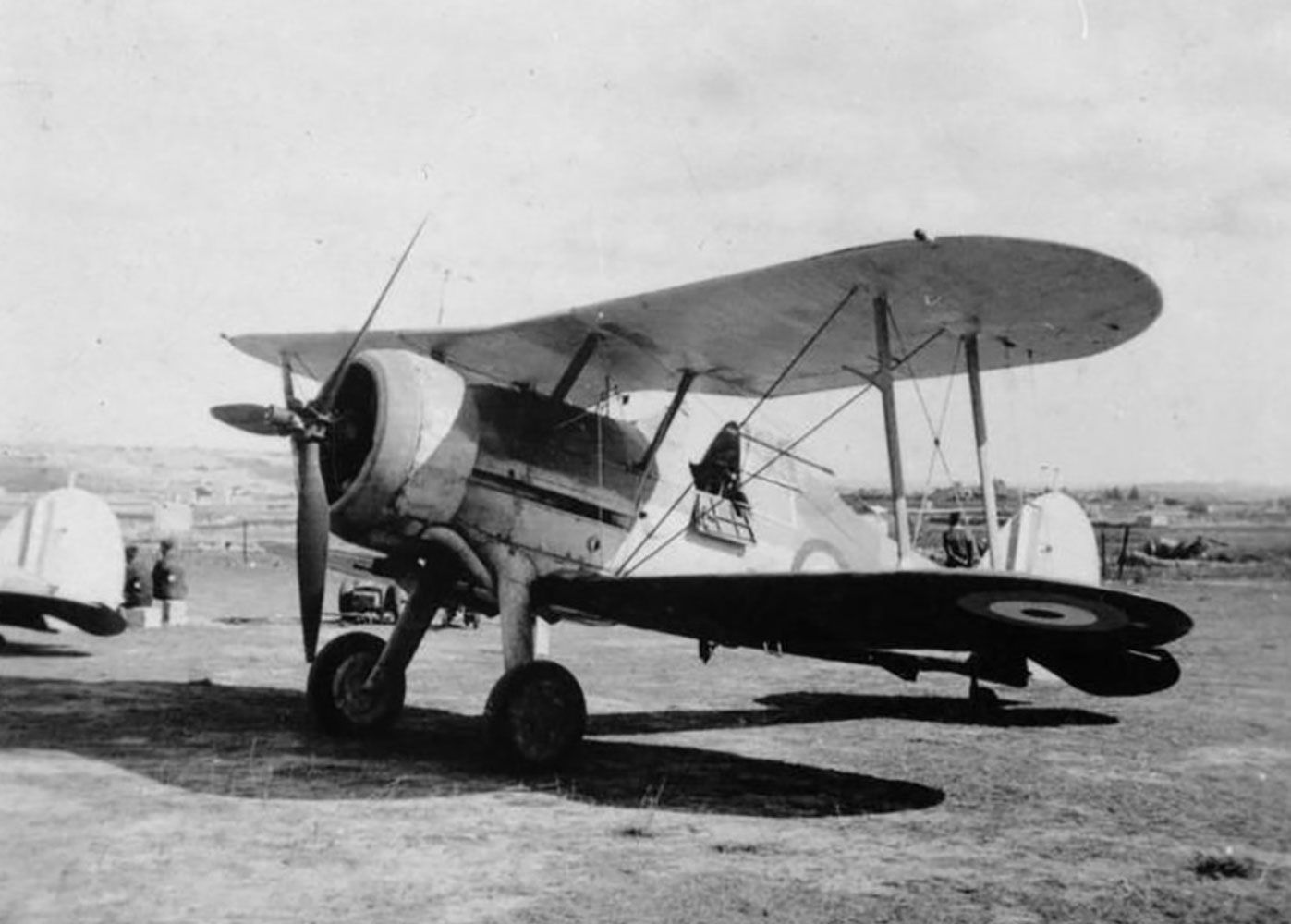
In the museum was the fuselage of a Gloster Gladiator, serial number N5520, named "Faith". At the beginning of World War II, Malta only had three Gloster Gladiators in flying condition (and a few more in crates). The Gloster Gladiators were obsolete biplane fighters from an earlier era and no match for the more modern monoplane fighters of Italy and Germany. The Maltese named them Faith, Hope and Charity. Only Faith survived the war. To fit it into the museum the wings were removed.
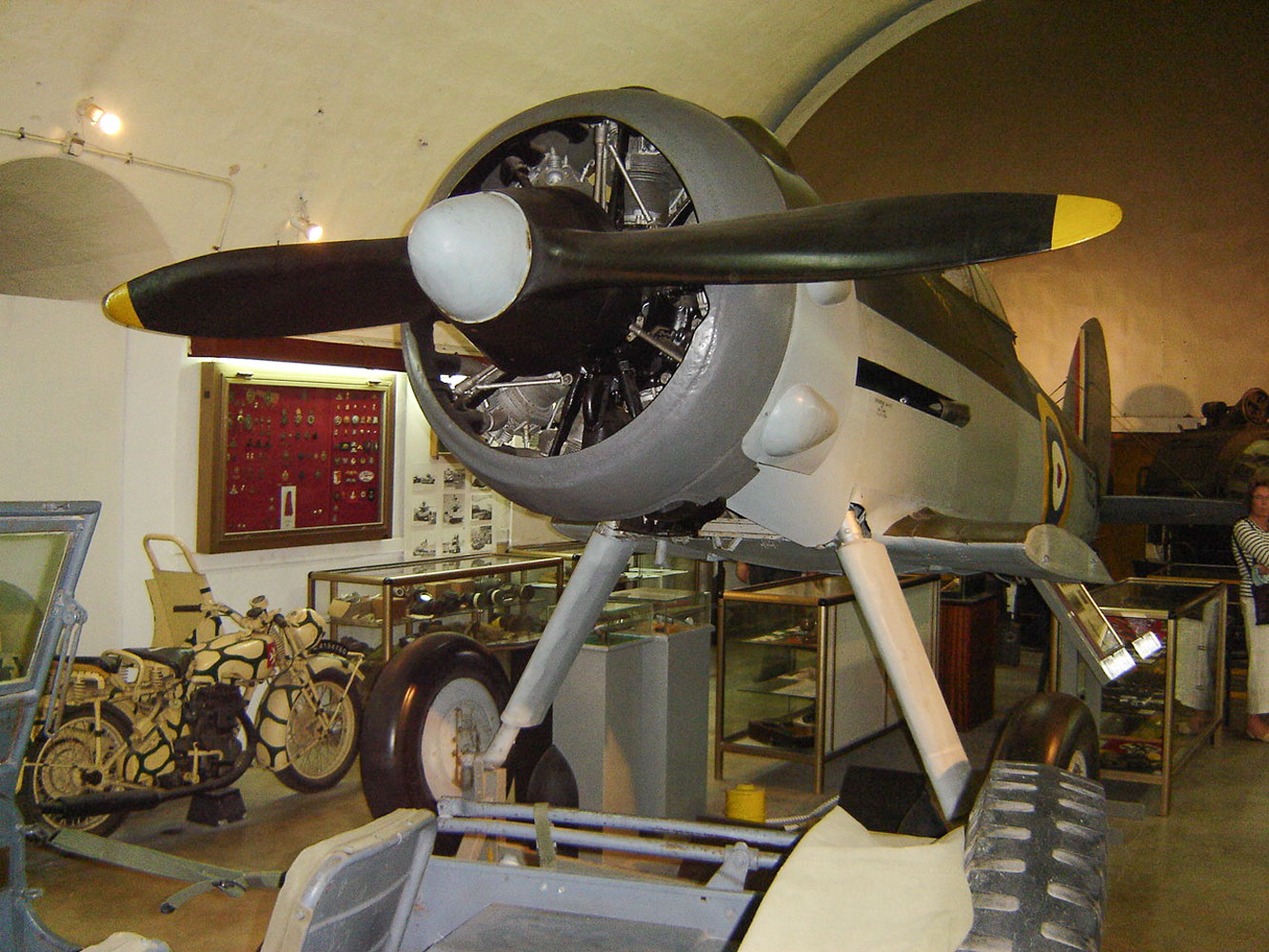
This is what it looked like back in September 1940.
The museum had a section dedicated to Operation Pedestal, and especially to the SS Ohio which was part of the convoy. The convoy saved Malta from surrender and the SS Ohio was an important part of that relief operation.
After we left Fort St. Elmo, we went to the Gardjola Gardens to see the Guard Tower there. The Gardjola Gardens are at the end of the Senglea peninsula and the guard tower faces out toward the harbor.
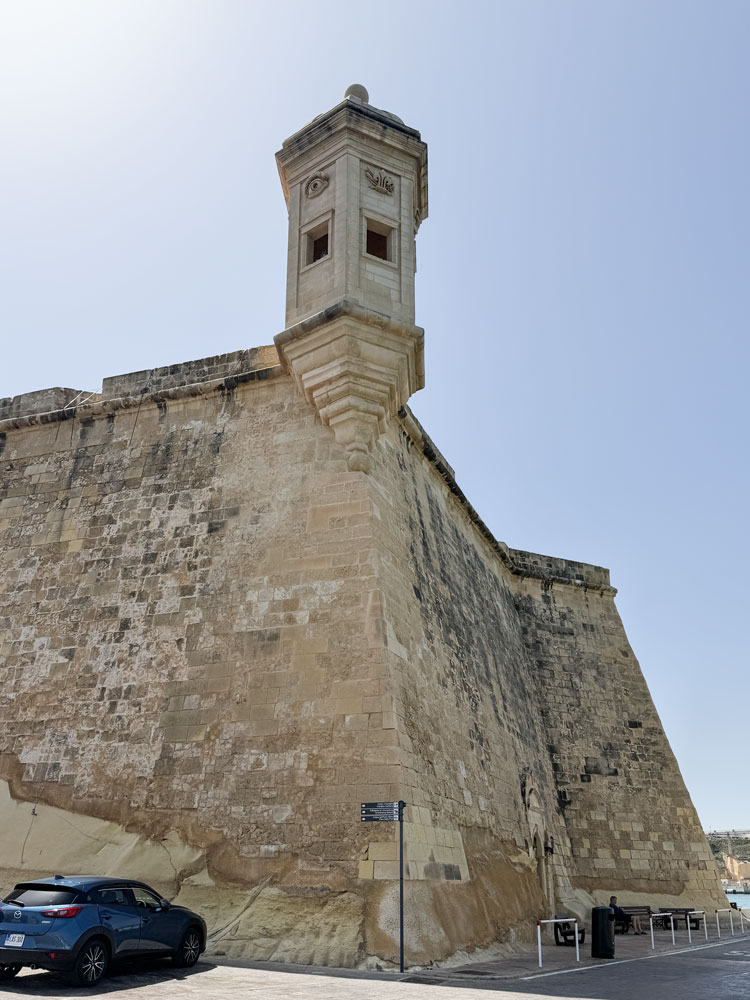
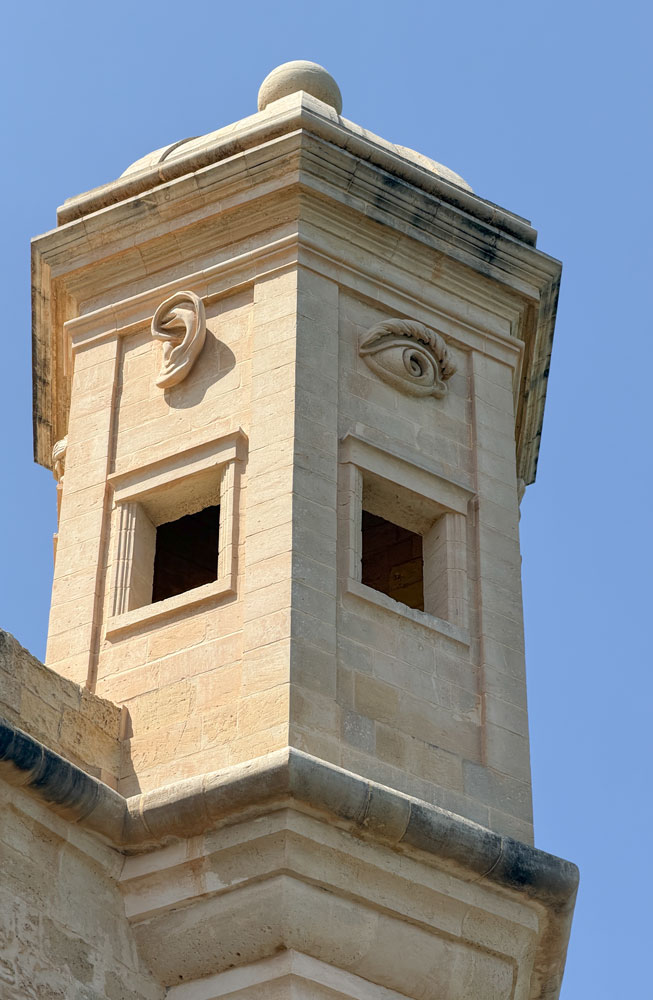
Here's a closer view of the cupola, showing the eye and ear carved into the stone, symbolizing that it hears and sees all.
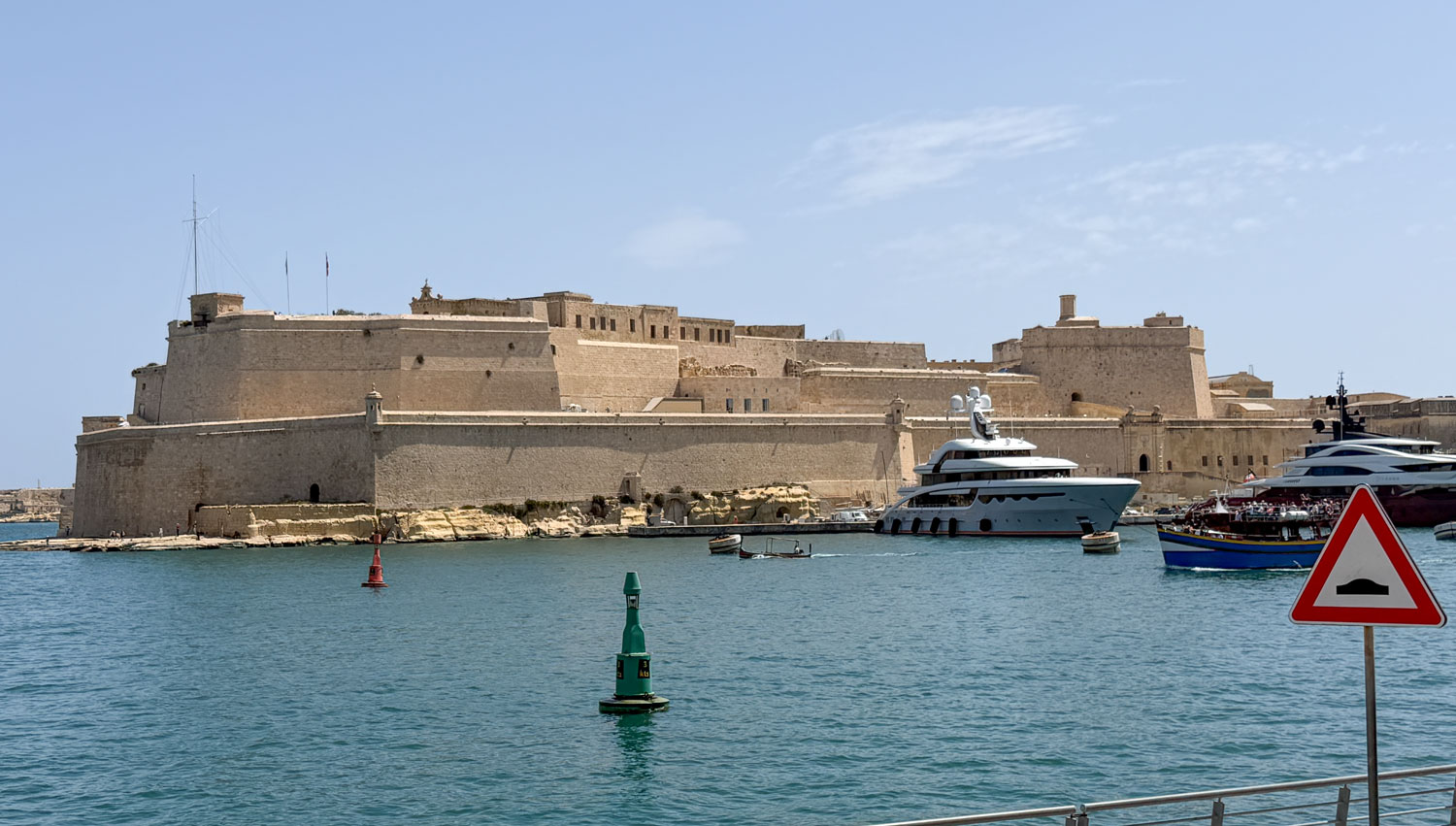
Across from the Gardjola Gardens is Fort St. Angelo, which played a critical role in the Great Siege. It's been restored and well kept (and expanded from what it was during the Great Seige).
As we were heading to Birgu, Albert stopped at Vittoriosa Pharmacy so we could purchase some bar soap for our hotel room.
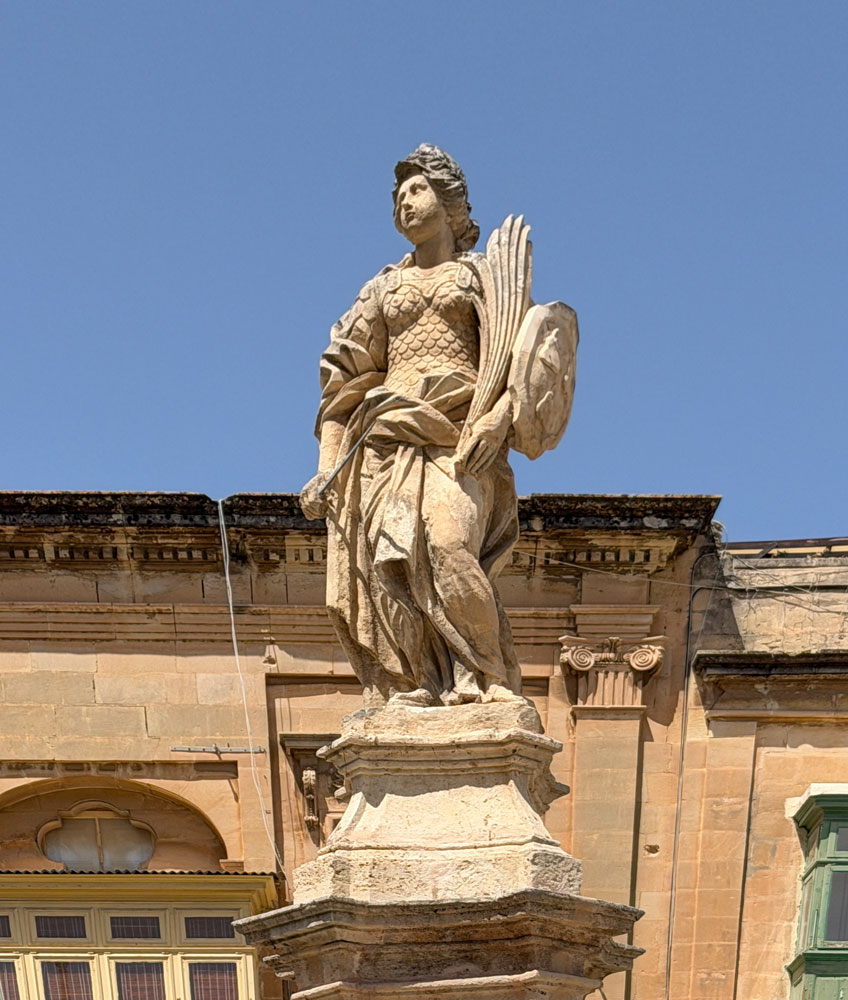
Then we proceeded to Victory Square in Birgu. The square was dedicated to the victory in the Great Siege. There are several statues in the square including this one of St. Luke. The original statue was destroyed in the bombing of WWII - this is a reproduction.

This statue is just known as the Victory Monument. It survived the WWII bombing.
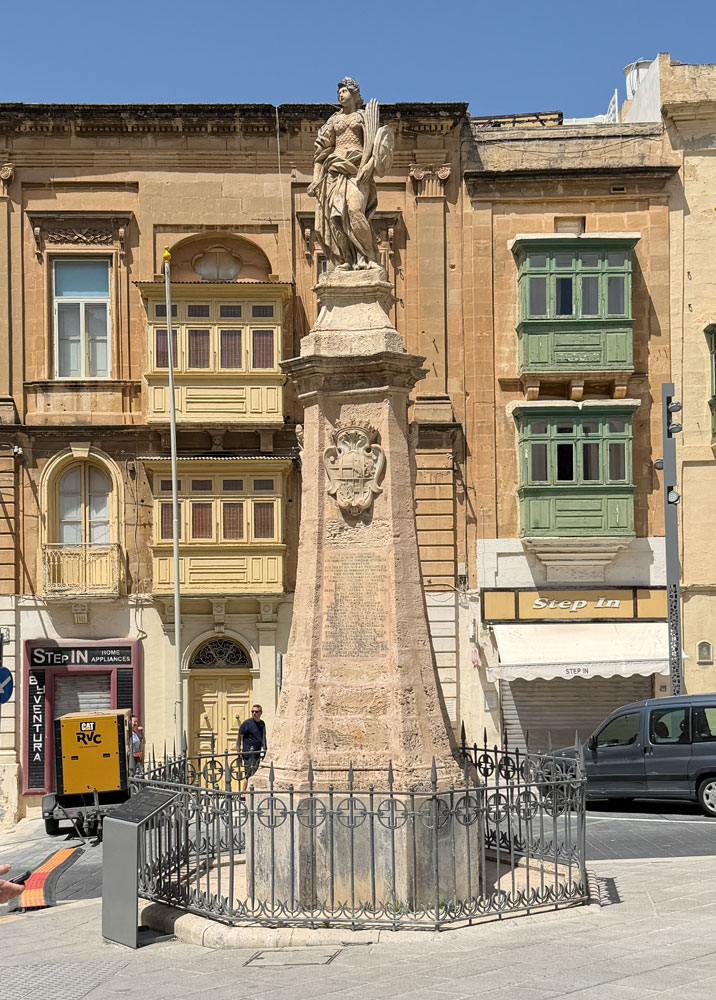
A closer view of the statue.
We walked to the Collegiate Church of St. Lawrence, a Roman Catholic Church.

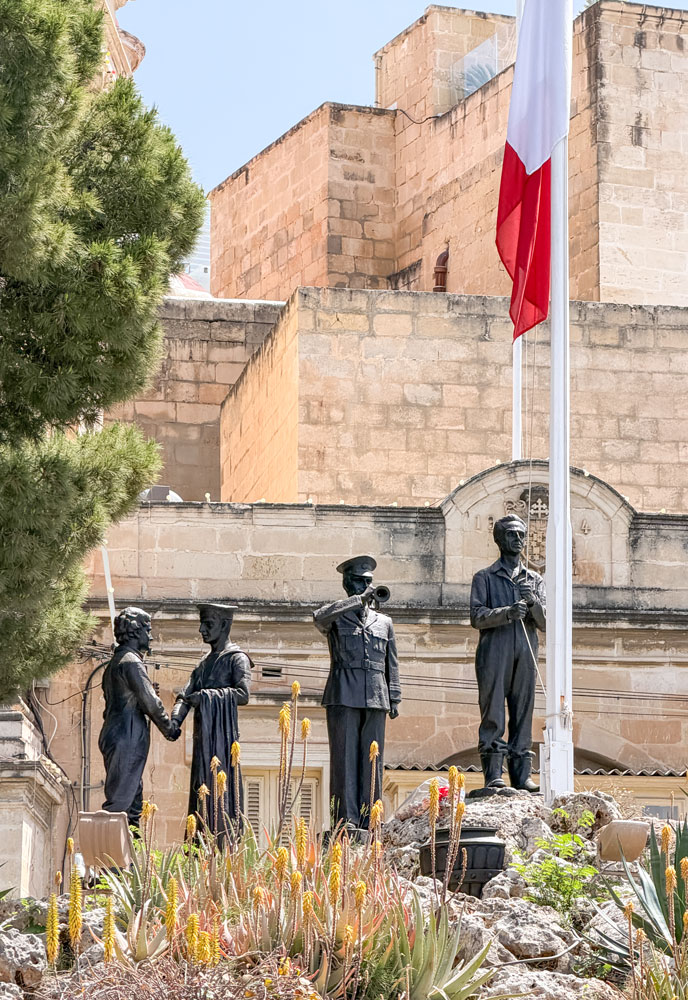
In front of the church is the Freedom Monument representing the handover of Malta to self rule by the British in 1974 (known as Freedom Day), the first self rule in many centuries of occupation.
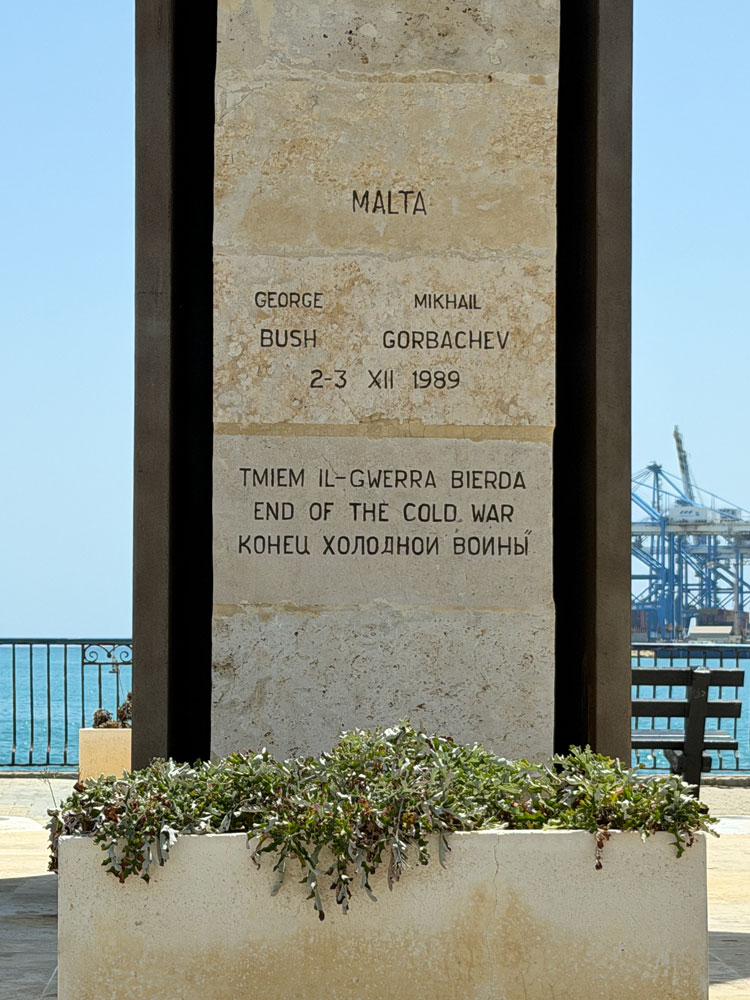
After this, we drove to the southern part of Malta, specifically Birzebbuga, where Alfred pointed out a monument to a meeting between George Bush and Mikhail Gorbachev in 1989, which was part of the end of the Cold War.
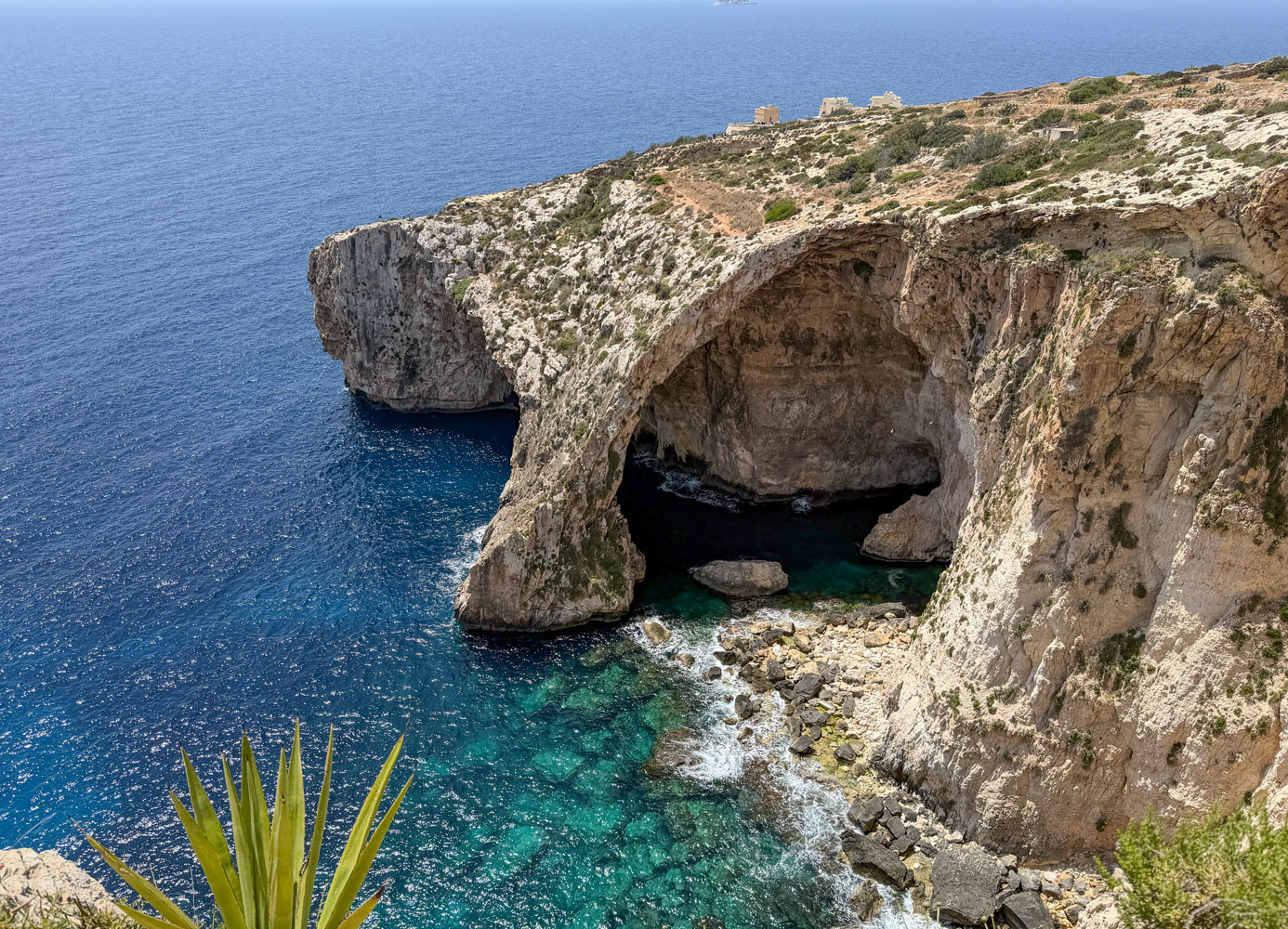
Next, we drove to the area of the Blue Grotto. I believe you can take a boat ride here, but all we did was look.
It was now nearing 1pm so we headed to Rabat through some very narrow streets to Point de Vue Restaurant.
 ,
,
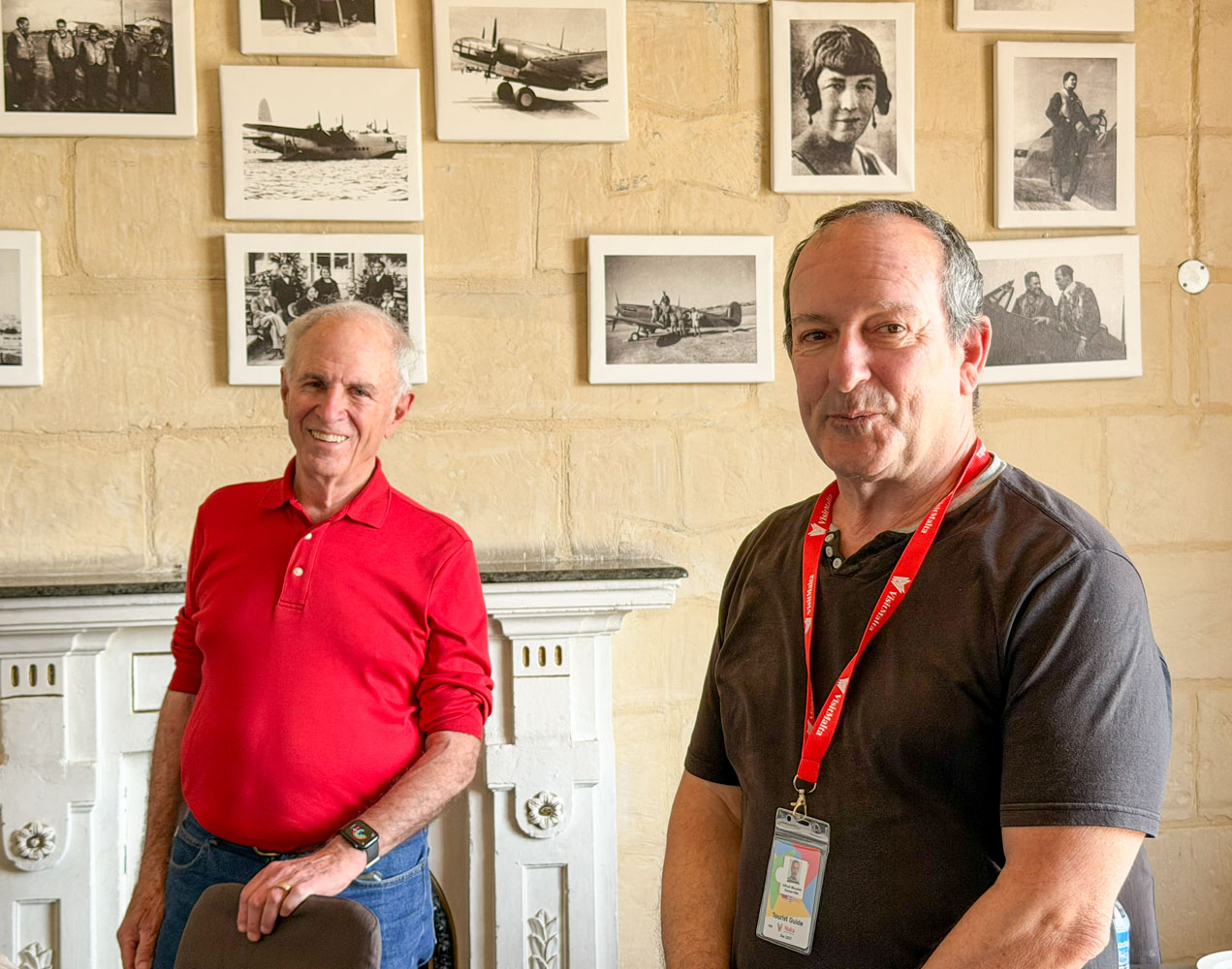
British pilots were billeted here during and after the war. There are lots of pictures of aircraft and pilots on the walls. Alfred joined us in the restaurant, but our driver Ray was required to stay with the car. You can see some of the pictures on the wall behind us. The food was very good.
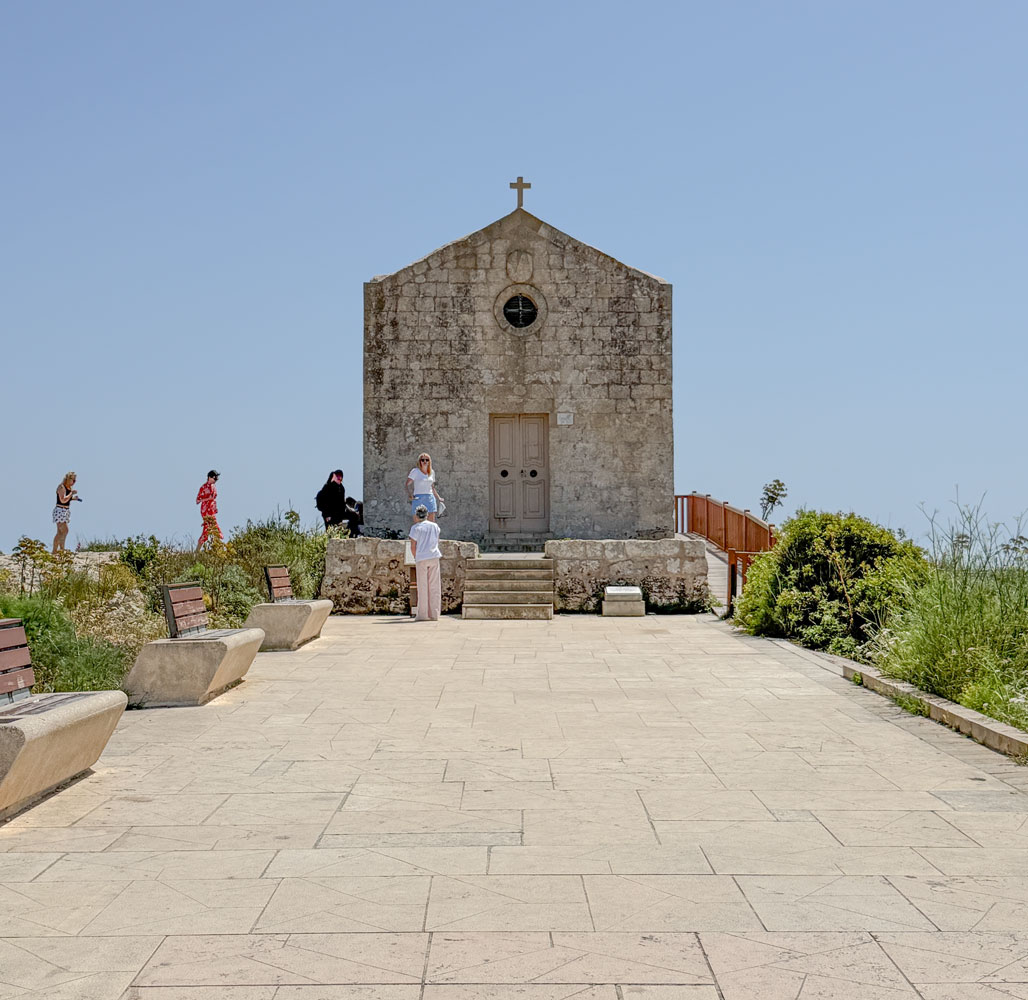
After lunch we went to Ta' Dmejrek, the highest place on Malta where the St. Mary Magdalene Chapel is located.
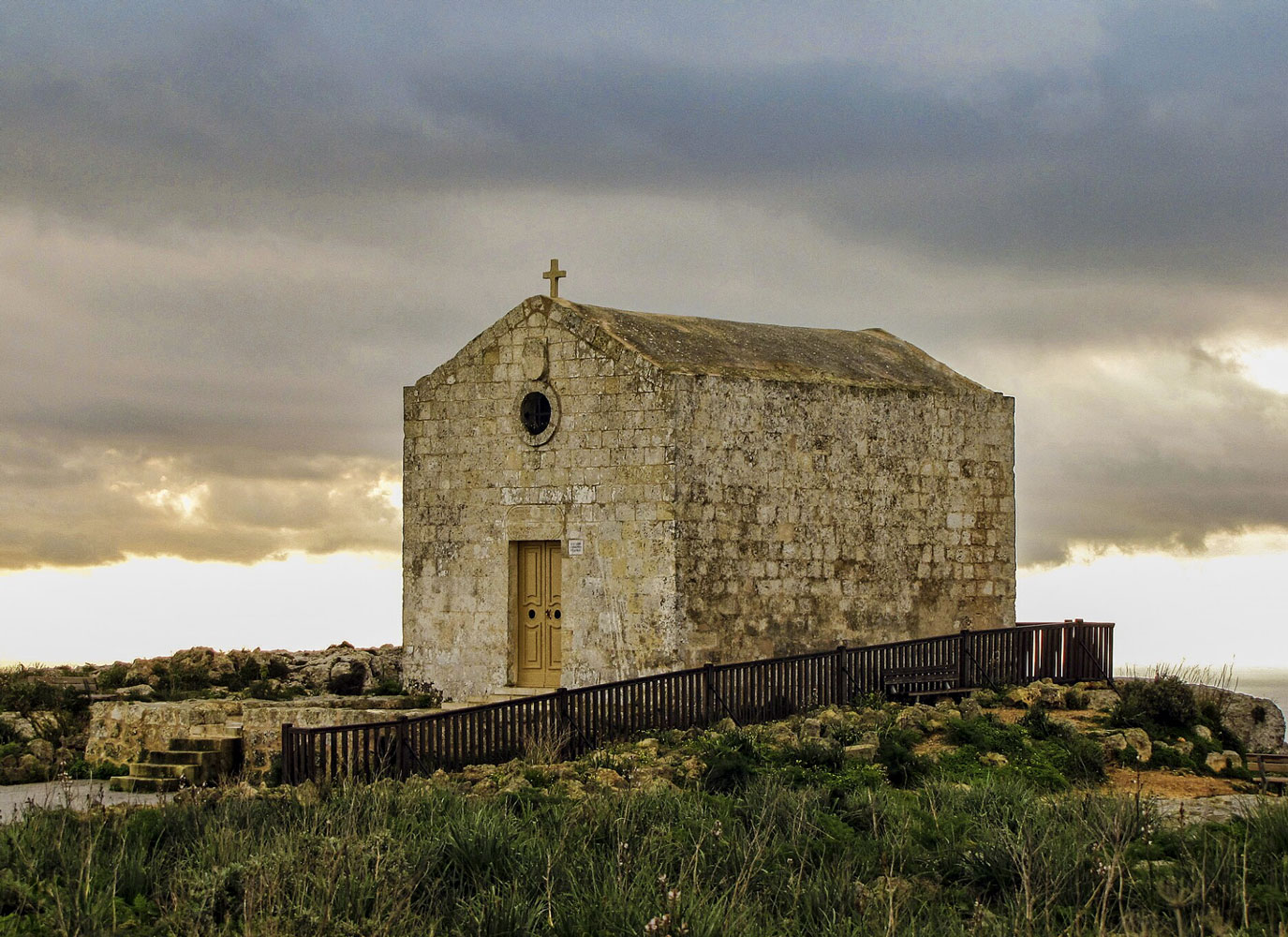
A much better picture of the chapel from the web. Alfred pointed out that the chapel has been damaged many times by lighting strikes, but the oldest stones were from the 14th century.
It was now getting late, but we wanted to see one more thing, St. Paul's Grotto and Catacombs in Rabat, just outside Mdina. It turned out to be the most unusual and interesting event of the day.
We stopped close to the Basilica of St Paul.
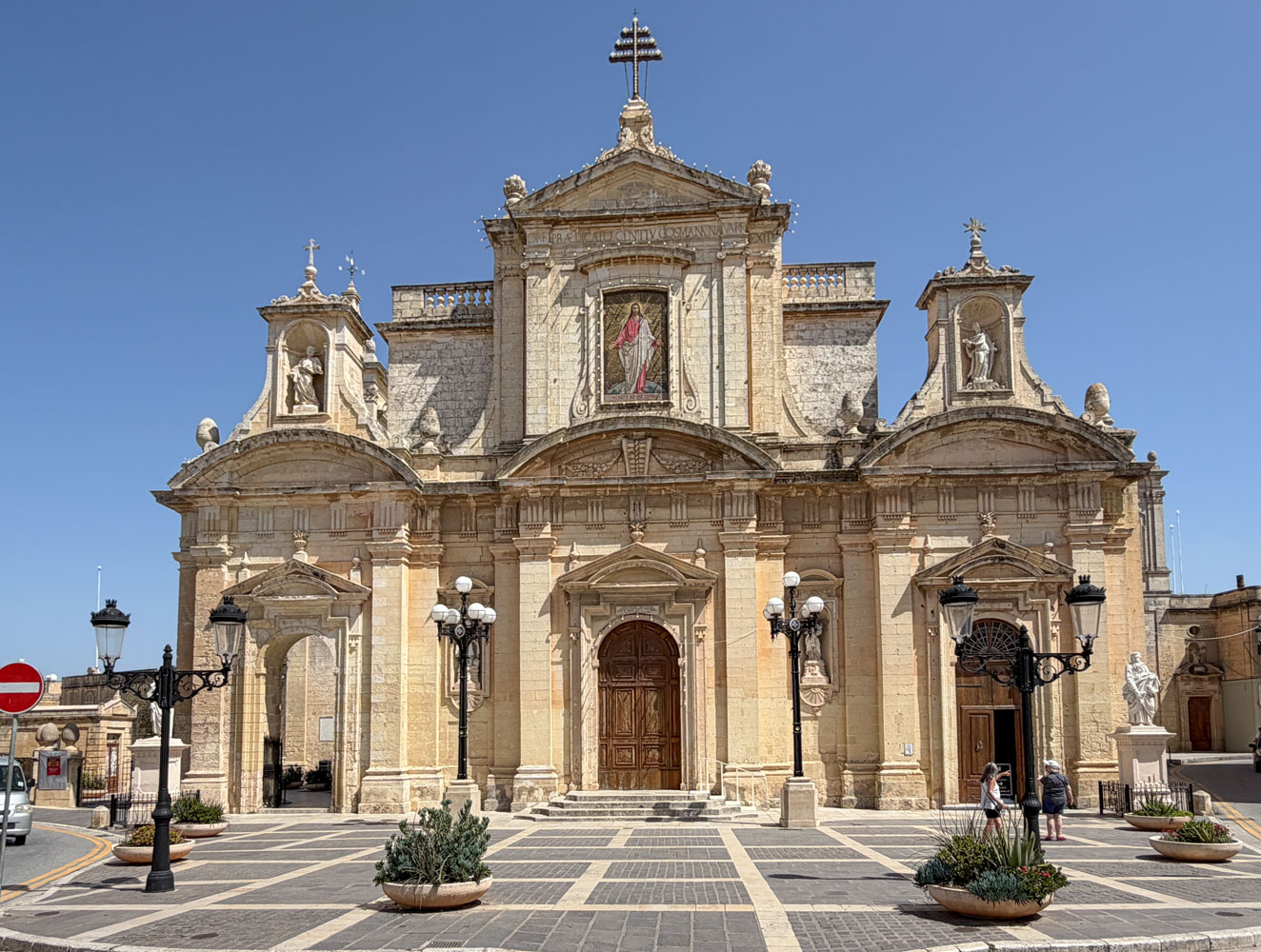
The entrance to the grotto and catacombs was next door to the Basilica. This statue of St Paul was just inside the entrance.

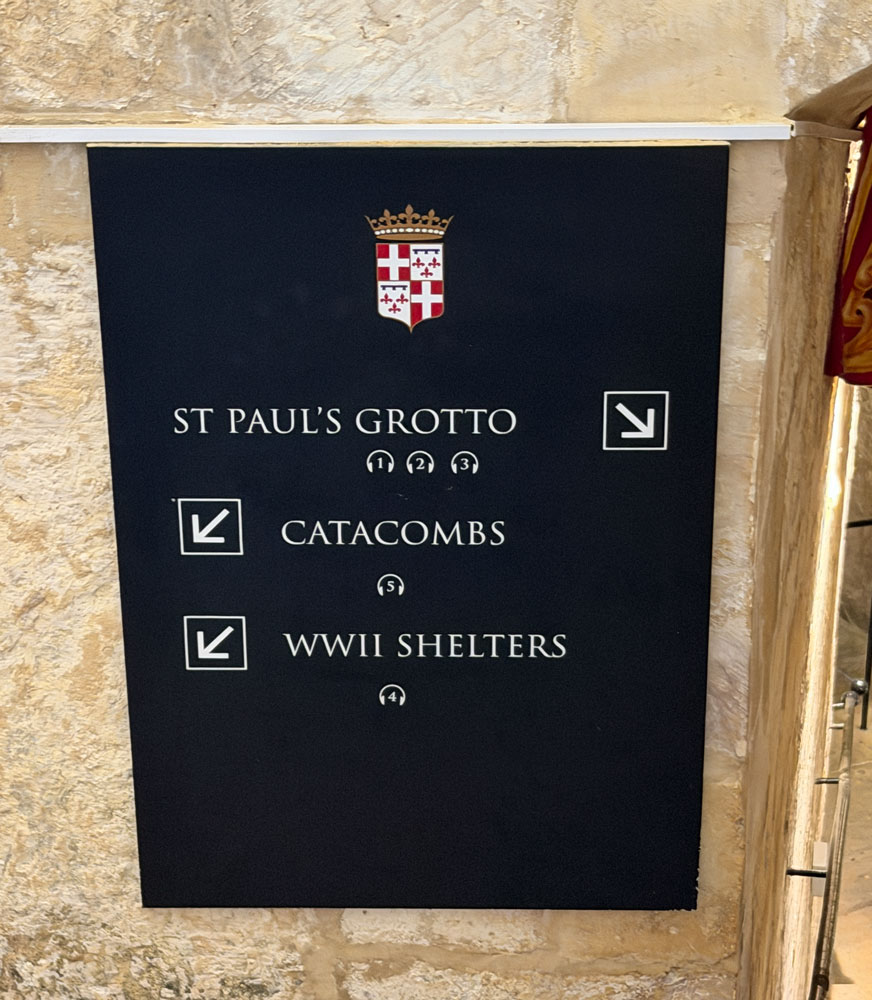
We began by visiting St. Paul's grotto but we're going to visit the catacombs and the World War II shelter, also.
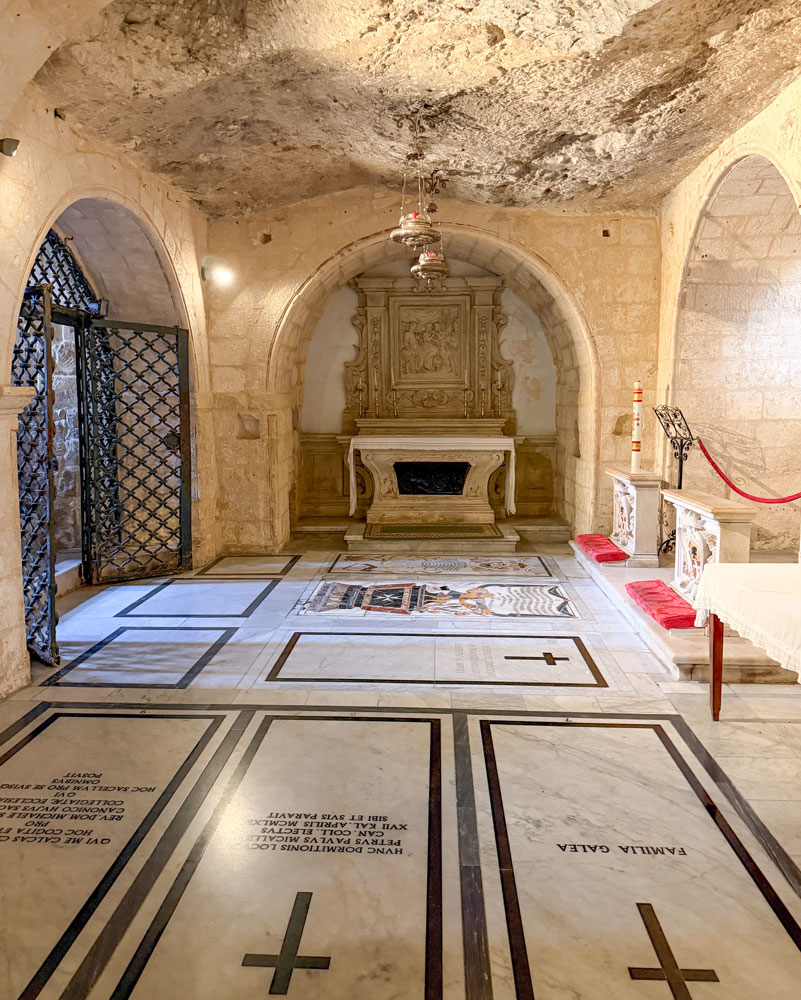
Here's the main part of St Paul's Grotto - what you see as you first enter. The rectangular outlines on the floor are burial chambers.
A closer view of the altar in the above picture. It shows St. Paul healing a man. At the time, St. Paul was a prisoner of the Romans so there's a Roman soldier on the right side of the picture. These are highly detailed limestone bas reliefs.

One of the side chambers. This is St. Paul, in a free standing statue.

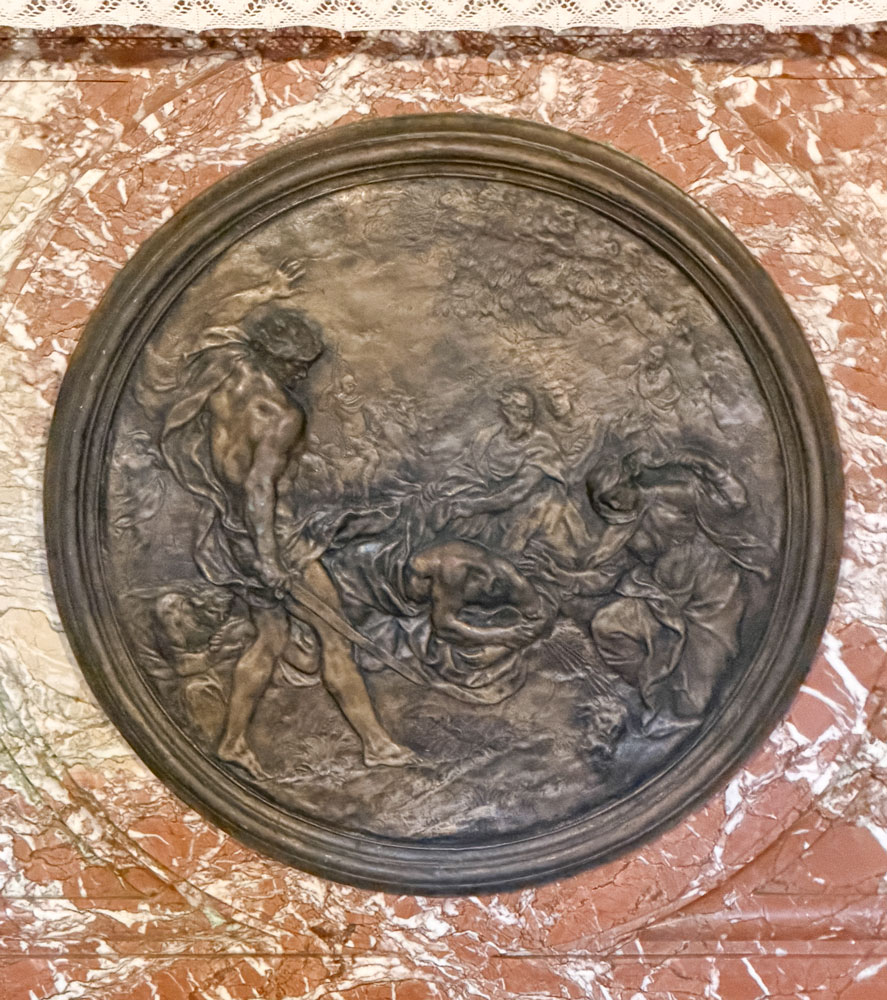
A close-up of the medallion on the lower part of the altar showing the death of St. Paul, with his severed head on the ground.
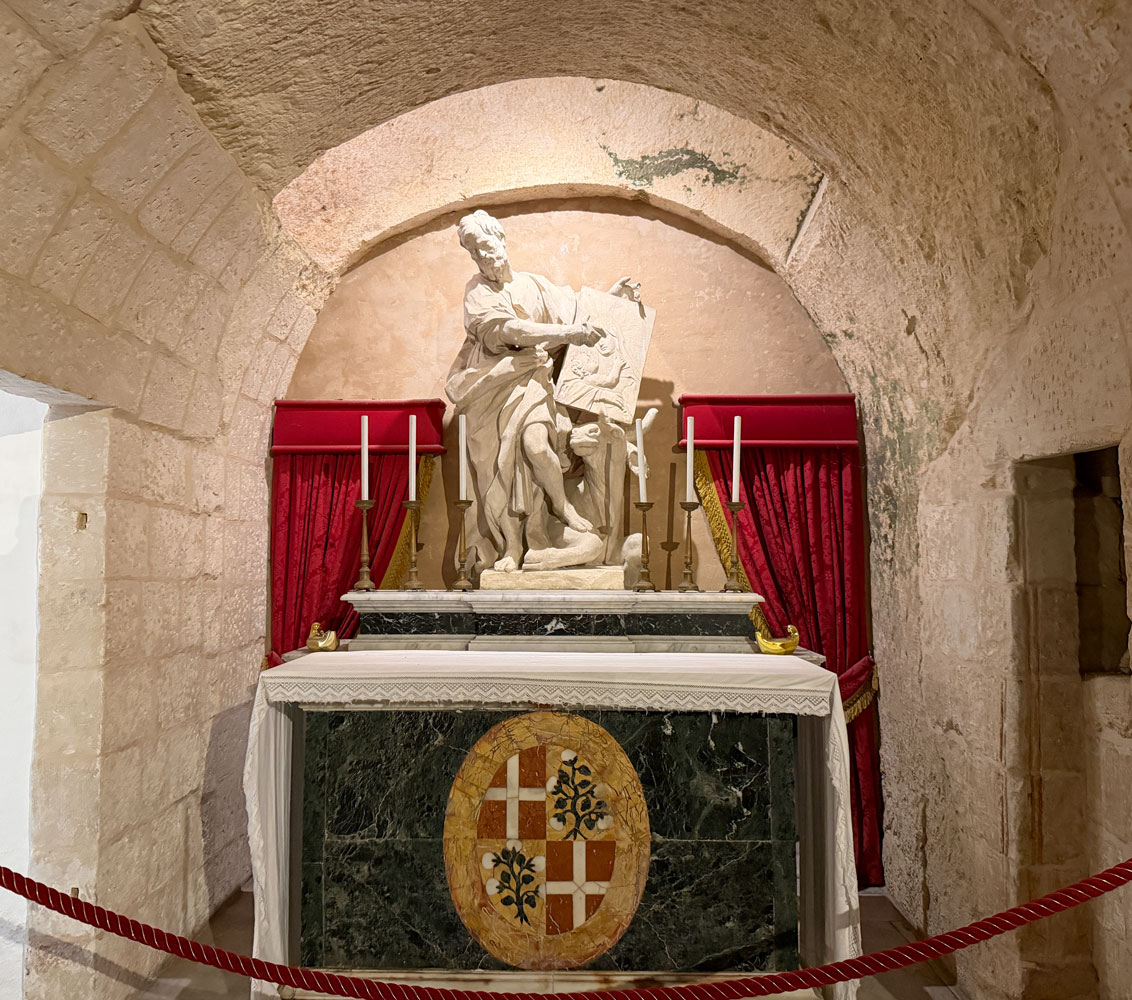
Another side chamber, this time St. Luke. Note the cow (or ox) just below the stone St. Luke is holding. The ox was a symbol of St. Luke.
A fairly modern display. I was told it was created for the visit of Pope John Paul II to the grotto in 1990.
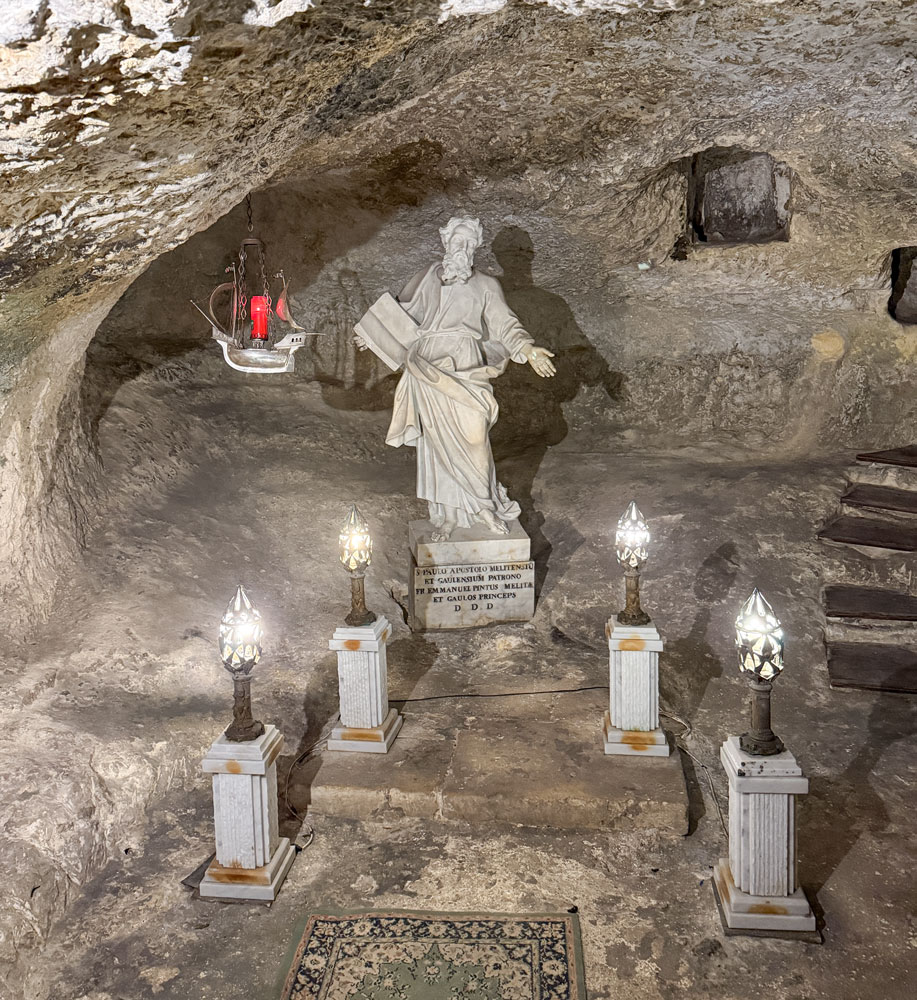
We left the grotto and went to the World War II shelters. During WWII the urban areas of Malta were extensively bombed and many people moved to the rural areas because the Germans and Italians didn't waste bombs on farmland.
Some statistics about the bombing of Malta: Malta was the most bombed place in World War II. From 1940 to 1943, 15,000 tons of bombs were dropped on Malta. 10,761 buildings were destroyed and 1,500 civilians were killed. The Malta "blitz" lasted 154 days. The London blitz lasted 54 days.
But some migrated to the tunnels of the catacombs. They carved out small living chambers in the limestone and lived in them during the 1941-1942 period.
I didn't take enough pictures of this area. But here's a picture of one of the main tunnels in the shelter. It was large and there was a flow of air through the tunnel.
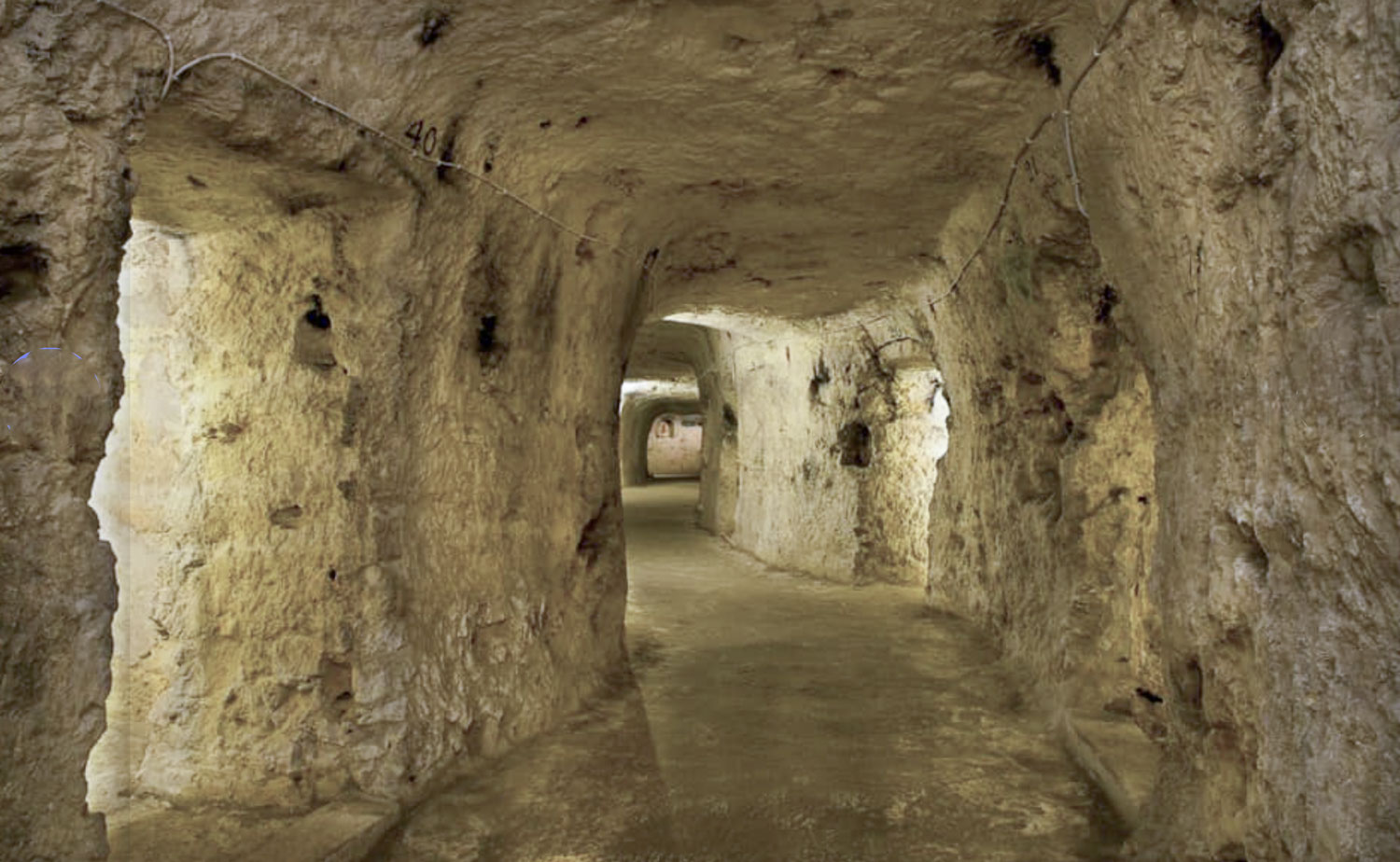
The main tunnel is reasonably large with these chambers off to the side. The chambers were fitted with wooden doors, although some just hung a curtain. It was like a small city - the tunnels go on and on. Searching the web, it indicates that there were about 50 chambers sheltering about 350 people. Entire families would occupy one chamber. The air was kept fresh by having openings at each end of the entire complex, and bathing and toilet areas were in one place.
Here's one of the chambers.
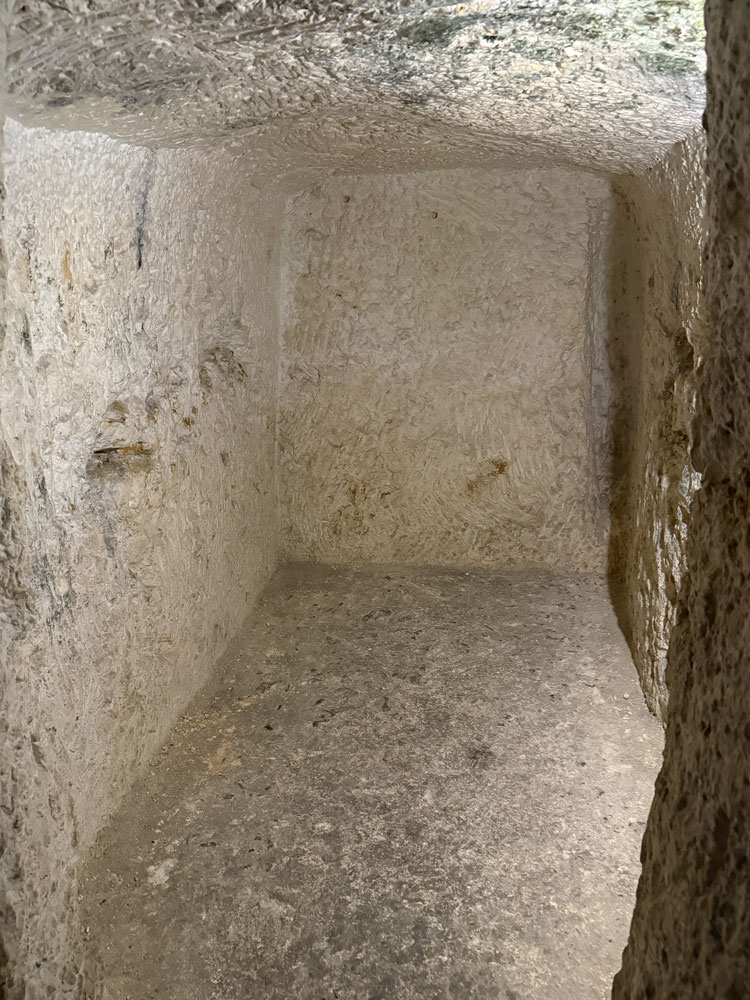
It's important to note that this wasn't the only underground shelter in Malta during WWII. In Mellieha, Couvre Porte (Vittoriosa), Valletta and Mgarr similar underground shelters were carved into the limestone of Malta (reportedly, there were about 100 underground shelters in Malta during the war). Here's a link to more information about shelters during WWII.
History has shown us that very few countries will surrender based just on aerial bombing. During World War II London was bombed during the Blitz. Germany was bombed extensively, with some cities such as Dresden completely destroyed. The civilian population hid in shelters and then went on with their life. In Vietnam, we dropped many tons of bombs on the North Vietnamese and they never gave up. Malta never gave up, either. In the current news, it's likely that Iran won't give up either. "Flesh is stronger than steel."
Conquest of Iran would require "boots on the ground" which is not likely to happen based on our experience in Iraq and Afghanistan.
As we continued to the catacombs the tunnel got narrower and lower. These burial places were created in much earlier times than WWII, and were perhaps the genesis of the protected areas during wartime. The human remains were removed to an ossuary before the tunnels were converted to an underground shelter so there are no bones in the catacombs, unlike the Paris catacombs (also, see here.)
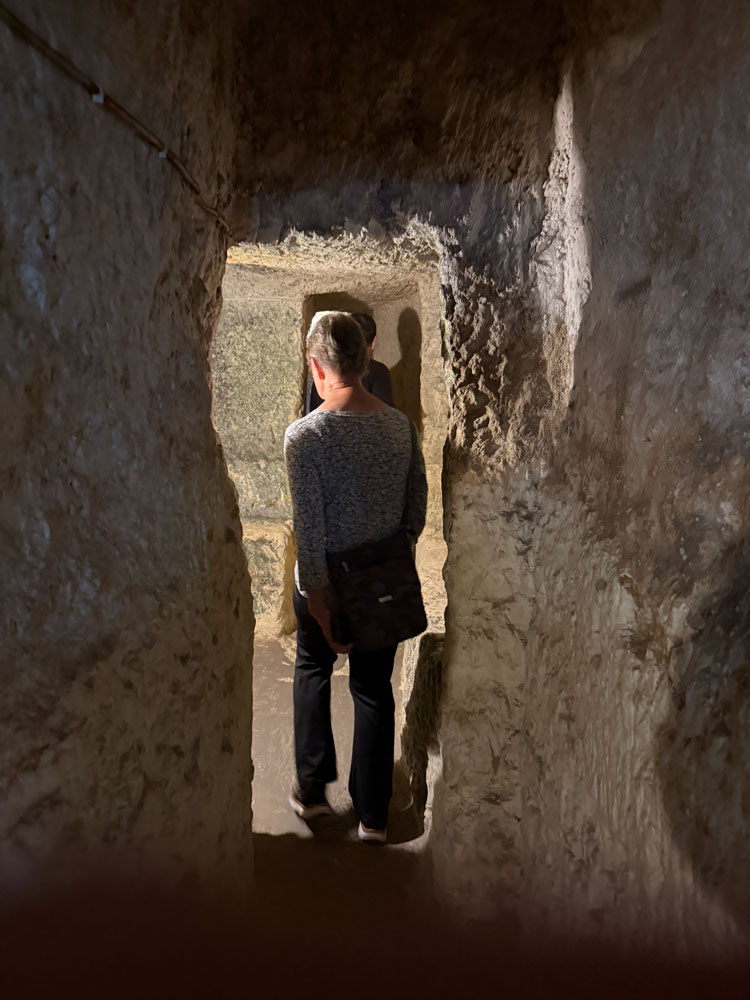

That was the last event on the tour. We drove back to the hotel and arrived about 4pm.
Judy and I walked over to the Bay Street Shopping Complex so she could get a new watch band for her Swatch watch, and then we went to a pizza place on the water for dinner (the pizza at the hotel was better).
Then it was to bed. We were tired.
**************************************************************
5/1/2026 (Friday) - We slept the whole night, which is good. After breakfast we just hung out in the room and later walked down to the shopping center again.
We submitted a load of laundry for cleaning at the hotel. That was a mistake - the rates for laundry were much less on the ship.
At 6:00pm we gathered in the lobby for the welcome dinner. Here's our tour director (for our subgroup- yellow), Terry Portwood. She did a very good job during the cruise/tour.

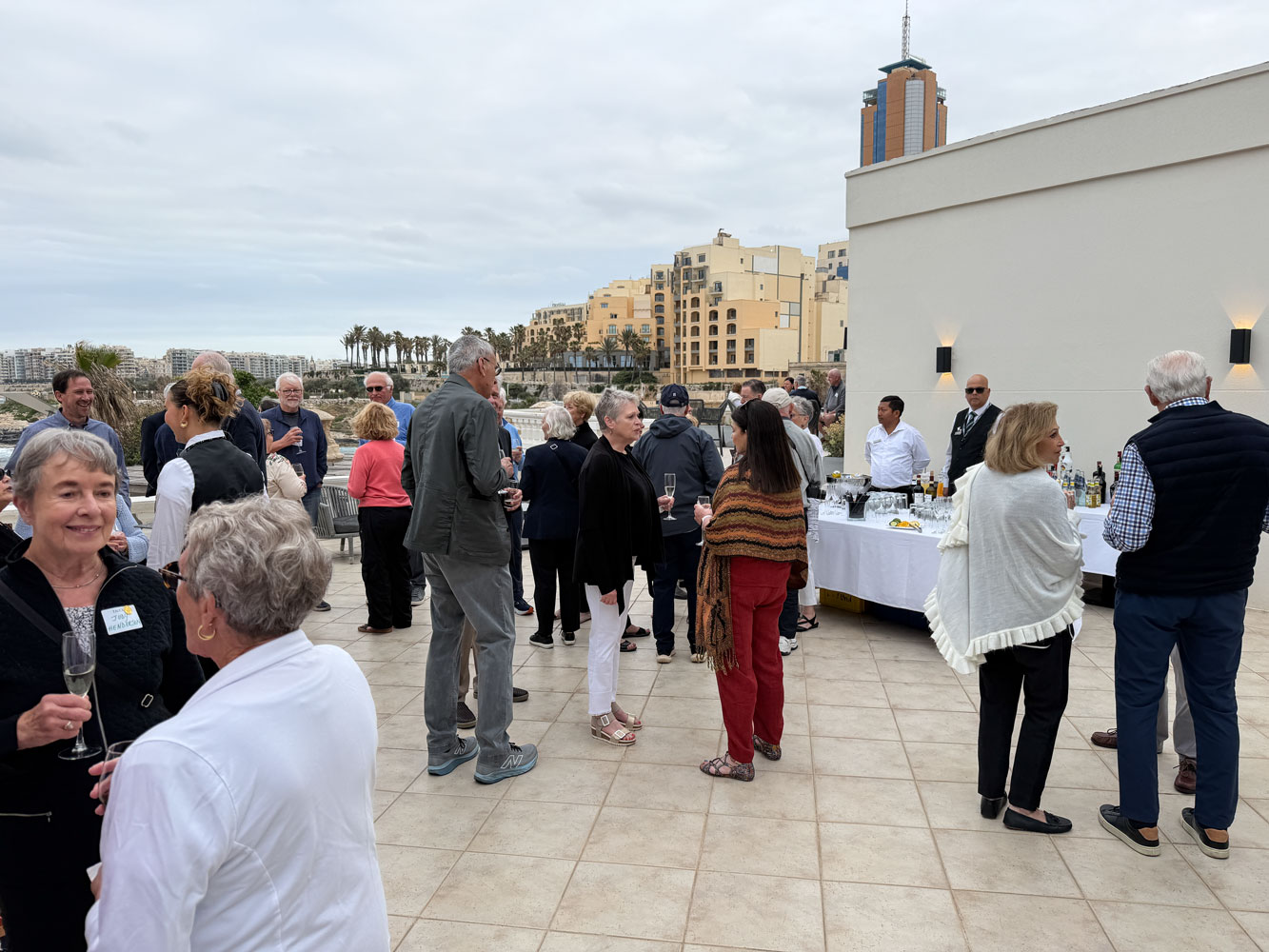
After meeting in the lobby, we walked next door to a stand-alone building at the side of the hotel. Note the area in the right side of the picture, next to the building. We'll have some social time there before going into the building for dinner.

The TDs (Tour Directors) had name tags for each of us. Here's some of the group. There are 150 Tauck guests on this tour/cruise. Fifty-nine are staying at this hotel and the rest are at the other hotel. We will have the whole ship to ourselves - there will be no non-Tauck passengers on the ship. The ship has a capacity of 184 passengers so I suppose there will be a few empty suites.
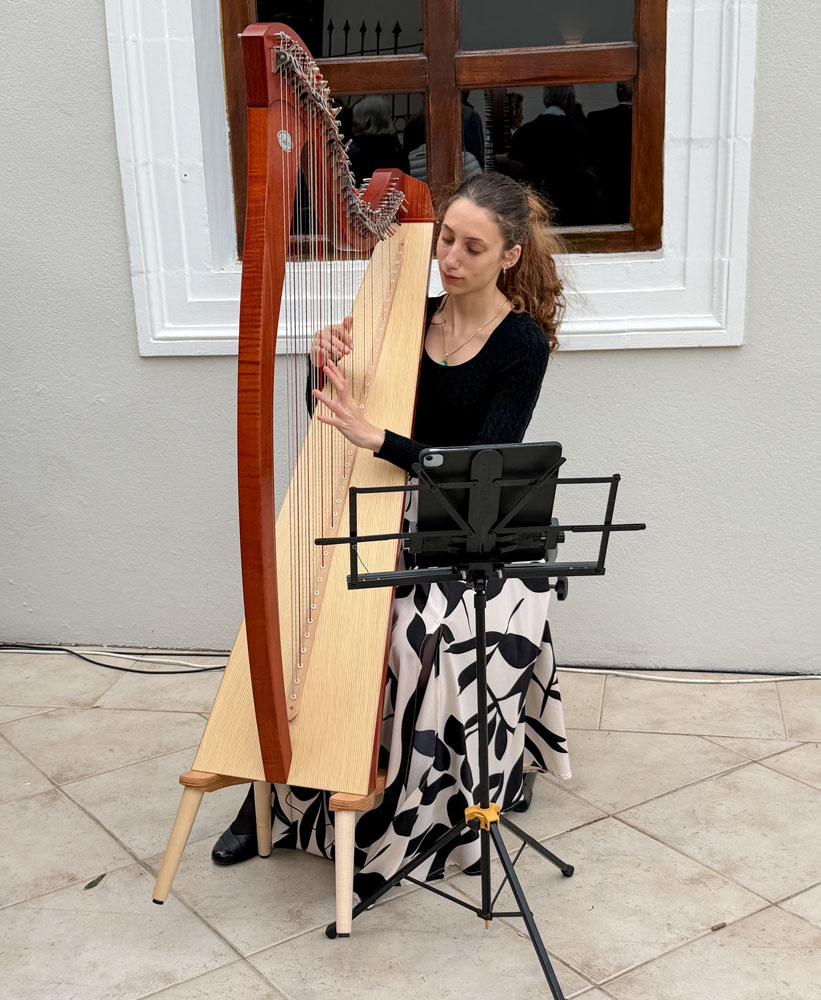
A harpist was playing while we chatted.
Eventually, we went into the building and were seated at tables of about eight to ten people. We got to know the people we were seated with.

The dinner menu was fixed and was sea bass, then a nice chocolate dessert. About 9:00pm the group broke up and as we departed the Tour Directors handed out the Vox units to be used for the rest of the trip. For those of us who wear over-the-ear hearing aids, the Vox units present problems. You can see more about this problem here.
Then it was back to our rooms and to bed. We meet tomorrow in the lobby at 9:30am for a tour of Valletta.
**************************************************************
5/2/2026 (Saturday) - We slept through the night - I guess we're getting time adjusted. We were down at breakfast about 8:00am. We must meet our Tour Director, Terry, in the lobby by 9:30am.
I hadn't said anything about breakfast earlier but the hotel lays out quite a breakfast. There's a coffee bar, an omelet bar, and counters with breakfast meats and all kinds of fruit, bread and rolls. It's quite a spread.
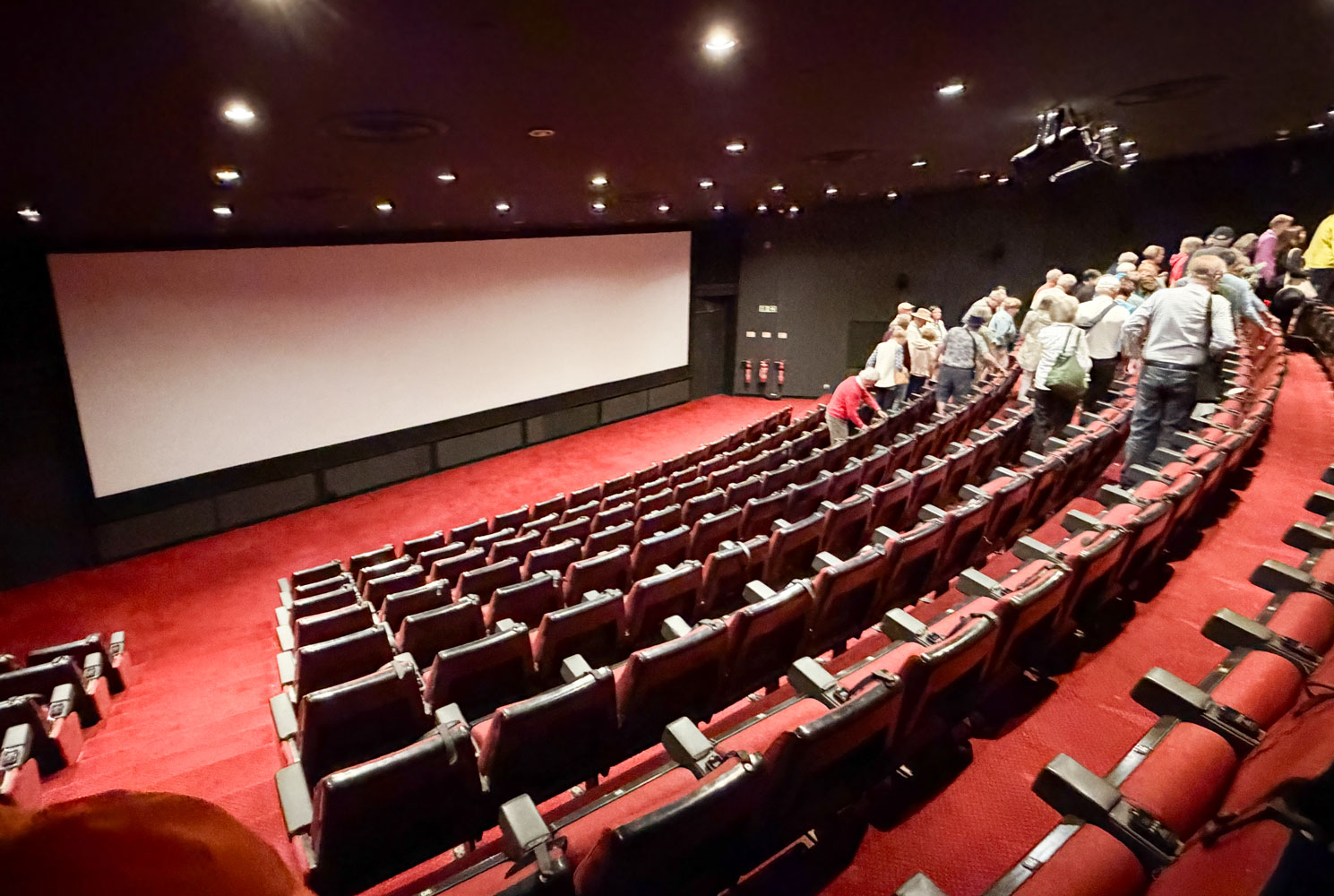
Right on time, we boarded a bus for our excursions, and went to Fort St. Elmo to see the movie, "The Malta Experience". When we arrived at Fort St. Elmo we were led downstairs to a wide-screen theater to see the movie. Here's a picture of the theater that I took after the movie was over. If you knew nothing about the history of Malta the movie might have provided you with a foundation of Malta's past. I had done some research on Malta before we left and didn't find that movie that enlightening.
After the movie, we walked up Merchants Street to Saint Dominic Street, to Casa Rocca Piccola. Casa Rocca Piccola was built in 1580, shortly after the Great Siege and has been in the same family since then.

I must admit that visiting an old house is not all that interesting to me, but I took some pictures that I'll share with you. Here's a statue of a small dog asking to have her tummy rubbed.

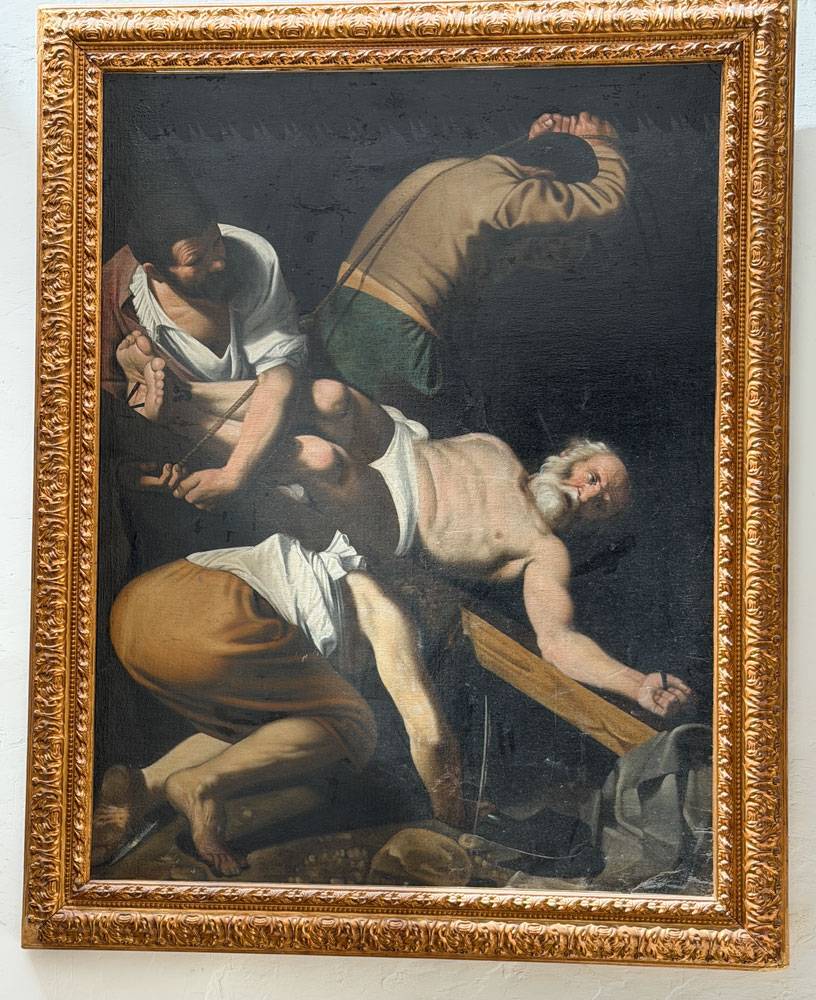
There was a reproduction of Caravaggio's "The Crucifixion of Saint Peter."
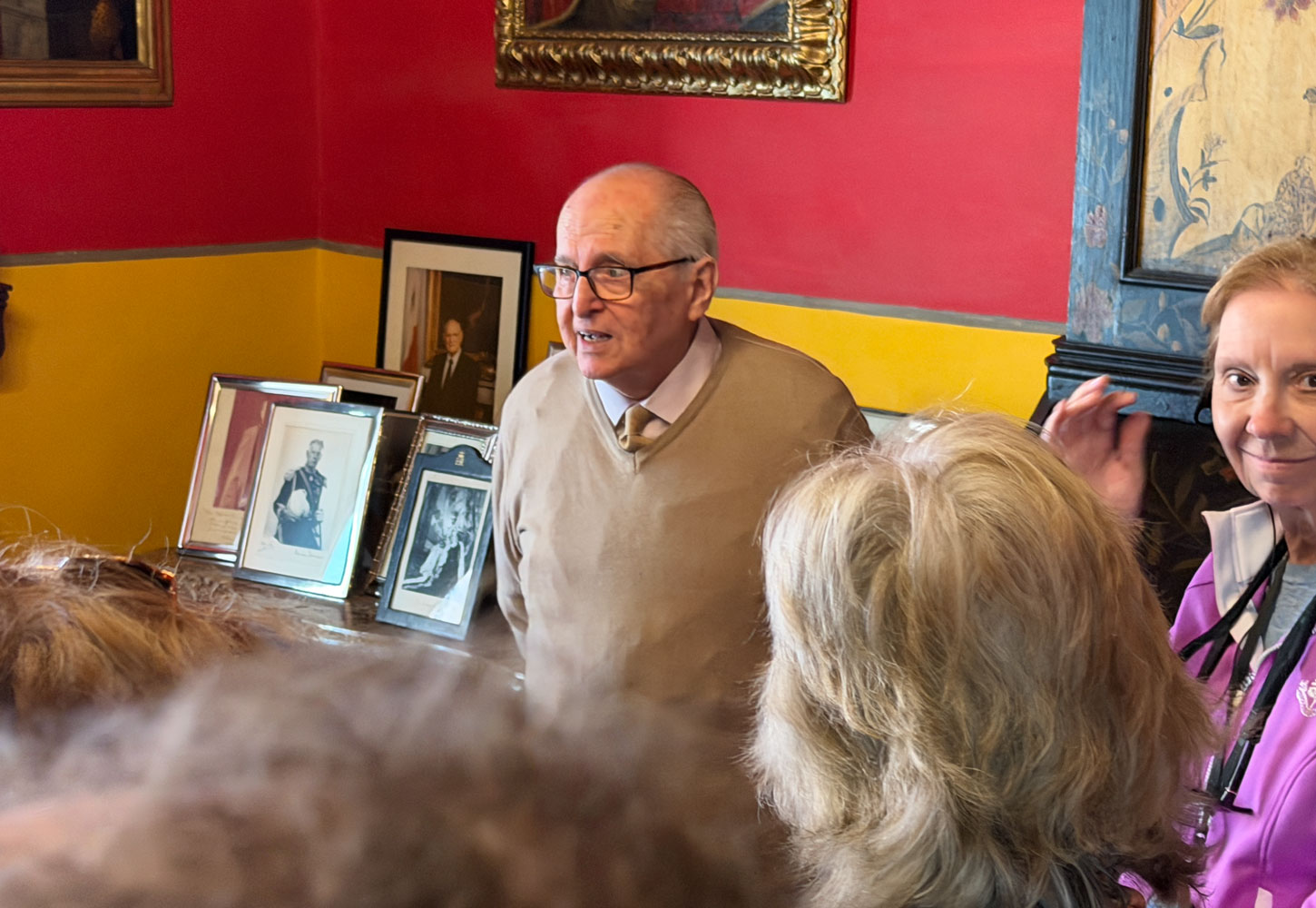
An older member of the family, who is a Knight, talked to us about the house, and about the piece of furniture he was standing next to. When it opened, it could be used by a priest to say mass.
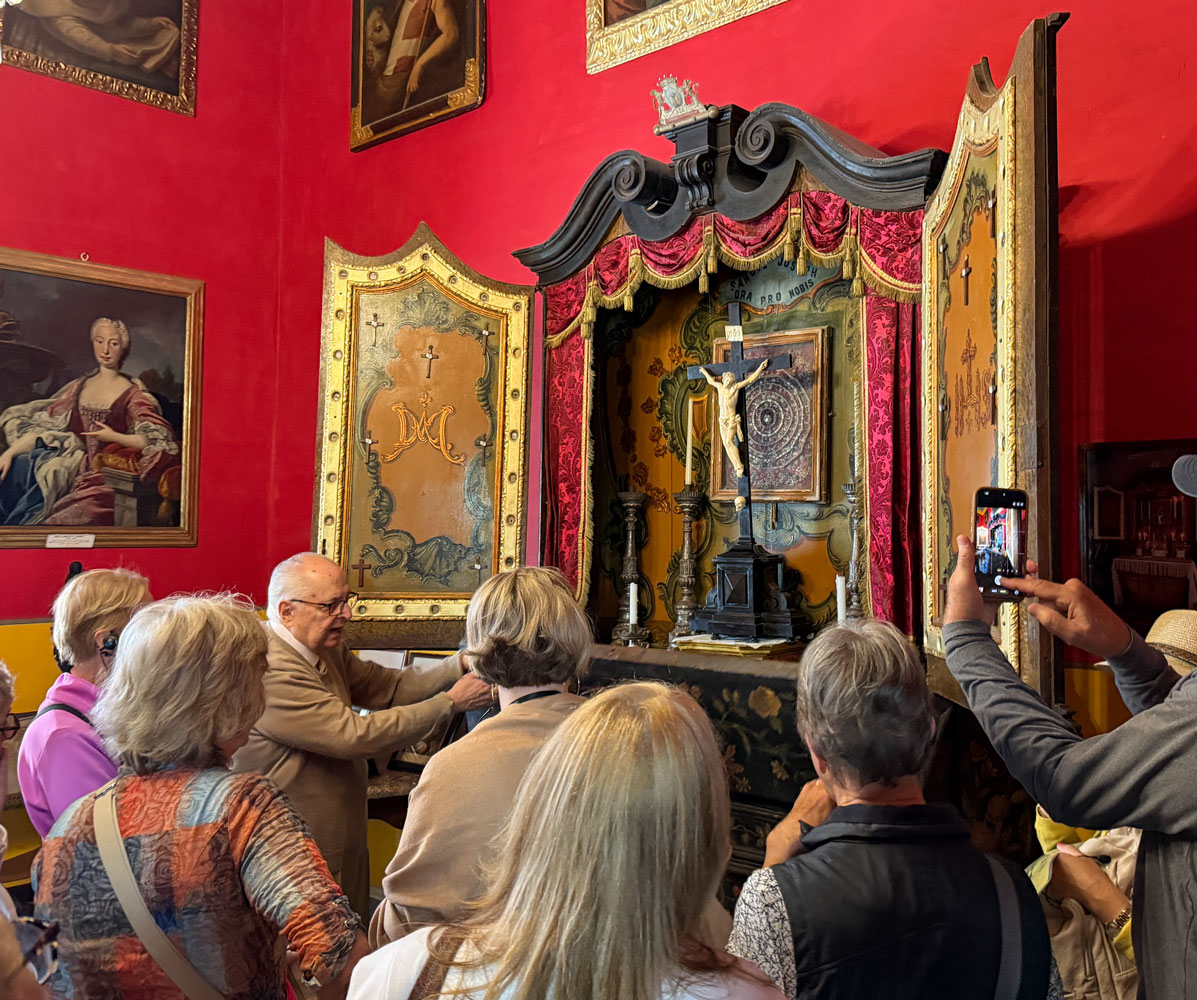
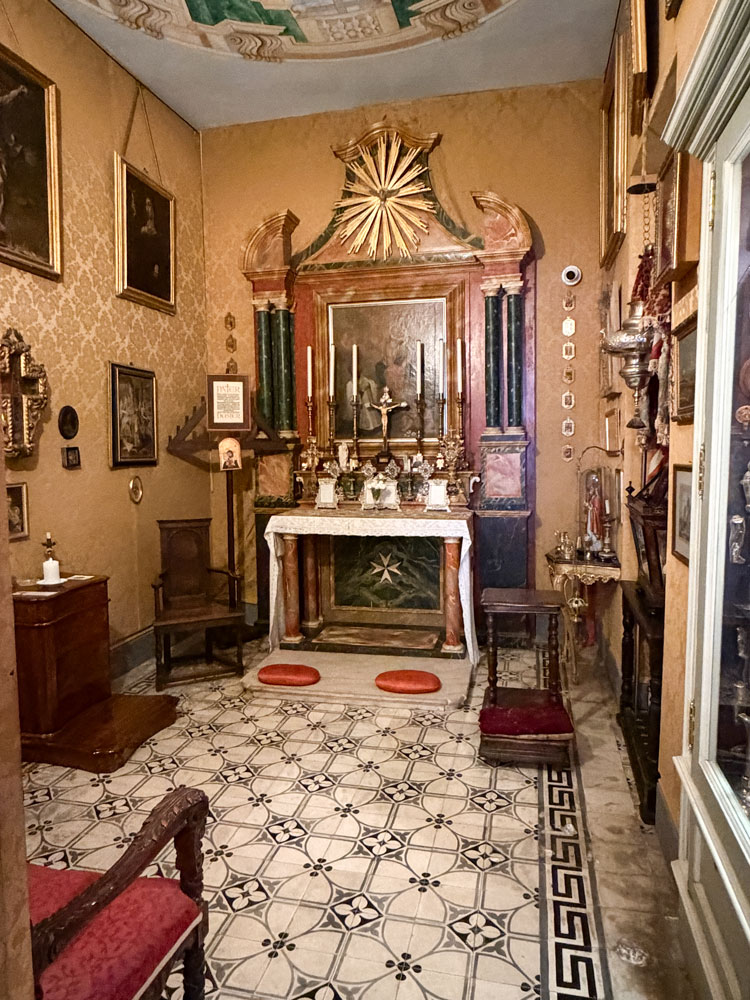
In addition to that, they had a family chapel built into the house.
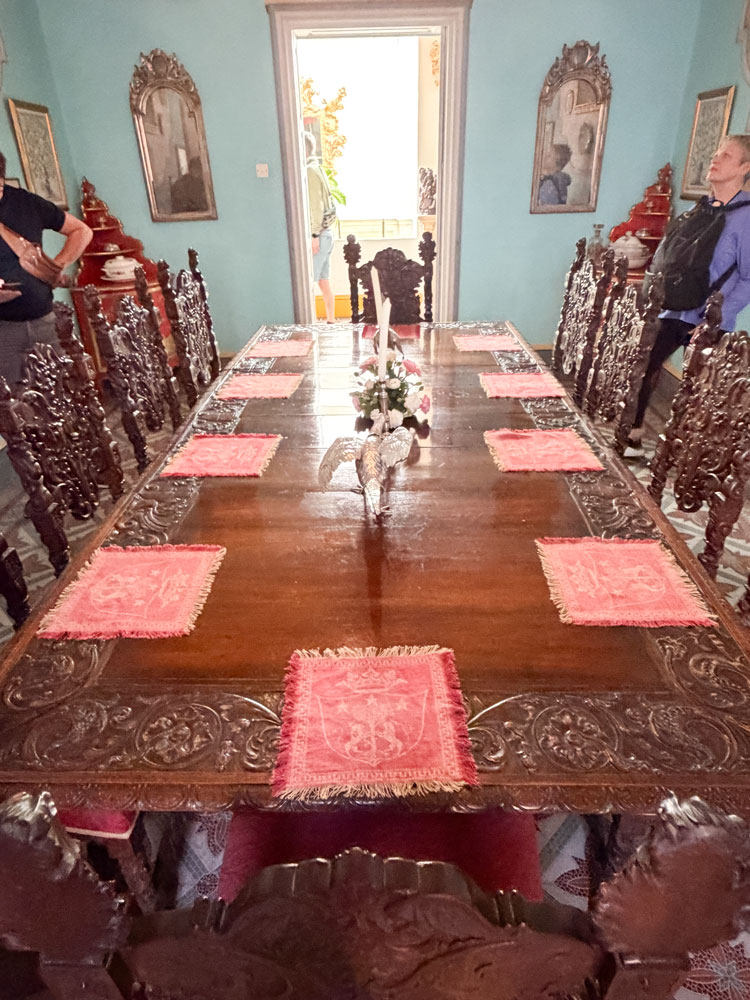
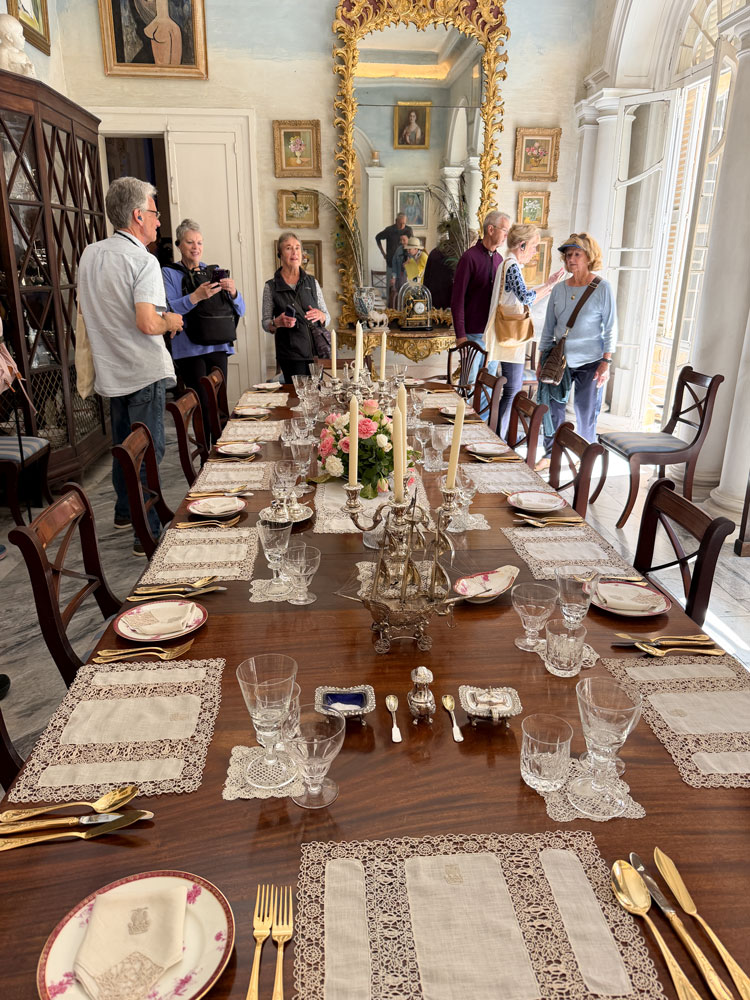
A carved dining room table.
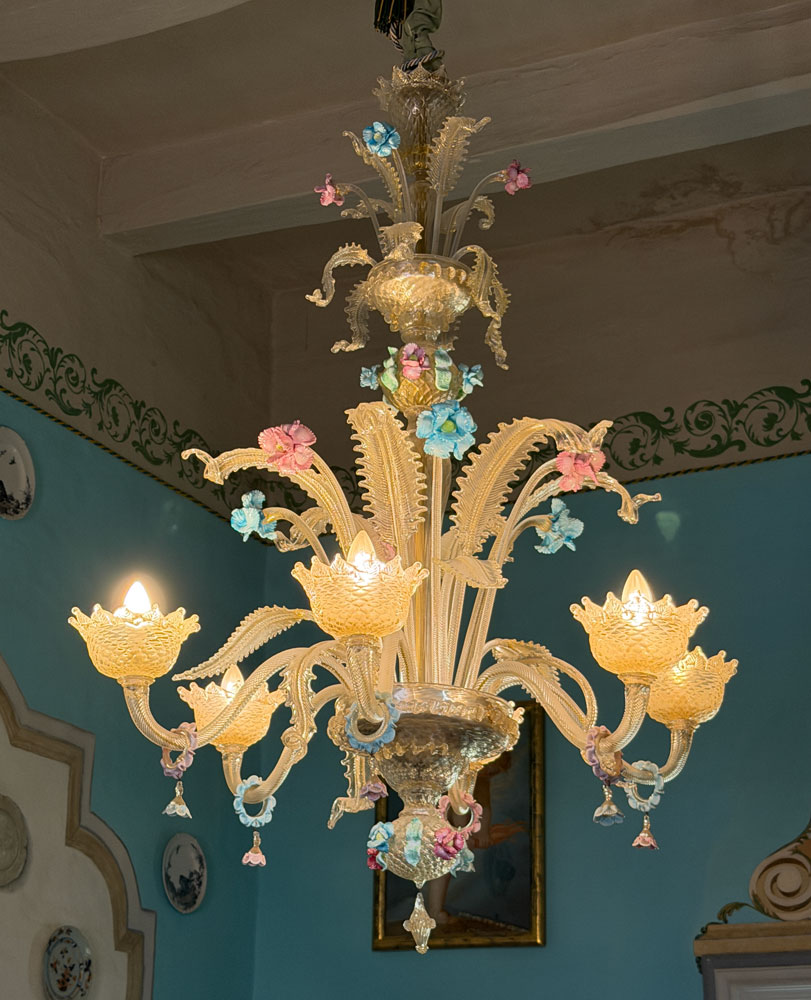
The chandelier over the table.
A palanquin. Boards would be placed into the metal brackets on each side and then it would be carried by four men. This was especially used to carry someone up and down stairs. There were no elevators back when the house was built.

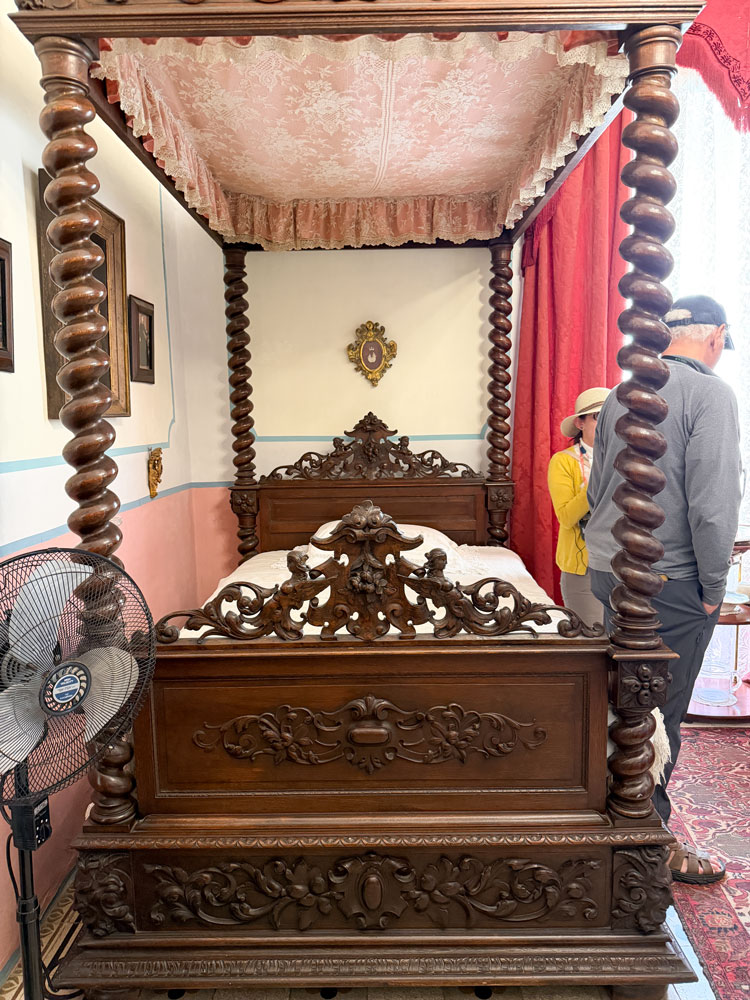
A carved bed, which today is considered a good luck bed, because many births occured in it.
This is a interesting clock based on a 17th Century Lantern clock. The original clocks were weight driven, while this one is spring driven, indicating it is a relatively modern version. But still cute.

Another dining table, more modern than the one shown earlier.
We went down to a small courtyard inside the Casa and were offered a glass of orange juice and a local sweet.

There was a blue and yellow macaw in the courtyard.

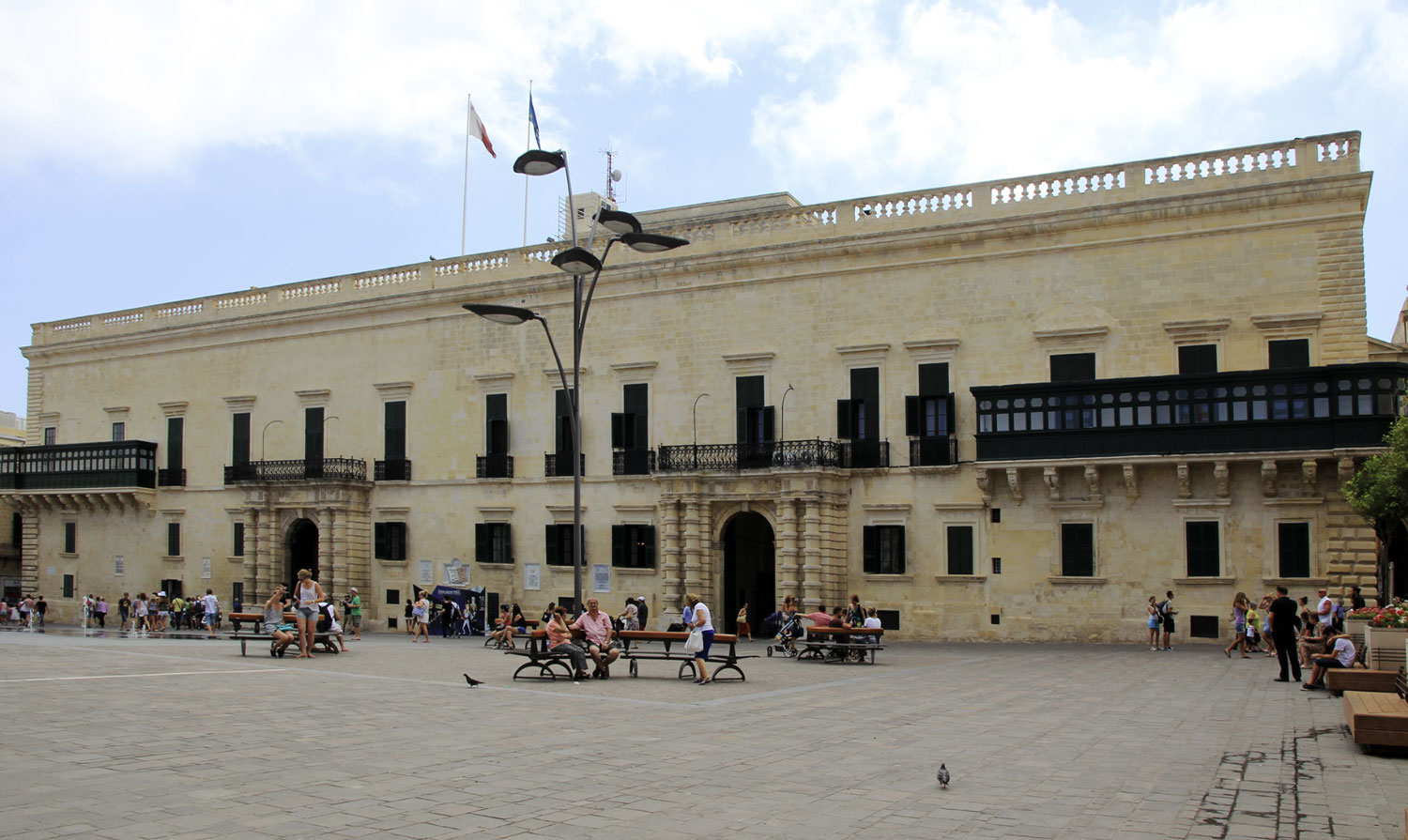
With that, we left the house and proceeded to the area of the Grandmaster's Palace at St. George's Square. Across the square is the Main Guard building.
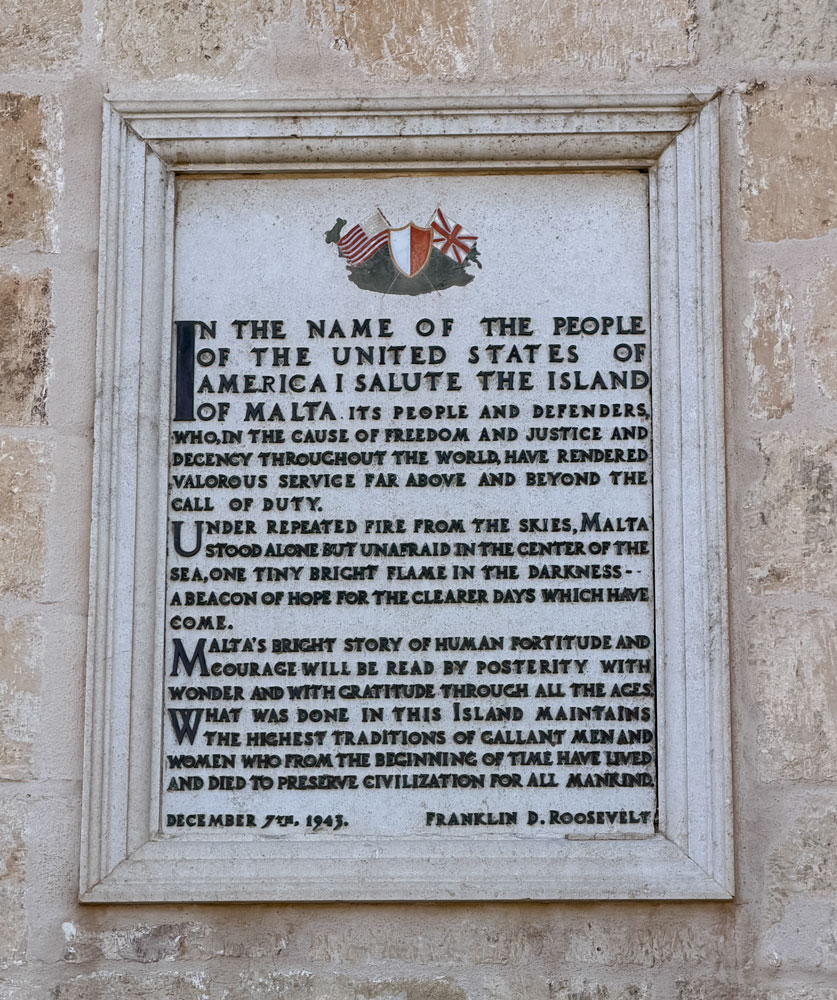
On the wall of the Grandmaster's Palace is this statement from
FDR (president
Franklin Roosevelt) honoring the Maltase for their heroic stand during the
bombing in WWII.
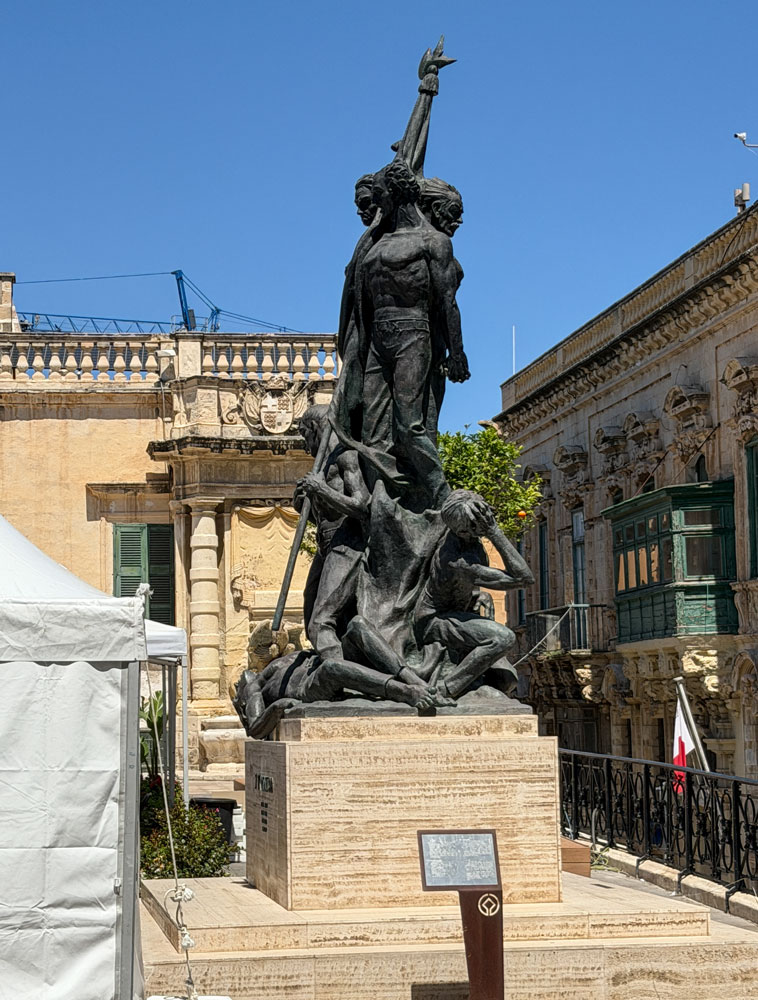
In St. George's Square is this sculpture titled "Sette Giugno" representing the cost-of-living riots that occurred in 1919. The British suppressed the riot but killed four Maltese citizens in the process. This increased the anti-colonial sentiment in Malta.
We passed the National Library of Malta but didn't go in.

Finally we came to St. John's Co-Cathedral, a Catholic cathedral built between 1573 and 1578. It is "Co" with St.Paul's Cathedral in Mdina, built in the 1100's. There was a long line waiting to enter. Apparently there had been an Ordination ceremony and the cathedral had been closed to tourists all morning.
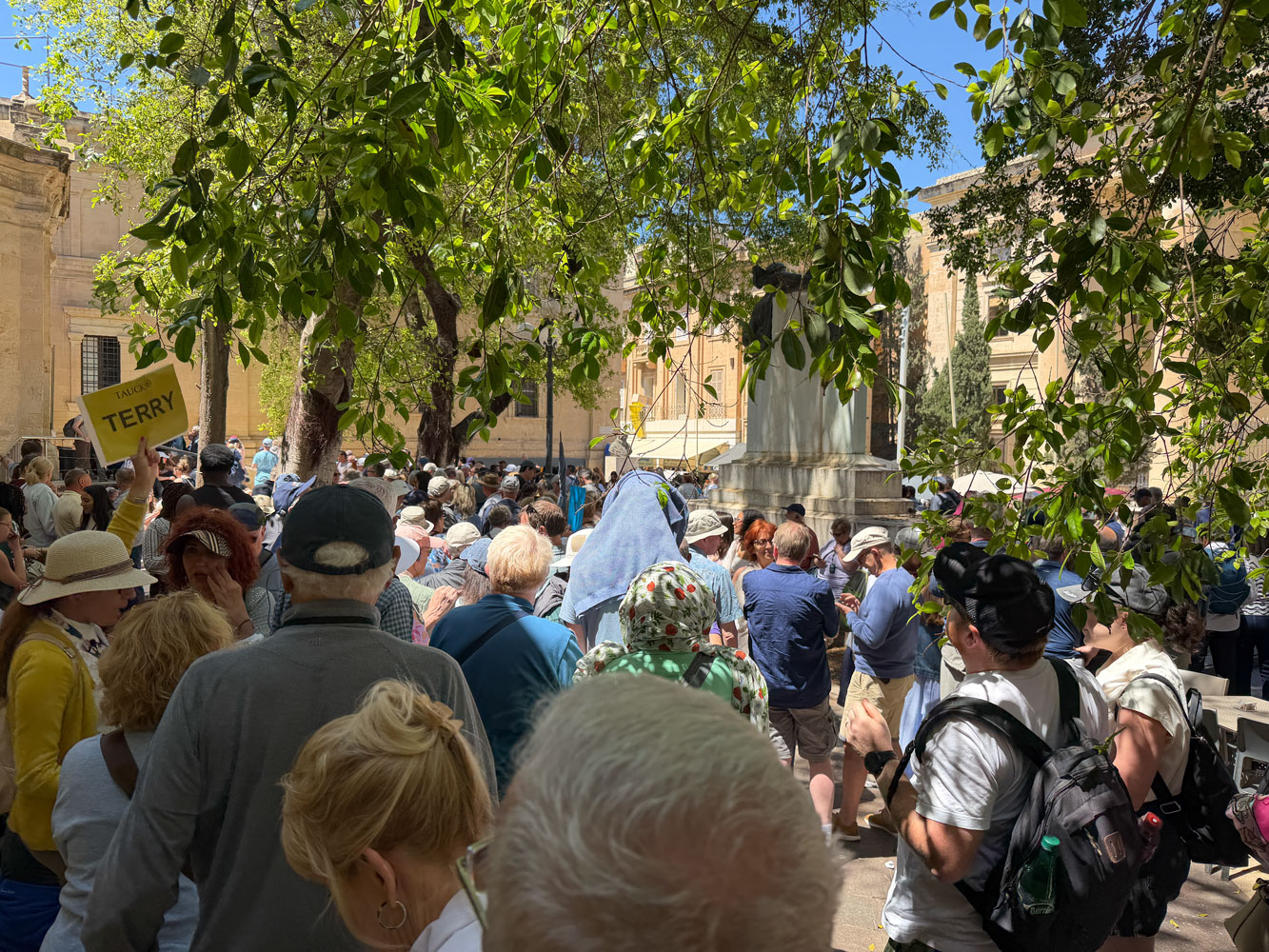
As we were entering, this sign was hung over the entrance.

This was the scene that greeted us inside the entrance. I was somewhat shocked by the ostentatious display of wealth and gold. My feeling is that most of the money that went into decorating this cathedral should have gone to help the parishioners. I have more respect for the simplicity of the Amish than for this.

A view from the back of the cathedral towards the altar.
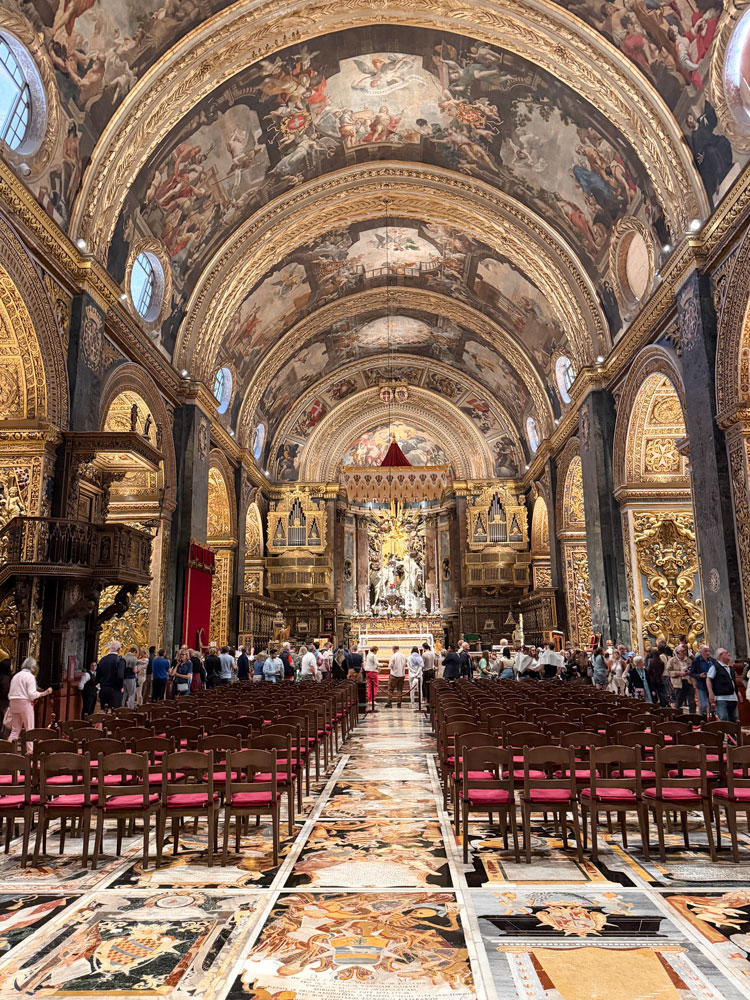
A closer view of the altar area from the rear of the cathedral.
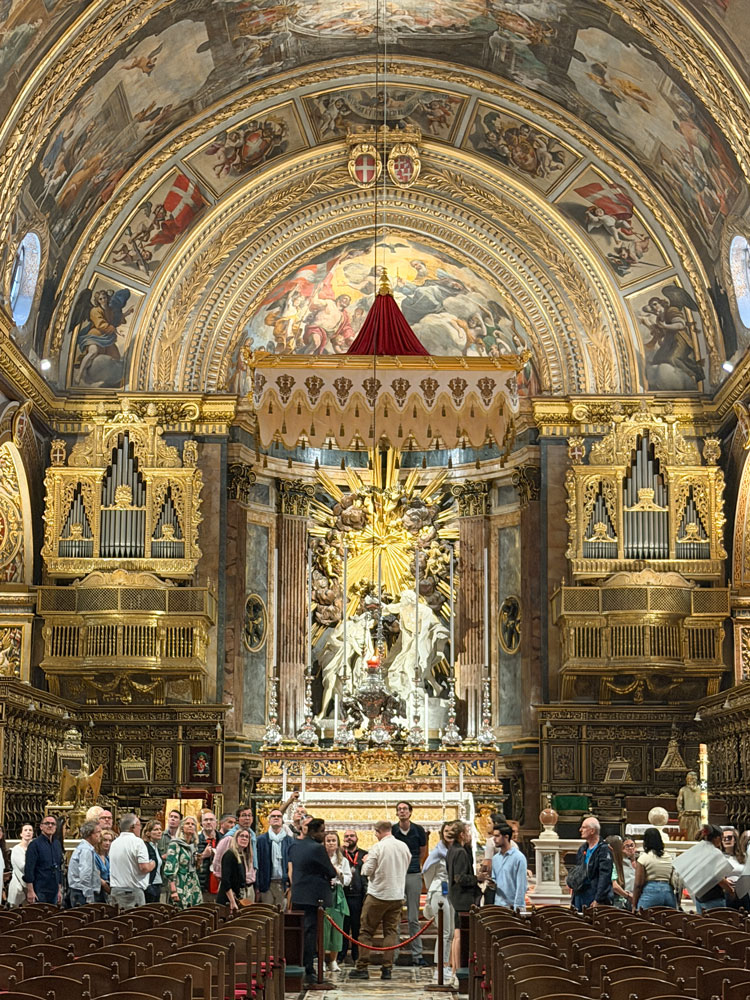
And a final view of the altar from the front of the cathedral.

A view from the front of the church towards the back.

Note the wooden "box" at the door of the cathedral. Here's a closer picture of it. That's there to limit the air coming in through the doors, especially in severe climates. It's called a narthex or vestibule.

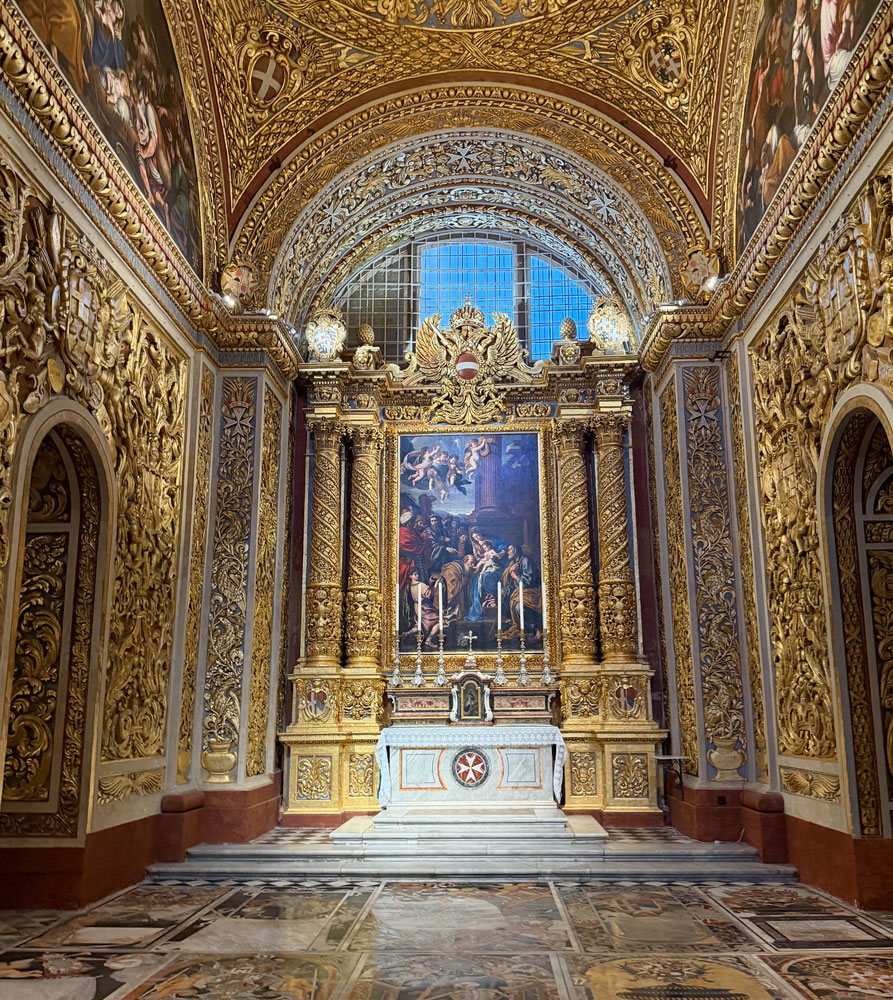
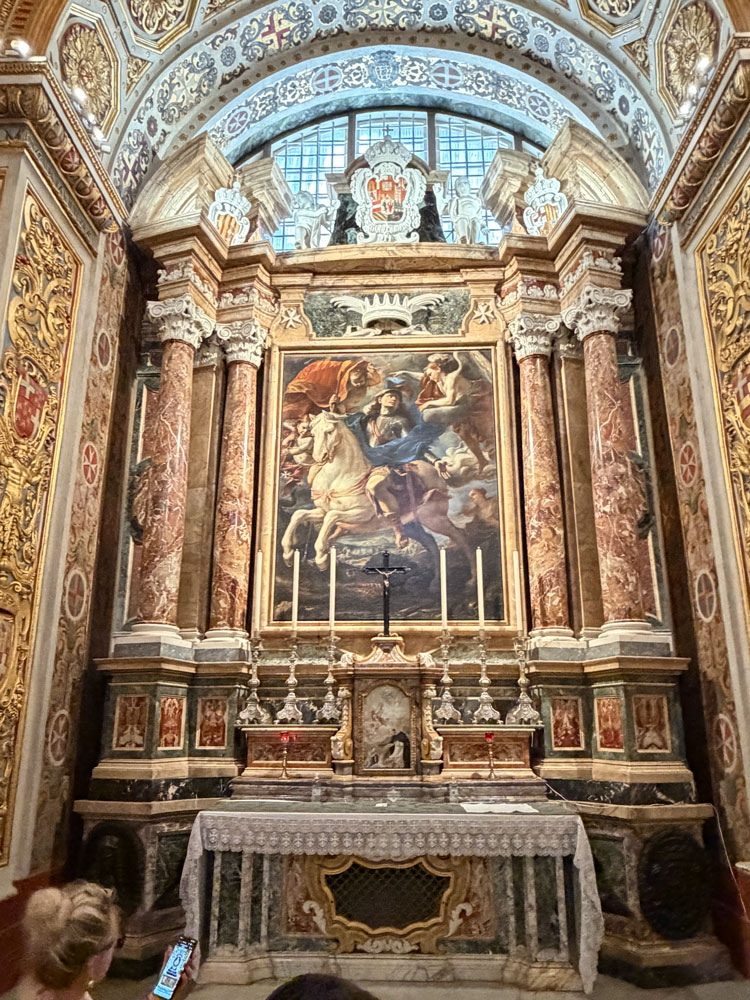
In the Catholic Church, priest are encouraged to offer a mass every day (perhaps that's to keep them in practice). However, in a cathedral there are more priests than are required to offer the public masses. To solve that problem cathedrals have "side altars" or chapels that the priests use to offer their mass. The chapels may also be used to offer a private mass for the family of a wealthy donor.
Here's a layout of the cathedral showing the side-altars/chapels.

Here are a few of those side altars/chapels. Wealth upon wealth.

Then we went to the Oratory where they have on display Caravaggio's "The Beheading of John the Baptist" (also see here) and "Saint Jerome Writing".
Here we are entering the Oratory.

The painting, "The Beheading of St. John", is at the end of the Oratory.
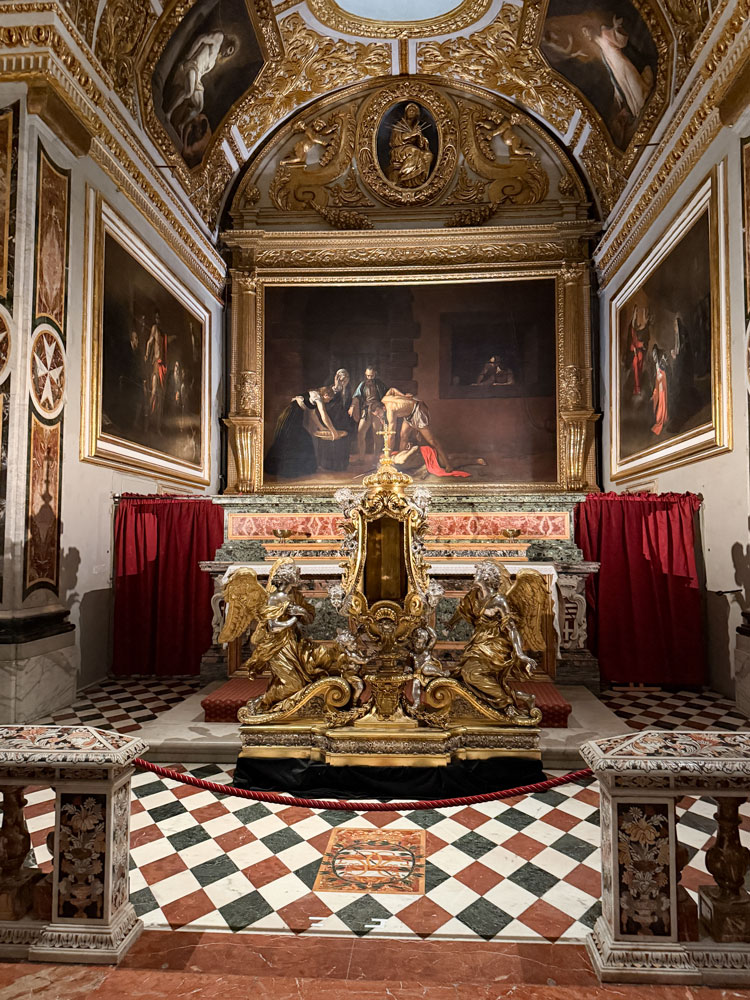
A closer view of the painting, in the Oratory.

Here's a better view of the painting, taken from the web.

From here we went into a side area off the Oratory to see the painting "Saint Jerome Writing". Here we are waiting to enter.

And the painting.
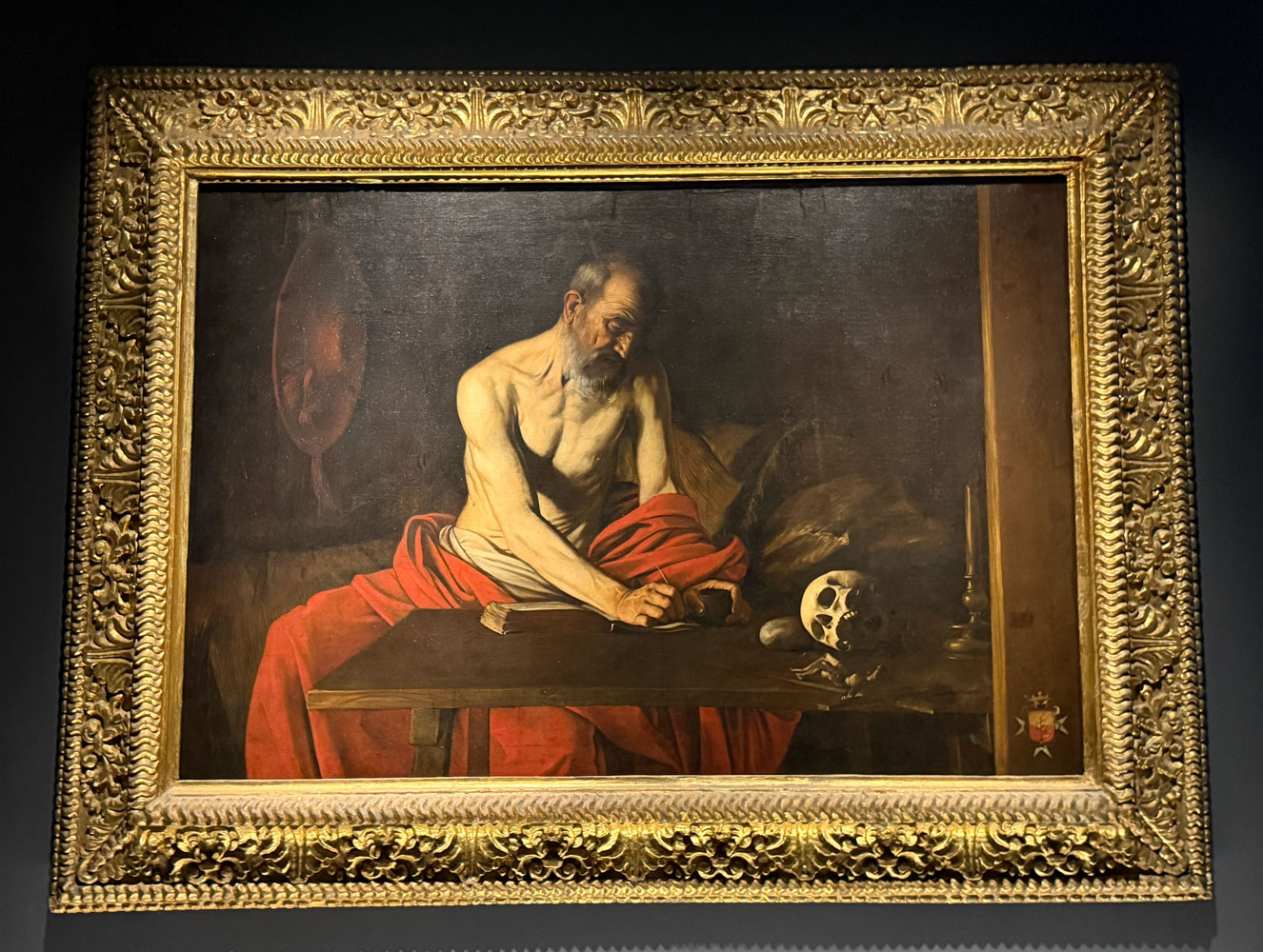
A better image of the painting from the web.

In December 1984, the painting was stolen by cutting it out of it's frame. The thieves demanded 500,000 Euros for it's return. As with all ransom demands, the robbers had to meet with someone to receive the payment, and when they did, they were arrested and the painting was recovered, although damaged. Here's the story. The painting was recovered in 1987.
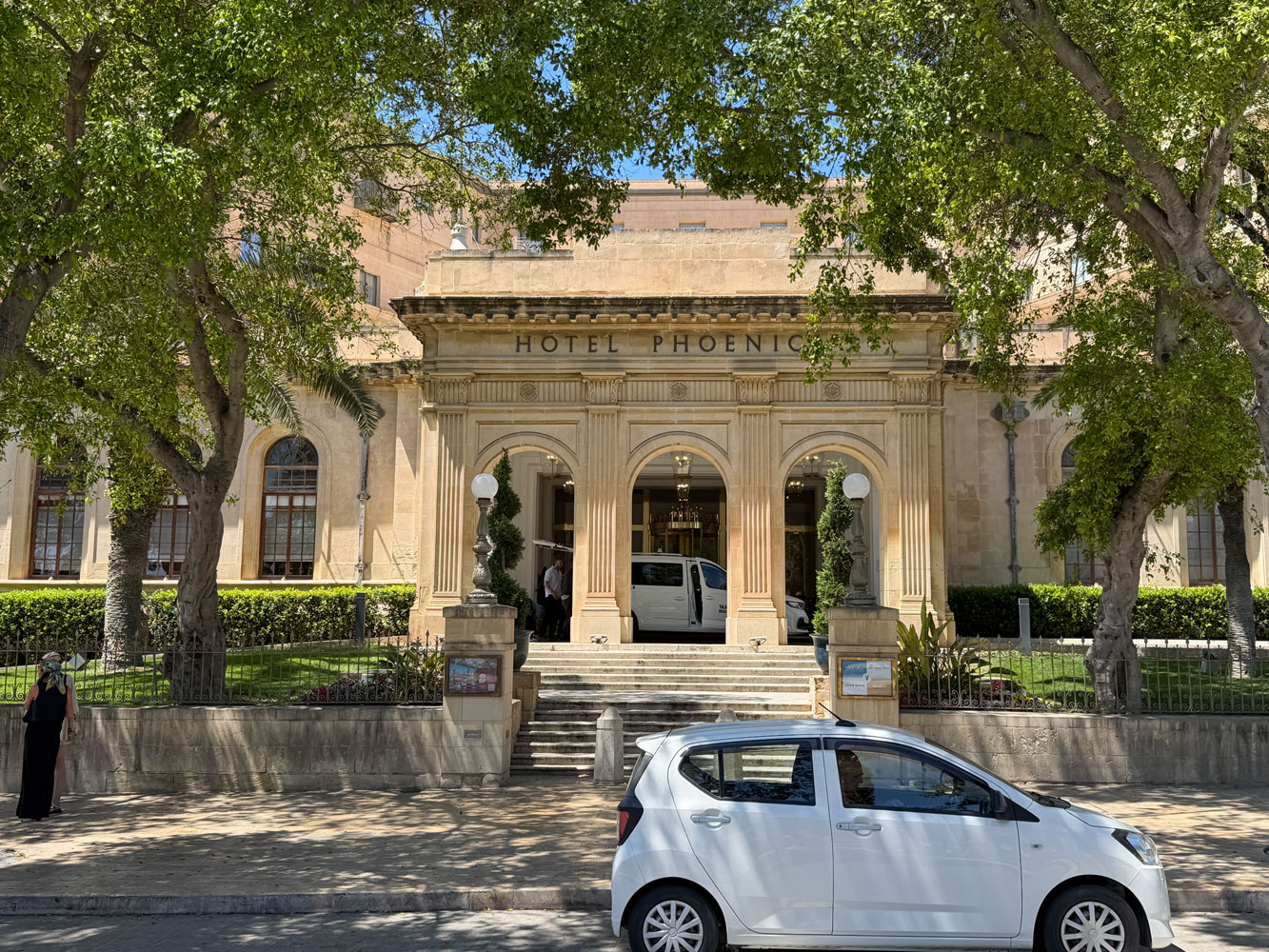
With that, we exited the cathedral and walked towards the end of Valletta to catch the bus back to the hotel. As we walked to the bus, we passed the hotel Phoenicia, where we stayed last time we visited Malta. It was a very nice hotel and well located.
When we got back to the hotel, we had a light lunch in the hotel bar and then rested in our room. Tomorrow we join the ship, and bag pickup is at 7:00am.